
NIMA Is Back – Rebuilt From the Ground Up for Celiac
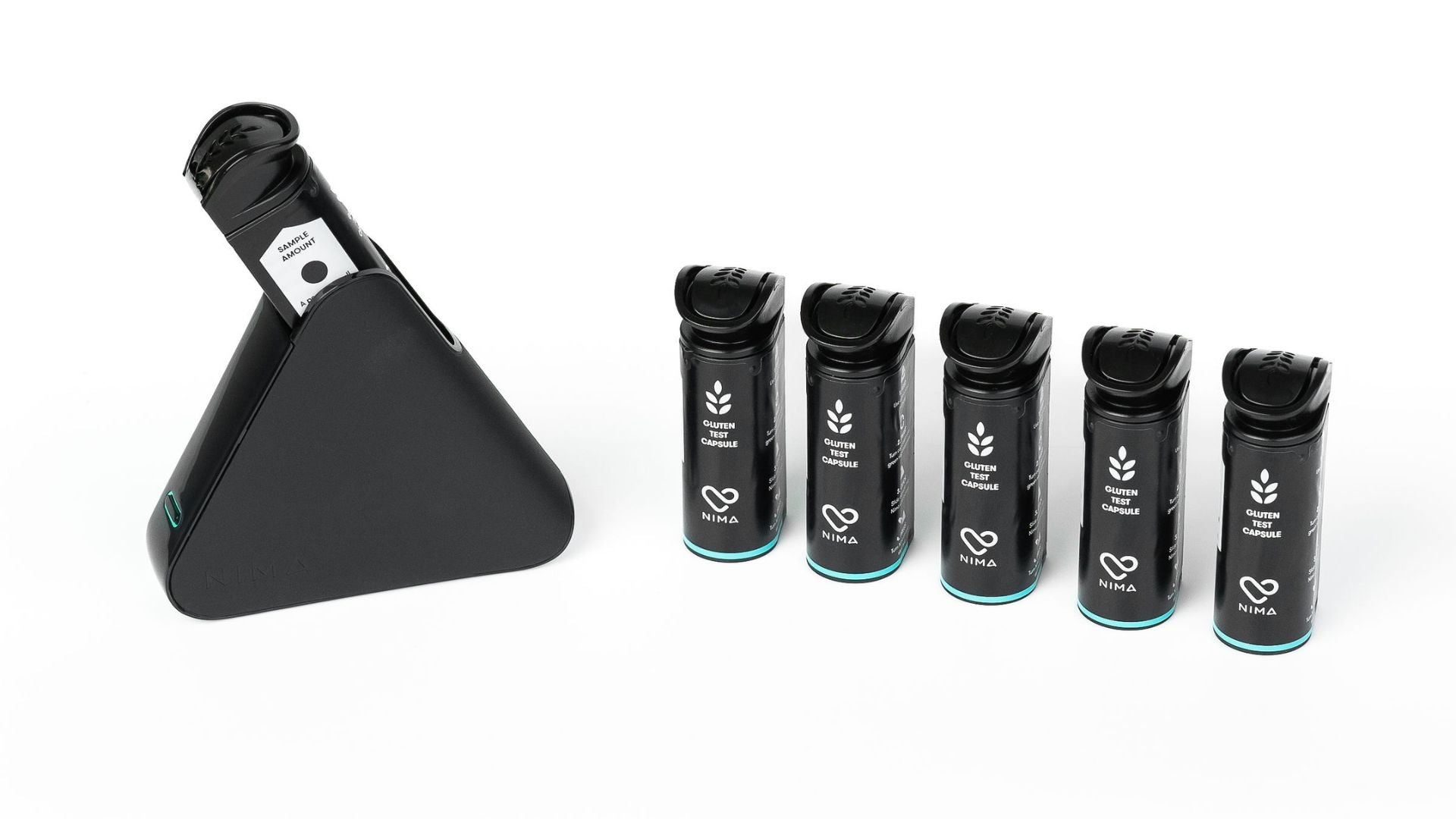
What We Improved, What You Need to Know, and How to Get Started
By Michael Elliott, Chief Manufacturing Officer, NIMA
NIMA’s return did not begin in a boardroom. It began with a family that understood firsthand what it means to live with celiac disease and the daily uncertainty that can come with every meal. Peter Kolchinsky, founder of RA Capital and the father of a son with celiac disease, had relied on NIMA as a customer and knew the peace of mind it could offer. When the product became unavailable, he recognized both the void it left behind for families like his and the promise of the technology at its core. That conviction led RA Capital to help bring NIMA back, rebuilding the company around its core technology and a renewed commitment to the people who need it most.
In the Q&A below, I’ll explain what changed, what the science shows, and the important limitations consumers should understand.
What We Improved
More Accurate Detection
We upgraded the sensor technology at the heart of NIMA. Key improvements include:
-
Enhanced LED optics that improve detection across all three main gluten sources: wheat, rye, and barley
-
A refined result-reading algorithm for better more consistent interpretation of each test
-
Targeted design changes to improve overall accuracy performance
-
Independent certified third-party lab validation confirming improved detection performance
After testing hundreds of samples internally and hundreds more with an independent, ISO-accredited food testing lab, covering a wide variety of foods, we are proud to share that NIMA can now detect gluten in food down to 10 parts per million (ppm) with 99% accuracy. That is below the FDA's recommended threshold of fewer than 20 ppm. We have published the third-party test report as part of our early access launch.
More Reliable Manufacturing
We rebuilt our manufacturing and quality systems from the ground up:
- A formal Quality Management System now governs every stage of production
- Multi-stage quality controls monitor materials, assembly, and final products
- A new Risk Management System enables faster identification and resolution of potential issues
- A more powerful motor drives the full testing process, from puncturing the capsule and grinding the sample to reading your result
A Better Daily Experience
- A fully rebuilt mobile app, developed with experts in biotech and consumer health
- Clearer result displays and improved test tracking
- USB-C charging and next-generation batteries
- Up to 30–40 test cycles per charge
- End-to-end supply chain improvements for more consistent capsule availability
What NIMA Is (and Isn’t): Responsible Use
We want to be direct about what NIMA can and where its limitations lie. We share the limitations of lateral flow tests as openly as we share the strengths because the celiac and gluten-free community deserves honesty, not just enthusiasm.
NIMA is a food sensor, not a diagnostic device. It detects gliadin, a type of protein found in gluten, from a pea-sized food sample and returns a result in about three minutes using lateral flow immunoassay technology, the same platform used in rapid COVID and strep tests. A negative result means the tested portion did not trigger detection above our validated threshold of 10 ppm, lower than the FDA’s 20ppm labeling requirement.
NIMA Is One Layer in a Broader Approach
You read the label. You asked the server. You did everything right. NIMA is designed for the moment after all of that, when uncertainty still remains before the first bite for label reading, provider guidance, or restaurant communication..
An effective gluten management approach includes:
-
Your GI, dietitian, or primary care provider, the foundation of your care
-
Reading ingredient labels carefully (note: barley and rye are not covered under U.S. wheat allergen labeling law)
-
Certified gluten-free products, which meet testing standards beyond FDA labeling requirements
-
Direct communication with restaurant staff about cross-contact and preparation
-
Community resources from organizations like the National Celiac Association, Beyond Celiac, and the Celiac Disease Foundation
-
NIMA, as the final data point, after all other steps have been taken
Food Categories That Require Extra Care
Lateral flow testing has known limitations with certain food types. Here is a summary of categories where results require additional preparation or interpretation:
|
Category |
Why It Matters |
How to Handle It |
|
⛔ Fermented, hydrolyzed foods & alcohol (Do not test) |
Protein structure is altered; antibody may not bind reliably. Alcohol disrupts chemistry. |
Do not test. Rely on ingredient labels. Examples: soy sauce, beer, malt vinegar. |
|
⚠️ Thick, dense, or sticky foods |
May not mix evenly with extraction buffer; can miss contamination or clog capsule. |
Dilute 1:1 with water. Use a smaller sample. |
|
⚠️ High oil & fat foods |
Oil resists mixing with water-based buffer, creating an uneven sample. |
Dilute 1:1 with water. Use a smaller sample. |
|
⚠️ Liquid & high-moisture foods |
Overfilling with liquid is the most common user error and can cause errors or dilution. |
Use approx. 5–6 drops for liquids. Do not fill past the spindles at the bottom of the capsule. |
|
⚠️ Very dry, powdery, or crumbly foods |
Dry materials don’t dissolve evenly in the extraction buffer. |
For powders: use less than 1/8 tsp, mix into a slurry with water. Keep sample pea-sized. |
|
⚠️ Brightly colored or high-pigment foods |
Strong pigments can interfere with the optical reader, causing false positives or negatives. |
Dilute with water to reduce color intensity. Interpret results with this limitation in mind. |
|
⚠️ High-acidity foods |
Very low pH can disrupt the antibody-buffer interaction and cause false positives. |
Use a small, pea-sized sample. Dilute 1:1 with water. |
|
🔍 Foods with hot spots or uneven contamination |
Cross-contamination from shared grills or surfaces may affect only part of a dish. |
Test from the highest-risk area. Include char marks or edges on grilled items. |
|
🔍 Wheat starch-containing products |
NIMA detects gliadin (the protein), not wheat starch itself. A negative result does not confirm safety. |
Follow manufacturer labeling and your care provider’s guidance. |
Learn more about Responsible Use Information
A Final Word
We know that trust, once lost, has to be earned back through action, not just words. That is what this rebuild has been about: better hardware, better science, honest communication about limitations, and products that actually perform in real-world conditions.
If you have celiac disease or live gluten-free, you deserve tools that are both reliable and honest about what they can and cannot do. We are committed to being both.
We look forward to earning your trust.
— Michael Elliott, Chief Manufacturing Officer, NIMA
Questions? Contact us at customerservice@nimanow.com
Recent News

What Can People With Celiac Eat? The Complete Beginner's Food Guide
Newly diagnosed with celiac disease and unsure what's still safe to eat? This beginner's guide breaks down the foods people with celiac can eat, the ones to avoid, and how to catch hidden gluten before your first bite.


