

Reduceexposureincidents
Students gain an additional tool when navigating dining environments.
“NIMA gives me the confidence to enjoy meals out without second-guessing every bite.”


Of students with celiac report gluten exposure through school dining
Many schools already provide:

Gluten-free menu options

Dining protocols

Staff
training

Disability support services
Yet students still report uncertainty around cross-contact, dining participation, and meal confidence.

Weisbrod et al., NASPGHAN 2025 / CDF College Consensus Summit
How NIMA helps
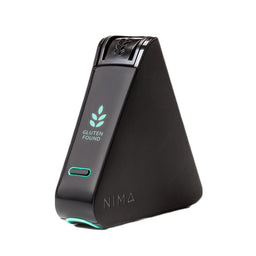
NIMA is a portable gluten sensor that allows students to test food before eating in about three minutes.
Detects gluten down to 10 ppm
~99% probability of detection
Independently evaluated across wheat, rye, and barley
Designed for use alongside dining protocols and gluten-free practices

How it works
1
Take a sample
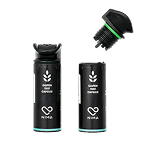
Place a pea-sized food sample into the capsule.
2
Insert and test
The capsule is inserted into the sensor and processed automatically.
3
Read your result
In about three minutes, NIMA displays a gluten detected or not detected result.
Important
A negative result ("No Gluten Found") means the tested portion did not trigger detection above the validated threshold of 10 ppm. It is additional information, not a guarantee of 0 ppm. NIMA does not replace label reading, dining staff communication, or institutional protocols.
WHERE NIMA FITS
Bon Appetit Management Company ran the first large-scale institutional pilot of NIMA across their dining portfolio. Their experience maps directly to the use cases below.
www.bamco.comBack of house verification
Spot-check sauces, prep areas, and cooking processes
Student self-testing
Students verify meals before eating
Events and catering
Review gluten-free items during campus events
Accessibility programs
Include sensors within accommodation or lending programs
WHAT THIS MEANS FOR YOUR INSTITUTION
Students gain an additional tool when navigating dining environments.
Fewer disruptions can mean better classroom engagement and campus involvement.
Dining confidence influences social participation, wellbeing, and retention.
NIMA can support broader accessibility and inclusion efforts.
Section 504 Note: Celiac disease may qualify as a disability under Section 504 and the ADA when eating or digestion is substantially limited. Schools may provide reasonable accommodations, and portable testing tools can support broader accommodation strategies.
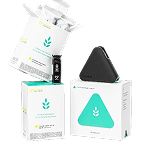
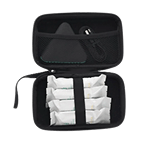
Complete the form below to request a starter kit and start a conversation. * = required
