


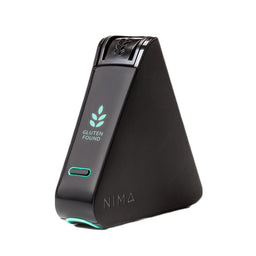
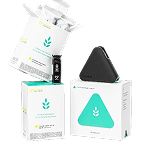
NIMA™ Starter Pack
Everything you need to start testing your food for gluten.
Sale price$247.50Regular price
$330.00
“NIMA gives me the confidence to enjoy meals out without second-guessing every bite.”


Gluten detection threshold
Probability of
detection
Results
time
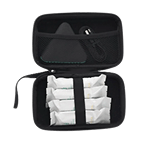
Small enough to take anywhere
Everything you need to start testing your food for gluten.
Know what’s safe before you take a bite.

NIMA adds one more layer of protection and gives your child one more step toward independence.

NIMA is designed for the moment after all of that when the food is in front of them and you want one more answer.
You’ve talked to the school nurse. You’ve emailed the teacher. You’ve called the restaurant ahead and explained everything twice. You packed the safe snack just in case.
And still, there’s a question in the back of your mind: Did they actually eat something safe?
For parents of children with celiac disease, that worry is real. Kids eat in classrooms, cafeterias, birthday parties, and friends’ homes often without you there to check every detail.
NIMA helps fill that gap by giving your child a way to check their food before they eat it.

Protecting your child is about building layers of safety. You’ve already become an expert in using these tools every day. NIMA works best as one of those tools, not as a replacement for the others you rely on.
Your family’s safety toolkit already includes:
Protecting your child is about building layers of safety. NIMA works best as one of those tools—not as a replacement for the others you rely on.
Think of NIMA like a smoke detector
You don’t rely on a smoke detector to prevent fire, but you absolutely want one installed as an extra layer of protection. It doesn’t replace careful planning, label reading, or communication with kitchens. It simply adds a final check when the food is in front of your child.
You don’t rely on a smoke detector to prevent fire, but you absolutely want one installed as an extra layer of protection. It doesn’t replace careful planning, label reading, or communication with kitchens. It simply adds a final check when the food is in front of your child.
Foundation of care
Institutional protection
At the store
A lifelong skill
The final check
Parents deserve clear information. NIMA detects gluten down to 10 ppm with high accuracy, but it tests a small sample of food, not an entire dish.
A negative result means gluten was not detected in that sample. Used alongside the other tools families rely on, NIMA adds real-time information when it matters most.
Join thousands of families who use NIMA as part of their gluten-free toolkit, at school, at parties, at restaurants, and everywhere in between.
NIMA is not a medical device and does not replace clinical guidance, school accommodations, or professional dietary advice. Always work with your child’s healthcare provider to determine the right approach for your family.
No. The cable works with any standard USB-C adapter — including the one that came with your phone, laptop, or tablet. Just plug the cable into any USB-C port on your adapter and you're good to go.
No. The NIMA Sensor is a consumer-use gluten detection tool, not a medical or diagnostic device. It is not regulated or approved by the U.S. Food and Drug Administration (FDA). NIMA is designed to help you eat with confidence as part of a gluten-free lifestyle, but it should not replace medical guidance or allergen labeling. Always follow your doctor’s advice and continue to read ingredient labels and allergen statements.
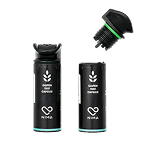
Each capsule is a single-use testing pod containing NIMA’s proprietary reagents. When you close and twist the lid, the capsule automatically mixes your food sample with these reagents. The NIMA Sensor analyzes the chemical reaction inside the capsule and displays whether gluten is detected in the portion you tested.
NIMA is designed to test solid or semi-solid foods that can fit easily into the capsule and mix evenly with the testing liquid. You can test a wide range of foods, such as:
Your NIMA Sensor detects gluten from wheat, barley, and rye at 10 parts per
million (ppm) or higher in the portion you test. For the most reliable results, take a pea-sized sample that represents what you plan to eat and follow the sampling tips in the User Manual.
Some foods and ingredients cannot be tested accurately because of their texture, composition, or how gluten proteins behave during processing. These include:
Your NIMA result reflects only the sample you test, not the entire meal. Gluten may be unevenly distributed in mixed dishes, so testing small samples from different
parts of a meal can help identify hidden gluten.
No. Capsules are one-time use only and should be used immediately after opening. Reusing or saving a capsule can lead to inaccurate results and may damage your Sensor. Store unopened capsules in a cool, dry place away from heat, humidity, and direct sunlight to maintain accuracy
(recommended storage temperature 32°F (0°C) and 90°F (32°C).
Each box is printed with an expiration date on the packaging. Capsules remain stable for about 12 months from manufacture when stored properly. Always check the expiration date before testing — using expired capsules may reduce result reliability.
If you see liquid leakage, if the lid won’t twist fully closed, or if you feel unusual resistance when sealing, do not run the test. Please contact customerservice@nimanow.com with your order number and photos of the capsule. Our team will help you identify the issue and, if needed, send a replacement.


