

Airport Travel with Celiac Disease

How to Actually Enjoy the Journey
by Kamiah Gibson | NIMA Community Manager
To be honest, airports used to stress me out way before I even got to the gate.
Not because of the TSA lines or the flight delays, though those are not exactly relaxing either. It was the food situation. Standing in the middle of a terminal, hungry, staring at a sea of options that were mostly off limits, trying to decode ingredient lists while someone announced a gate change over the intercom. It is a lot.
If you have celiac disease or a gluten sensitivity, you know exactly what I am talking about. Travel days are supposed to be exciting. And they can be. But they require a different level of preparation than they do for people who can just grab whatever looks good at the grab-and-go counter.
The good news is that with the right approach, airport travel with celiac disease is completely manageable. Here is everything I have learned, and everything our community swears by, to make travel days less stressful and a lot more enjoyable.
Why Airports Are Particularly Challenging for the Celiac Community
It is not just that gluten-free options are limited at most airports, though they often are. It is the combination of factors that makes airports uniquely difficult.
Airport food is unreliable at best. Even restaurants that advertise gluten-free menu items may not have the protocols to back it up. Busy kitchens during rush periods, shared prep spaces, limited staff knowledge about cross-contact, and the general chaos of a high-volume food service environment all create real risks for people with celiac disease.
Buffets and shared kitchen environments may pose a higher cross-contamination risk, so when eating at airport restaurants, choosing sit-down restaurants with clear gluten-free protocols is always the safer bet. Grab-and-go sushi counters fall into the same category, where shared prep surfaces sit behind a roll that looks simple. Always inform your server that you have celiac disease and require strict gluten-free food preparation.
And then there is the unpredictability factor. Flights get delayed. Gates change. That one restaurant you researched in advance turns out to be in a different terminal. When things go sideways, you end up eating wherever you can find something fast, which is rarely where you planned to be.
That combination of limited options, cross-contact risk, and unpredictability is exactly why experienced gluten-free travelers tend to rely on a combination of preparation, backup snacks, and tools like NIMA rather than trusting any single strategy on its own.
What to Pack in Your Carry-On
Your carry-on is your best friend on a travel day. Treat it like a safety net, because that is exactly what it is.
One of the best approaches experienced celiac travelers use is to assume you will find nothing safe to eat in the airport or on the plane, and pack at least a full day's worth of food whenever you travel. That might sound extreme, but anyone who has been stranded at an airport during a six-hour delay on an empty stomach knows it is just smart planning.
A quick note on bringing food through security: for domestic flights, you can bring your own food through TSA without any issue. If you are flying internationally, policies vary by airline and destination, but many airlines will accommodate passengers with a documented medical condition. It is worth calling your airline ahead of time to let them know about your celiac diagnosis. Many international carriers will make accommodations once they understand it is a medical need, not a preference.
Here is what I recommend packing:
- Certified gluten-free protein bars
- Nuts or trail mix
- Gluten-free crackers or pretzels
- Shelf-stable protein shakes
- Individual peanut butter packets
- Electrolyte packets
- Dried fruit or fresh fruit
- Gum or mints
- A reusable water bottle
Favorites in the celiac travel community include Kind bars, trail mix, cheese sticks, and hard-boiled eggs for protein. If you are traveling internationally or have a long layover, pack even more than you think you need. The moments when you are most grateful for that extra snack are always the moments when nothing else is available.
Navigating TSA with Gluten-Free Food
Here is something a lot of people do not realize: you have every right to bring your own food through airport security, and TSA is generally accommodating when you know what to say.
Solid food is generally allowed through security without issue. For travelers with celiac disease, having reliable food during delays or cancellations is essential.
The trickier items are spreads, yogurt, protein shakes, and other foods that fall under TSA's liquid guidelines. Here is the thing though: if your food is medically necessary, you can declare it as such at security. Simply tell the agent that your food is medical due to celiac disease. They will typically flag it for a quick inspection and let it through. You can request a letter of medical necessity from your doctor to bring with you, though security rarely asks to see it. Having it gives a lot of people peace of mind, and it takes about five minutes to get from your gastroenterologist or primary care doctor.
A few practical TSA tips:
- Freeze ice packs before you leave home if you are packing perishables in an insulated bag
- Your medical food bag, whether it is a lunchbox or a small cooler, will not count as an additional carry-on
- If you have TSA PreCheck, you will generally have fewer issues and should not be required to remove food items from your bag
If a TSA agent questions your food, stay calm and matter of fact. You have every right to bring medically necessary food, and most agents are understanding once you explain the situation clearly.
Do Not Forget NIMA
This is the part of my airport routine that genuinely changed travel for me.
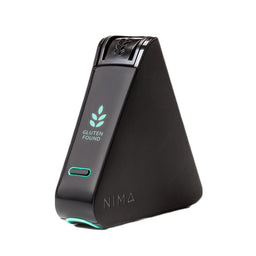
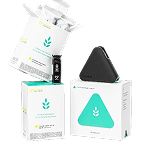
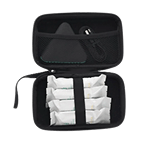
NIMA packs easily in a carry-on, a backpack, or a purse and goes through TSA with zero issues. It does not set off any alarms and does not require any special declaration. It just goes through with everything else.
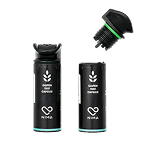
What it does on the other side of security is what matters. Whether I am grabbing something at an airport restaurant, testing a meal on the plane, or checking food at a hotel after landing, NIMA gives me a real answer in about three minutes instead of a best guess. The habit is the same one I use anywhere I eat out, and testing restaurant food for gluten works best when you sample the part of the dish most likely to have picked up cross-contact.
Travel situations where NIMA is especially useful include:
- Airport restaurants and grab-and-go counters
- Airline meals, even pre-ordered gluten-free ones
- Hotel dining after arrival when you are tired and do not have the energy for a long conversation with the kitchen
- International travel where language barriers add an extra layer of uncertainty
- Conference or event catering where you have no control over preparation
Even if an airline offers gluten-free meals, there are real challenges to be aware of. Your meal might not be loaded on the plane even if you pre-ordered it, and some airlines do not guarantee celiac-safe preparation. That is not a reason to skip requesting a gluten-free meal, but it is a reason to test it before eating.
Travel already involves enough uncertainty. Having an extra layer of reassurance makes the whole experience feel so much more manageable.
A Few Airport Wins Worth Celebrating
While most airports still have a lot of room to grow when it comes to safe gluten-free options, there are some bright spots worth knowing about.
At Kitava inside San Francisco International Airport, travelers can find a fully gluten-free restaurant right in the terminal. If you have a layover at SFO, it is worth knowing it is there. A dedicated gluten-free space in an airport is genuinely rare, and finding one can completely change the tone of a travel day.
Another great find is Sambazon Açaí Bowls at John Wayne Airport in Orange County, California, which offers dedicated gluten-free açaí bowl options. Refreshing, satisfying, and a much better option than staring down a shelf of mystery ingredients at a grab-and-go counter.
These spots are worth celebrating because they represent what is possible when airports and food vendors actually prioritize the needs of travelers with dietary restrictions. The more we support them and talk about them, the more likely other airports are to follow.
Before any trip, look up airport dining options in advance and check if specific restaurants offer gluten-free selections. Apps, reviews, and social media groups can help you find safe places to eat. Find Me Gluten Free is one of the best resources for exactly this, with community-reviewed ratings specifically from people with celiac disease.
Tips for Long-Haul Flights
International travel deserves its own moment because the food situation on long flights is a whole different conversation.
Most major international airlines allow you to request a gluten-free meal when booking. Do it. But do not rely on it as your only plan. Request a gluten-free meal when you book your flight, but also pack snacks and meals as backup including items that may be considered liquids such as peanut butter, hummus, yogurt, and protein shakes.
When the meal arrives, test it with NIMA before eating. Airline kitchens prepare hundreds of special meals in high-volume environments, and even with the best intentions, cross-contact can happen. Testing takes three minutes and gives you real information. It is always worth it on a nine-hour flight when getting sick is not a recoverable situation.
The Bottom Line
Traveling with celiac disease takes more planning than it does for most people. That is just the reality, and there is no point pretending otherwise. But it absolutely should not stop you from going places, seeing people, and having the experiences you have been looking forward to.
Pack your snacks. Know your TSA rights. Research your airport in advance. Request your gluten-free meal. And bring your NIMA.
When you have those pieces in place, you can spend a lot less energy worrying about what you are going to eat and a lot more energy actually being present for the trip.
That is the whole point.
Sources: Celiac Disease Foundation, "Traveling Gluten-Free" | Explore, "How Travelers with Celiac Disease May Be Able to Get Liquid Foods Through TSA" | The Gluten Free Travel Bliss, "Flying With Celiac Disease" | TravelMint, "Gluten-Free Travel Tips for Celiacs Traveling by Air" | New York Gastroenterology Associates, "Gluten-Free Travel Tips" | The Nomadic Fitzpatricks, "Flying With Celiac Disease"
NIMA supports informed decisions. It does not guarantee food safety or replace medical management.
Recent News

Food Anxiety With Celiac Disease: How to Feel Safer Around Food
Food anxiety can be a rational response to managing celiac disease, but it should not make your world smaller. This guide explains how to build calmer safety routines, balance vigilance with quality of life, and recognize when professional support could help.


