


Can You Reverse Gluten Intolerance? What the Research Actually Says

You clicked this asking, can you reverse gluten intolerance, and hoping for a yes. Let's get to it.
Celiac disease cannot be reversed. It is a lifelong autoimmune condition, and the only treatment is a strict gluten-free diet. Non-celiac gluten sensitivity is a different story. For some people, symptoms fade and a degree of tolerance may return, and there is emerging research to back that up. The honest answer sits somewhere between "no" and "maybe, with a plan."
Here is what the science actually says. The difference between the two conditions. What "reversing" gluten intolerance really means. How long recovery can take. What a safe reintroduction looks like if you are considering one. And where a portable gluten sensor fits into the toolkit you have probably already built.
The Short Answer, Up Front
If you only read this section, here is what matters.
Celiac disease is a lifelong autoimmune condition. There is no cure. A strict gluten-free diet is the only treatment, and even trace exposure can restart intestinal damage.
Non-celiac gluten sensitivity may be transient for some people. Current re-challenge studies suggest a subset of people can regain tolerance after an extended period of strict avoidance. The evidence is limited, mixed, and always paired with medical supervision.
From here, you will figure out which side of that line you are on and what your next step could look like.
Reversing Celiac Disease Is Not Possible. Here Is Why.
Celiac disease sits in a different category from a simple food sensitivity. It is autoimmune at the root. When you eat gluten, your immune system attacks the lining of your small intestine and damages the villi that absorb nutrients. That reaction is genetic. Removing gluten from your diet gives the villi a chance to heal, but the underlying autoimmunity does not go away. Reintroduce gluten, and the damage resumes.
According to the Cleveland Clinic, gluten intolerance in the broader sense affects roughly 1 in 20 people in the United States, and there is no cure for celiac disease itself. Treatment is lifelong avoidance.
The most important step, before you consider any change to your gluten-free diet, is a proper diagnosis. Self-treating celiac disease as if it were a sensitivity carries real risks. Ongoing exposure raises the chance of long-term complications, including nutrient deficiencies, bone density loss, and other autoimmune conditions. Work with a gastroenterologist. Confirm what you are actually managing. If cost is what is holding you back, it helps to know what a celiac diagnosis actually runs before you book anything.
Non-Celiac Gluten Sensitivity Might Be a Different Story
Non-celiac gluten sensitivity, or NCGS, is a real reaction to gluten in people who do not have celiac disease or a wheat allergy. Symptoms overlap with celiac disease. Bloating. Fatigue. Brain fog. Headaches. Joint pain. What is different is the mechanism. NCGS describes symptoms triggered by ingestion of gluten-containing foods after celiac disease and wheat allergy have been excluded. The exact dietary trigger remains an active area of research. Current research suggests some people diagnosed with NCGS may actually be reacting to fructans (FODMAPs), amylase-trypsin inhibitors, and wheat components besides gluten, instead of gluten itself.
That difference matters when we talk about reversibility. If you have wondered whether gluten intolerance can go away over time, NCGS is the category where that possibility actually sits. A 2017 systematic review and meta-analysis published in Frontiers in Physiology looked at gluten re-challenge studies in adults with self-reported NCGS. In several of the included studies, a share of participants did not react to gluten during blind re-challenge after an extended period of avoidance. The authors were careful in their conclusions. The results were mixed. But they suggested NCGS may be transient in a subset of people rather than a permanent condition.
Clinicians who treat NCGS often reflect that same caution. Some suggest a supervised reintroduction after 1 to 2 years of strict gluten avoidance, especially in cases where celiac disease has been ruled out. The goal is to test whether tolerance has returned, not to promise a cure.
What "Transient" Actually Means Here
In this context, transient means symptoms may fade and tolerance may return, in some people, sometimes. Not gone forever.
That is a more honest frame than reversal. Reversal implies a switch you can flip. What the research actually points to is closer to gradual improvement, in some cases, under the right conditions, with medical support.
For most people, the realistic answer is maybe, and only with a plan.
How Long Does It Take to Reverse Gluten Intolerance?
There is no fixed timeline for gluten intolerance recovery, and anyone who promises one is guessing. People often ask whether you can outgrow gluten intolerance, and the honest answer is that some might, but only over long timelines and with real medical support.
Symptom relief on a strict gluten-free diet often begins within days to a few weeks for people with NCGS. That is why an elimination trial can feel dramatic in the first month. For celiac disease, gut healing at the tissue level typically takes longer, and some adults never see full villous recovery even on a strict diet.
If you are asking about tolerance returning in NCGS, the honest answer is longer. Re-challenge studies commonly test tolerance after 1 to 2 years of strict avoidance. Think of that timeline as a rough benchmark clinicians work with, not a firm rule.
For people with celiac disease, gluten exposure restarts the autoimmune process. For individuals with NCGS, accidental exposure may trigger symptoms and complicate assessment of whether tolerance is changing.
Why You Might Have Become Gluten Intolerant in the First Place
Sudden onset is real. It is recognized in the medical literature. And it is not your fault.
Researchers have proposed that viral infections, changes in the gut microbiome, pregnancy, or other physiologic stressors may contribute to symptom onset in susceptible individuals, although no single cause has been established. With celiac disease, a genetic predisposition can sit quietly for years and then activate after one of these events.
Identifying the trigger with your doctor matters. It shapes what a recovery plan looks like. Someone whose symptoms surfaced after an antibiotic-heavy year may benefit from a different approach than someone whose sensitivity appeared during pregnancy. This is not something to work through alone.
What the Research Says About Gut Healing and Recovery
The gut lining is not passive. In people with gluten sensitivity, ongoing exposure appears to affect intestinal barrier function and low-grade immune activation. When gluten leaves the picture, the environment changes. Inflammation eases. The microbiome shifts. Some research is now looking at whether that shift, combined with dietary and lifestyle support, might help partially explain why tolerance can return for some people over time.
The mechanisms are still being mapped. Some researchers hypothesize that improvements in gut barrier function and reduced immune activation may contribute to symptom improvement, but the mechanisms remain unclear, and any recovery plan should be paired with the right medical guidance. As Beyond Celiac explains in its overview of NCGS, the condition is defined by symptoms that improve on a gluten-free diet without the autoimmune markers of celiac disease. What causes it, and how it resolves for some people, are questions the research community is still working through.
None of this is a green light to loosen your diet. Read it as context. Healing takes time. So does clarity.
What a Safe Reintroduction Looks Like (If You Are Considering One)
Reintroduction should only happen under medical supervision. Read that carefully. It is the whole approach, not a warning to brush past.
A typical reintroduction plan includes a stable baseline of strict avoidance, a documented symptom log, a controlled challenge that starts with small amounts of gluten, and careful tracking of what happens over hours and days. Your gastroenterologist rules out celiac disease first. A registered dietitian helps you plan the meals and interpret what you are seeing. There is no gluten sensitivity treatment that works like a medication, so a supervised process is the closest thing to a real plan. Neither piece is optional.
Two practical habits make the process useful, no matter how it turns out.
Track Your Symptoms in Writing
Memory is unreliable during a reintroduction. Symptoms are subtle. A written log gives your provider real data to work with.
Track the timing of every meal. Track the quantity of gluten. Track when symptoms start, how long they last, and how intense they are. Track energy, sleep, and mood too, because these are often the first things to shift.
You are collecting evidence. That evidence is what tells you and your provider whether tolerance has returned or not.
Verify What Is on Your Plate
Reintroduction only works if you know exactly what you are eating. Unlabeled cross-contact quietly changes your test.
Labels help, but they only go so far. The FDA's gluten-free labeling rule allows a product marked "gluten-free" to contain up to 20 parts per million of gluten. For most people that is safe. For sensitive individuals in an active elimination or a supervised reintroduction, it can be enough to muddy the picture.
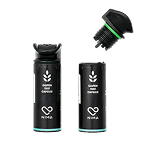
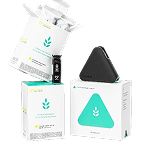
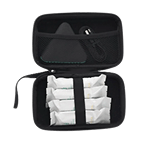
A portable gluten sensor can help close that gap. NIMA detects gluten from wheat, barley, and rye down to 10 ppm with 99% accuracy, independently validated by Bia Diagnostics, and returns a result in about three minutes. Treat it as an additional tool in your gluten-free toolkit. It never replaces your doctor, your dietitian, or a proper diagnosis. It gives you a clearer read on what is actually on your plate before you take a bite.
Your Gluten-Free Toolkit During Recovery and Reintroduction
You have probably built more of a toolkit than you give yourself credit for. Recovery means using what you already have and adding the layers you are missing. You are not starting from zero.
The core layers most readers rely on:
-
A gastroenterologist for diagnosis, monitoring, and long-term care.
-
A registered dietitian for nutrient balance and meal planning.
-
Careful label reading, with a clear picture of what "gluten-free" legally allows.
-
Awareness of cross-contact in shared kitchens, restaurants, and packaged foods.
-
Knowledge of certified gluten-free labels and what standards they meet.
NIMA sits at the end of that stack. It is the last step before the first bite. The layer that turns "I think this is safe" into a clearer answer in minutes. It sits alongside the rest of the toolkit rather than in place of any of it.
When to Talk to a Healthcare Provider
Some signs mean the plan needs a professional set of eyes, quickly.
Reach out to your provider if your symptoms are getting worse, if they have not improved after weeks of strict avoidance, if you are losing weight without trying, if you see signs of nutritional deficiency like fatigue or hair changes, or if you notice blood in your stool. Symptoms that overlap with irritable bowel syndrome, small intestinal bacterial overgrowth, or a wheat allergy deserve a proper workup too, because the treatment for each is different.
Any attempt to reverse or reintroduce gluten should run through your provider, not through online advice and not a friend who tried it themselves. Run it through the person who knows your history and can actually test what is happening.
Frequently Asked Questions
Why Did I Suddenly Become Gluten Intolerant?
Sudden onset is often linked to a triggering event that shifts how your immune system or gut microbiome responds. Common suspects include a viral illness, antibiotic use, pregnancy, or chronic stress. Sometimes another GI condition surfaces at the same time. The research is still evolving, so a conversation with your doctor is the best starting point.
How Long Does It Take to Reverse Gluten Intolerance?
There is no fixed answer. Symptom relief on a strict gluten-free diet often shows up within days to a few weeks. Studies that test whether tolerance has returned typically wait until after 1 to 2 years of avoidance. Individual variation is large, and any accidental exposure can reset your progress.
How Can I Tolerate Gluten Again?
Only under medical supervision. Rule out celiac disease first, then work with a gastroenterologist and dietitian on a structured elimination and gradual reintroduction, with a written symptom log throughout. Be prepared for either outcome. Some people regain tolerance, and some do not. Both results are valid, and both give you useful information.
What Are the First Signs of Being Gluten Intolerant?
Common signs of gluten sensitivity include bloating, gas, brain fog, fatigue, headaches, and shifts in mood. Skin changes and joint discomfort can show up too. Symptoms often appear within hours of eating gluten, but for some people they build over a day or two. If any of this sounds familiar, our guide on gluten intolerance symptoms goes deeper. Understanding gluten allergy vs. celiac disease helps readers distinguish an immune disorder from intolerance or other reactions.
One More Layer Before Your First Bite
So, can you reverse gluten intolerance in a lasting way? For most people, it looks more like a slow, quiet process than a switch you can flip, and for some people it never fully happens. Those outcomes still count. The wins here are getting the diagnosis right, working with the right providers, and using every layer of your toolkit. Symptom relief is a win. Confidence at the table is a win.
If you are early in the process or somewhere in the middle of a supervised reintroduction, NIMA can be the last step before the first bite. A quick, portable test that turns uncertainty into a clearer answer in minutes. More clarity. More confidence. More agency at your own table.
Recent News

Food Anxiety With Celiac Disease: How to Feel Safer Around Food
Food anxiety can be a rational response to managing celiac disease, but it should not make your world smaller. This guide explains how to build calmer safety routines, balance vigilance with quality of life, and recognize when professional support could help.


