

How To Check A Meal Cooked In A Shared Kitchen
Key Takeaways
Gluten is invisible in cooked food, so appearance, smell, and taste cannot confirm safety in a shared kitchen.
Cross-contact risks are highest from shared fryers, wooden utensils, cutting boards, colanders, and double-dipped condiments.
A 60-second risk assessment highlights high-risk meals, and testing adds objective data about the food in front of you.
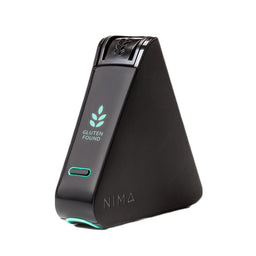
Point-of-consumption testing with the NIMA Sensor gives a clear result in about three minutes for the portion on your plate. NIMA helps people with celiac disease and gluten sensitivity make informed decisions at the moment of eating.
Who This Guide Helps And Key Gluten Terms
This guide supports people living with celiac disease, people with non-celiac gluten sensitivity, and parents or caregivers making food decisions for someone who must avoid gluten. A few definitions matter here.
Cross-contact is the transfer of gluten from a gluten-containing food, surface, utensil, or hand to a food that is meant to be gluten-free. This is distinct from the broader food-safety term "cross-contamination," though the two are often used interchangeably in everyday conversation.
The FDA's 20 ppm threshold is a labeling rule. A packaged food may carry a gluten-free claim if any unavoidable gluten is below 20 parts per million. It is not a universal medical safety line. A 2026 Nutrition Reviews analysis notes that immune activation may occur from as little as 3 mg of gluten per day in a subset of people with celiac disease. People vary considerably in how little gluten triggers a reaction.
The portion you tested is the unit any test result describes. A result tells you about that specific sample. It does not describe the whole dish.
This article offers food-safety guidance, not medical advice. Defer to your care team for decisions about your health.
Why You Cannot Check A Cooked Meal By Looking, Smelling, Or Tasting
Gluten proteins from wheat, barley, and rye are invisible at the trace levels that matter. A crumb, a shared pan, or a knife that touched bread leaves no visual or sensory trace in the finished food. Celiac.com notes that even a chef with celiac disease, trained to evaluate food through smell, appearance, texture, and technique, cannot confirm gluten safety by tasting.
A meal can look, smell, and taste completely normal and still contain gluten above a level that makes a sensitive person sick. A 2026 dose-response study published in Gastroenterology found that participants reported mild symptoms at low gluten doses that did not cause a measurable immune response. This confirms that how you feel does not reliably show whether you have consumed trace gluten.
Most cross-contact happens at a handful of predictable points, and knowing them lets you ask the right questions before you eat:
A shared fryer, where oil carries gluten from breaded items to everything cooked in it, and heat does not destroy gluten
Wooden utensils and cutting boards, which are porous and harbor gluten even after washing
A shared toaster, where crumbs accumulate around heating elements and cannot be scrubbed out
A colander used for wheat pasta, where residue collects around the holes
Double-dipped condiments, where a knife with bread residue contaminates the whole jar
Sponges and dish towels that have contacted gluten-containing food can transfer gluten to gluten-free surfaces unless they are properly rinsed and cleaned. Dedicated sponges or cloths for gluten-free prep are recommended to avoid this mistake.
Unwashed hands after handling bread, flour, or pasta
The 60-Second Risk Assessment For A Meal Cooked In A Shared Kitchen
Use this quick check before deciding whether to eat, by asking the cook or observing the kitchen:
Was a shared fryer used?
Were wooden utensils, a shared cutting board, or a shared colander used?
Was the gluten-free portion prepared before or alongside gluten-containing food?
Were condiments, butter, or spreads double-dipped?
Was the counter or pan wiped with a sponge that has touched gluten?
Were hands washed after handling bread, flour, or pasta?
Any single indicator can make a meal high risk. One shared fryer or one double-dipped jar is enough on its own. Uncertainty counts too, so a cook who cannot answer your questions becomes a risk indicator.
Keep in mind what this framework can and cannot do. It gathers information, but it does not deliver a verdict, and a low-risk assessment is not a guarantee.
How Long Gluten Lingers On Kitchen Surfaces
Gluten proteins are durable and stay put until you remove them. They do not evaporate, break down on their own, or become inert over time. Gluten survives on surfaces, hides in scratches on pans and wooden utensils, and transfers from hands to food with almost no effort. Soap and water physically remove the protein from those surfaces.
Gluten residue from a previous meal can linger on a counter, so wiping down surfaces before gluten-free prep also matters. The risk is highest on surfaces that contact food directly, such as cutting boards, colanders, shared cooking oil, and porous or scratched cookware. A shared kitchen stays safer with a consistent routine instead of a one-time clean.
Can You Test A Cooked Meal For Gluten?
Most tools in the gluten-free toolkit are predictive. Labels, certifications, and conversations with the cook are all forecasts. They tell you about food you have not yet eaten, and none of them measures the plate in front of you.
Point-of-consumption testing works differently because it measures the actual food.
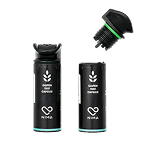
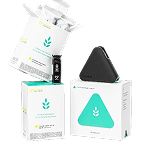
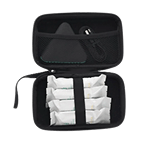
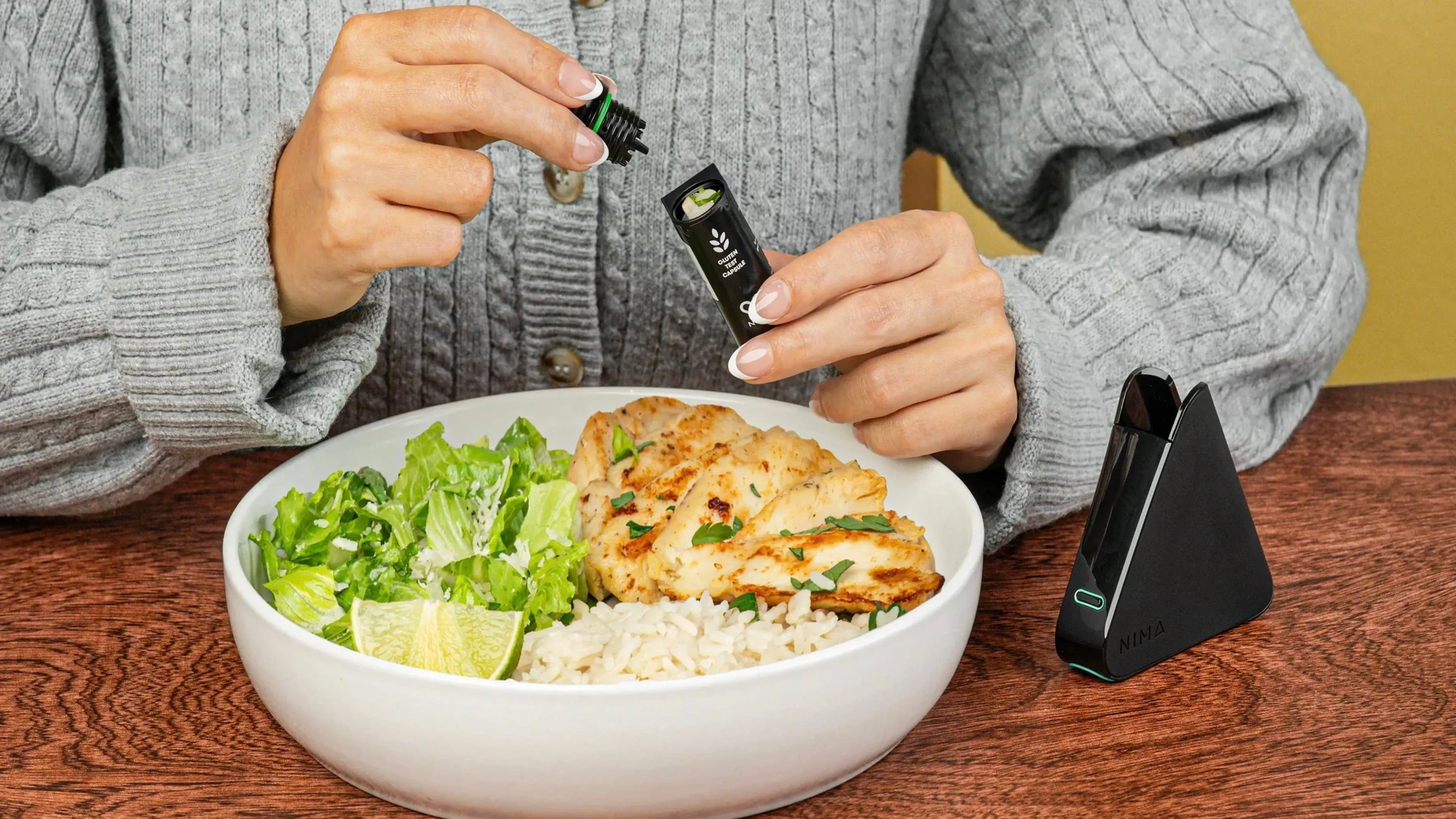
The NIMA Sensor is a portable, consumer-use gluten detection sensor for people living with celiac disease and non-celiac gluten sensitivity. Load a pea-sized sample of the food into a single-use capsule, twist it shut until it clicks, insert it into the sensor, and get a clear result in about three minutes. The display shows a smiley face or a "gluten found" symbol, with no faint line to interpret.
NIMA detects gluten from wheat, barley, and rye down to 10 ppm, a threshold twice as strict as the FDA's 20 ppm labeling threshold. That sensitivity means it can detect trace gluten at levels below the labeling threshold. A 2026 peer-reviewed review in Comprehensive Reviews in Food Science and Food Safety confirms that lateral flow devices operating on antibody-recognition principles report detection limits of 5–10 mg/kg, though they provide qualitative rather than quantitative results.
NIMA was validated twice by BIA Diagnostics, an independent laboratory. The first study tested 228 samples across four food matrices prepared with measured amounts of gluten and achieved a 98.7% probability of detection at 10 ppm. The second study tested 100 samples from 20 real restaurant meals, including meals advertised as gluten-free, and found 99% agreement with the AOAC 2012.01 ELISA reference method. Several of those restaurant meals sold as gluten-free contained gluten, with readings as high as 74 ppm. Both study reports are downloadable from NIMA's technology page.
Important limits to state plainly:
A result from NIMA reflects only the portion you tested, not the whole dish.
A smiley face on NIMA means gluten was not detected above 10 ppm in that portion. It is not a guarantee of 0 ppm.
NIMA is a screening tool and does not replace medical care.
Fermented and hydrolyzed foods and alcoholic beverages cannot be reliably tested with NIMA.
NIMA is generally eligible for HSA/FSA reimbursement with a Letter of Medical Necessity. Final eligibility rests with the plan administrator, and NIMA cannot guarantee reimbursement.
How NIMA Compares To Not Testing And Manual Strip Testers
The difference comes down to who reads the result and how much interpretation it requires. The table below shows where each option leaves the judgment call.
Attribute |
Not Testing |
Manual Strip Testers |
NIMA Sensor |
|---|---|---|---|
Measures the actual plate |
No |
Yes |
Yes |
Who reads the result |
— |
The user, by eye, under available lighting |
Integrated optical camera and algorithm, binary output with nothing to interpret |
Sample preparation |
— |
Manual extraction and buffer mixing by the user |
Automated inside the sealed capsule, and a motor-driven magnetic clutch mixes the sample |
Independent validation |
— |
Varies by product. Validation procedures for lateral flow devices are less standardized than laboratory methods |
Two BIA Diagnostics studies benchmarked against AOAC reference ELISA methods |
How To Talk To The Person Who Cooked The Meal
A direct, warm opening sets the tone: "I have a medical condition and I need to ask a few questions about how this was prepared." From there, ask specifically about the fryer, the utensils, and the condiments. These are the highest-risk points, and a cook who genuinely wants to help you will appreciate the specificity.
Start with the fryer: "Was this cooked in oil that was also used for breaded items?" Then move to utensils: "Were the same spoons or cutting boards used for both gluten-free and regular food?" If the answers rule the meal out, you can decline without apology: "Thank you so much, I'm going to sit this one out to be safe. It means a lot that you made something for me."
Over-apologizing is unnecessary. Prioritizing your health is a reasonable response to a real medical condition.
If a NIMA result comes back "gluten found," that result changes the conversation. Instead of expressing a suspicion, you can state a fact: "I tested it and it came back positive, would it be possible to get something else?" A result is evidence and turns an uncomfortable social moment into a straightforward request.
One firm boundary remains. If a kitchen has stated it cannot safely serve someone who must avoid gluten, a NIMA result does not override that. A smiley face does not change a kitchen's own assessment of its capabilities.
The Emotional Side Of Shared Kitchens
The vigilance is exhausting. The guilt of asking again, of turning down food someone made for you, or of making friends change plans feels heavy, and it is documented. NIMA's own 2026 research found that the lack of resources contributes to anxiety, emotional fatigue, and isolation for people managing celiac disease.
"I did everything right and still got glutened." "I don't want to be a burden." These are the phrases people living with celiac disease use, and they reflect something true. The vigilance is rational because the stakes are real. Seventy-four percent of people with celiac disease are accidentally exposed each year despite following a strict gluten-free diet. The effort does not always translate to safety, and that gap is not a personal failure.
The goal is to expand what you can say yes to. More meals you can accept, more invitations you can keep, and more tables you can sit at without running a two-hour risk calculation first. Getting there starts with reducing the uncertainty that makes every shared meal feel like a calculation.
The questions below cover the details readers ask about most.
Frequently Asked Questions
Can You Tell By Looking Or Tasting If A Meal Has Gluten?
No. Gluten proteins are invisible, odorless, and undetectable to the senses at the trace levels that matter for people with celiac disease or non-celiac gluten sensitivity. As explained above, appearance, smell, and taste cannot reveal trace gluten, and symptoms do not reliably track immune activation.
How Long Does Gluten Residue Last On Kitchen Surfaces?
Gluten remains until you physically remove it with soap and water, as noted earlier. It persists on counters, in the scratches of wooden cutting boards, in the holes of colanders, and in the oil of shared fryers. A shared kitchen needs a consistent cleaning routine, with surfaces wiped before gluten-free prep, because residue from a previous meal can remain and transfer to food.
Can You Test A Cooked Meal For Gluten?
Yes, with a point-of-consumption sensor like NIMA, which measures the portion you tested and gives a clear result in about three minutes. This is the same process described above and provides a simple smiley face or "gluten found" symbol.
Does A Smiley Face Mean The Whole Dish Is Gluten-Free?
No. A smiley face means gluten was not detected above 10 ppm in the portion you tested. It adds information, but it is not a verdict and not a guarantee of 0 ppm across the entire plate. Gluten can be distributed unevenly in a dish, which is why sampling technique matters. Test the highest-risk part of the food, such as the coating on fried items, the sauce, or the area most likely to have contacted a shared surface. NIMA teaches this explicitly because how you sample materially affects what you find.
What If The Person Who Cooked It Is Not Sure?
Treat uncertainty as a risk indicator. If the cook cannot answer questions about the fryer, the utensils, or the condiments, that absence of information is itself meaningful data. Use your risk assessment framework and ask the specific questions that matter most. If any high-risk indicator is present, or if the cook simply does not know, treat the meal as high risk. A point-of-consumption test gives you one more layer of information at exactly that moment.
Recent News

Is Soy Sauce Gluten Free? What You Need To Know
Most soy sauce contains wheat. NIMA breaks down gluten-free options, tamari, label tips, and safe substitutes so you can eat confidently.


