

Gluten-Free Diet for Celiac Disease: First 90 Days Guide

Key Takeaways
The first 90 days after a celiac diagnosis bring a steep learning curve, and the gluten-free diet is a skill you build over time.
Strict, lifelong elimination of gluten from wheat, barley, and rye is the only effective management for celiac disease because there are no FDA-approved treatments.
Hidden gluten sources like malt flavoring, modified food starch, and cross-contact in shared kitchens often explain symptoms despite a gluten-free label.
US labels require wheat to be declared, while barley and rye can appear under names like malt extract, so third-party certification and careful reading matter.
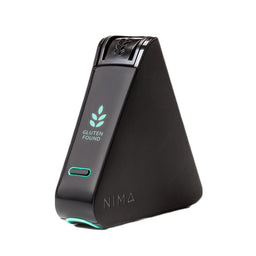
NIMA adds another layer of information for high-risk moments such as restaurants and travel by detecting trace gluten that labels may not reflect.
Why Celiac Disease Requires a Strict Gluten-Free Diet
Celiac disease is an autoimmune condition, not a preference or a sensitivity. It presents with more than 200 known symptoms, which helps explain why diagnosis often takes six to ten years. In people with celiac disease, consuming gluten triggers an abnormal immune system reaction that damages the small intestine.
There are no FDA-approved treatments. Strict, lifelong avoidance of gluten is the only effective management. The daily work of managing a serious autoimmune disease falls on the individual, at every meal, for life.
Non-celiac gluten sensitivity is a separate, formal diagnosis given to people who test negative for celiac disease but experience similar symptoms. It affects more people than celiac disease itself. The day-to-day challenges overlap, and both diagnoses require careful label reading and cross-contact prevention.
People already diagnosed with a gluten-related disorder need to avoid gluten completely. Clinicians should guide any questions about testing, reintroduction, or diagnosis because those decisions depend on your specific medical picture.
Gluten Sources to Avoid and Naturally Gluten-Free Foods
The three primary gluten sources are wheat, barley, and rye. Triticale (a wheat-rye hybrid) and malt (derived from barley) also contain gluten.
Gluten often acts as a thickener, binder, or flavor carrier rather than an obvious ingredient. Hidden sources include modified food starch, malt flavoring, preservatives, and stabilizers. Other frequent sources include soy sauce, gravies, dressings, soups, processed meats, malt extract, wheat starch, and hydrolyzed wheat protein. Canned soups, sour cream, and cold cuts can also contain gluten in ways people do not expect.
Naturally gluten-free foods include fresh produce, plain proteins, dairy without fillers or additives, legumes, and gluten-free whole grains. Avoiding gluten still leaves a full whole-grain category that includes rice, corn, quinoa, buckwheat, millet, amaranth, sorghum, and potatoes.
Oats deserve special attention. They are naturally gluten-free but are often contaminated with gluten-containing grains during growing and processing, so only certified gluten-free oats are appropriate. A small number of people with celiac disease may also react to avenin, the oat-specific protein. Introduce oats with your care team’s guidance, usually after symptoms are well controlled.
Restaurant meals require attention to both ingredients and handling. A dish made with naturally gluten-free ingredients can still be cross-contacted during cooking, so ask about preparation for house-made and packaged sauces alike.
How to Read a US Gluten-Free Label
Start with the ingredient line, not just the front of the package. In the US, wheat must be declared as a major allergen. Barley and rye are not covered by the same allergen law, so they can appear under names like malt extract, malt flavoring, or natural flavoring, which requires research and judgment.
Under FDA rules, a food bearing a gluten-free claim must contain less than 20 parts per million (ppm) of gluten in the finished food. The manufacturer self-reports that figure. The FDA recommends that restaurant gluten-free claims match its definition. That recommendation is separate from the FDA’s packaged-food regulation, which applies to labeled products.
“Wheat-free” and “gluten-free” are not interchangeable. A product can be wheat-free and still contain barley malt, which contains gluten.
Reducing Cross-Contact in a Real Kitchen
Cross-contact occurs when gluten from a gluten-containing food or surface transfers to a gluten-free food, making it unsafe for people with celiac disease. This explains how a food can meet labeling rules and still cause symptoms in a highly sensitive person.
High-risk situations include shared toasters, shared cutting boards, colanders used for wheat pasta, butter dishes and jam jars where a knife has touched bread, shared fryers, bulk bins, and shared condiments. These steps help reduce cross-contact at home:
Dedicate a separate toaster exclusively for gluten-free bread. Toasters do not need to be fully cleaned of gluten to be safe; a 2019 study in Gastroenterology found that toasting gluten-free bread in shared toasters immediately after gluten-containing bread produced gluten levels below 20 ppm, even with visible crumbs and no cleaning procedures attempted.
Use separate cutting boards, colanders, and wooden utensils for gluten-free food preparation.
Keep individual condiment jars (butter, jam, peanut butter) for gluten-free household members, or use squeeze bottles to avoid double-dipping.
Wash all surfaces, pots, and pans thoroughly with soap and water before preparing gluten-free food.
Avoid shared fryers for gluten-free items because oil carries gluten from previously fried foods.
Avoid bulk bins, where shared scoops transfer gluten between products.
Store gluten-free foods on higher shelves, above gluten-containing foods, to prevent crumbs from falling in.
Eating Out, Traveling, and Social Situations With Celiac Disease
Using the words “celiac disease” at restaurants signals a medical need. Ask about shared fryers and prep surfaces, whether the kitchen can prepare the dish safely, and what steps staff take to prevent cross-contact. These direct questions give clear, practical information.
If a restaurant says it cannot safely serve someone with celiac disease, treat that answer as final and choose another option.
Travel adds complexity. Menus may not translate cleanly, ingredients can vary by country, labeling rules differ from US standards, and hotel or airport food often offers limited choices. These situations are where labels, conversations, and research may feel stretched.
When a Gluten-Free Label Still Makes You Sick
Many people follow every step and still react to a food labeled gluten-free. This experience is common and reflects the limits of labeling rules, not a personal failure.
The FDA’s 20 ppm threshold is a labeling rule rather than a medical safety line. People vary in how little gluten triggers a reaction. A product can legally carry a gluten-free label and still contain trace gluten. A 2019 study in the American Journal of Gastroenterology found that 32% of foods labeled gluten-free in restaurants had detectable gluten, rising to 53% for pizza and 51% for pasta. This finding illustrates the gap between labeled status and actual content, though it does not describe every restaurant.
Most people managing celiac disease have never used portable gluten detection as an added data point. In a NIMA survey of more than 700 people, only 3% of respondents with celiac disease had ever tested their food.
How NIMA Gluten Sensors Work
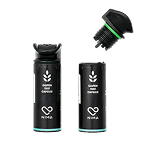
NIMA is a portable, consumer-use gluten detection sensor. You put a pea-sized portion of food into a single-use capsule, twist it shut, and drop it into the sensor. About three minutes later, the display shows either a smiley face or a “gluten found” symbol, so there is nothing to interpret by eye.
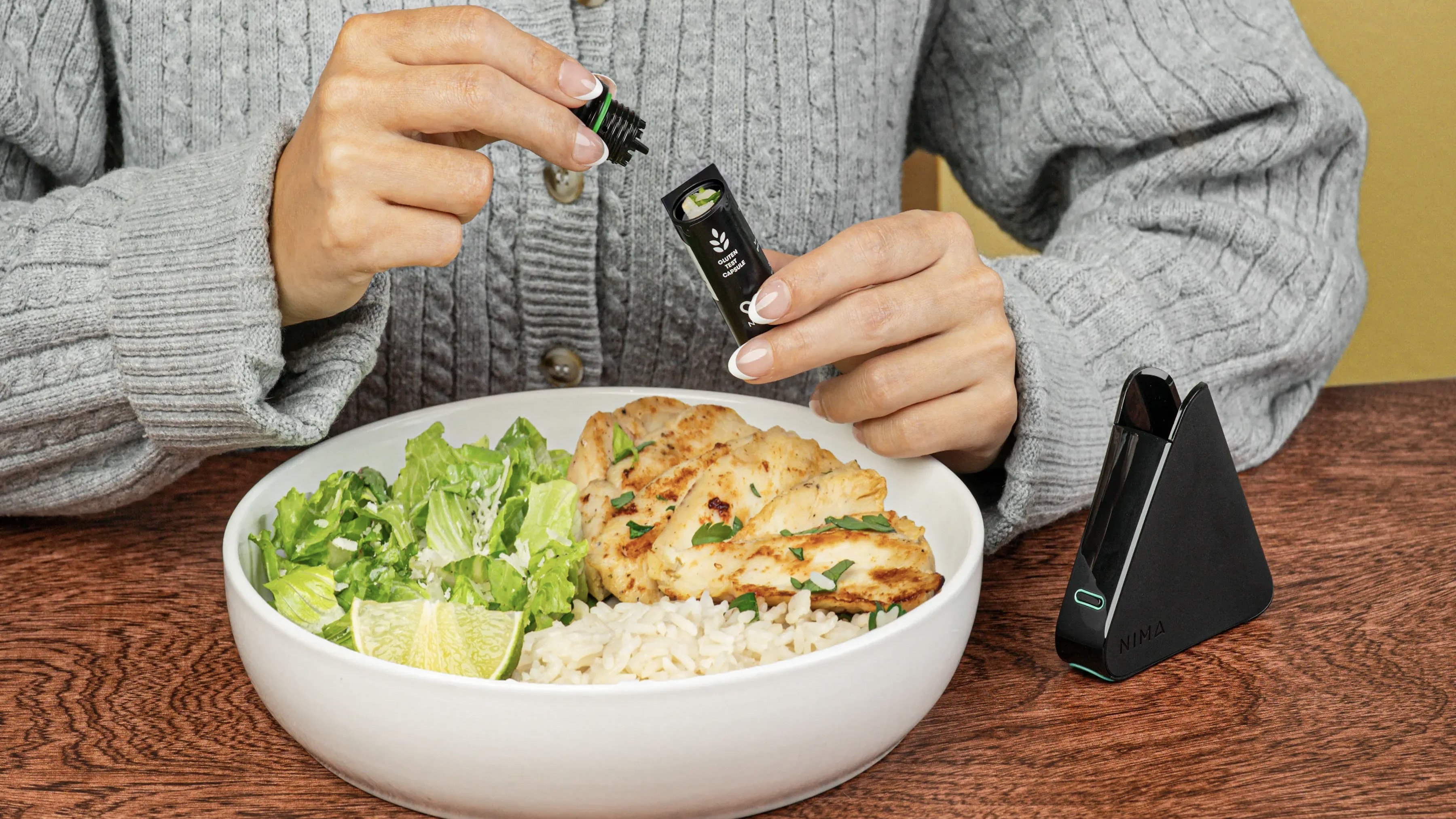
NIMA detects gluten from wheat, barley, and rye at a threshold twice as strict as the FDA’s 20 ppm labeling limit. That tighter threshold lets it flag trace gluten that a label may not reflect. The company helped create this category in 2013 and relaunched in January 2026 after a ground-up rebuild.
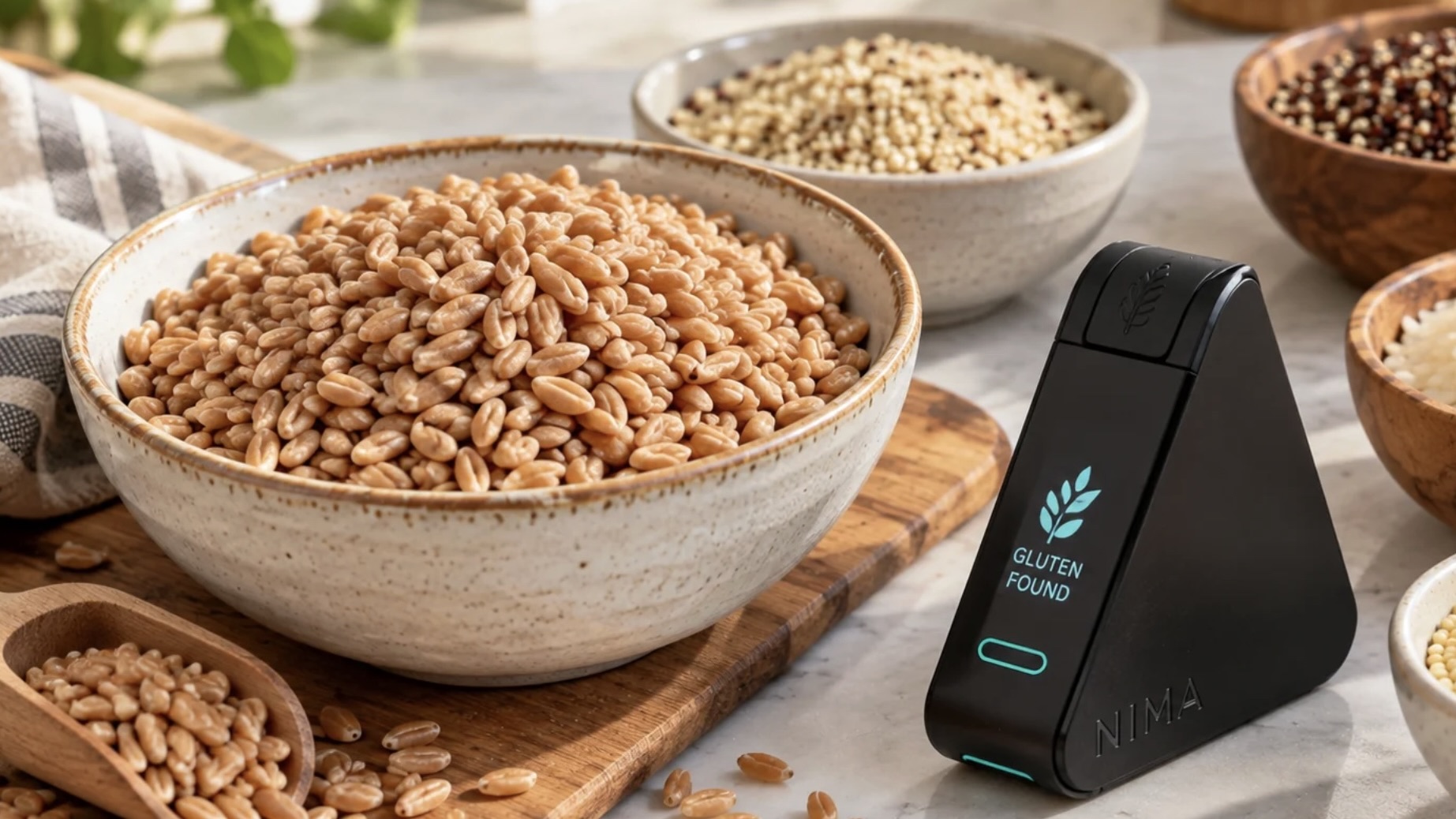
What NIMA’s Validation Studies Show
Two independent validation studies by BIA Diagnostics support NIMA’s performance. The October 2025 controlled lab study reported a 98.7% probability of detection at 10 ppm across four food matrices.
The May 2026 real-world study tested 20 restaurant meals against the AOAC 2012.01 ELISA reference method and reported 99% agreement across 100 samples. That figure measures agreement with the reference method in real-world restaurant meals. The 98.7% probability of detection figure comes from the controlled lab study and reflects a different performance measure.
What NIMA Can and Cannot Detect
NIMA has defined limitations that should sit alongside any testing advice. It cannot reliably test fermented or hydrolyzed foods or alcoholic beverages, including soy sauce, malt vinegar, and beer. It also cannot test non-food items such as medications, supplements, vitamins, gum, or cosmetics.
NIMA does not detect fructans or ATIs, diagnose non-celiac gluten sensitivity, or establish personal tolerance. These limits relate to its sandwich assay format, and some laboratory antibody methods differ in their capabilities.
Each result reflects only the portion tested. A smiley face means gluten was not detected above the validated threshold in that portion. The result adds information but does not, by itself, decide whether a meal is safe to eat. NIMA does not display numeric ppm results; laboratories provide those readings.
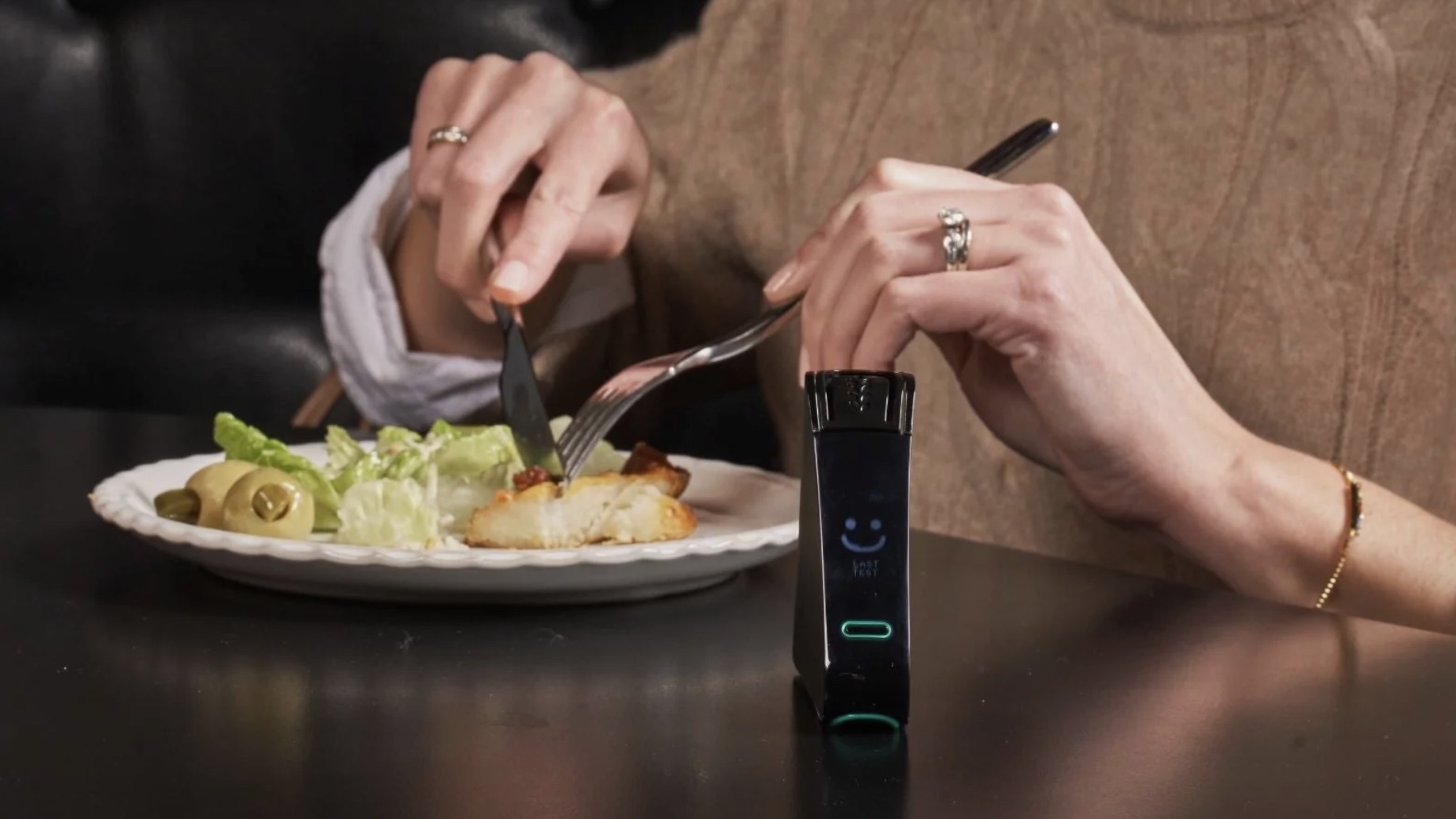
Gluten is not spread evenly across a plate, so where you sample matters. Start with the highest-risk part of the dish, such as the coating on fried items, sauces, the bottom of a pizza, or char marks on grilled protein. Use the teeth on the capsule cap to dab from several areas of the plate. If a meal has distinct components you want to evaluate individually, each one requires its own test.
NIMA tests food for gluten as a consumer wellness device. It is not a medical or diagnostic device and is not intended to diagnose, treat, or prevent any disease.
When to Add a Detection Tool to Your Routine
NIMA’s guidance suggests adding a detection tool after roughly four to eight weeks of active dietary adjustment, once label literacy and cross-contact awareness feel solid. The sensor is designed for moments of genuine uncertainty such as restaurants, travel, social events, and unfamiliar kitchens rather than for every meal.

NIMA products are generally eligible for HSA/FSA reimbursement with a Letter of Medical Necessity. Visit NIMA’s HSA/FSA page for current details, keeping in mind that final eligibility rests with the plan administrator. For current pricing, subscription options, returns, and warranty information, see NIMA’s product pages.
Manual strip testers and NIMA both test food for gluten, yet they differ in how much of the process depends on your own handling. The table below highlights those differences.
Feature |
Manual Strip Testers |
NIMA |
|---|---|---|
Sample prep |
Manual extraction and buffer mixing |
Automated extraction inside the capsule |
Result reading |
Visual strip reading |
Optical camera reading |
Detection threshold |
Varies by product |
10 ppm across wheat, barley, and rye |
Output format |
Results can be subjective |
Binary result display |
Check NIMA for High-Risk Meals
The First 90 Days: A Step-by-Step Roadmap
The first 90 days feel more manageable when you follow a sequence instead of a long list. This roadmap offers one practical way to structure that time.
Weeks 1–2: Clear the kitchen of shared gluten sources. Learn the three primary gluten grains, wheat, barley, and rye, and their common aliases. Set up dedicated utensils and surfaces.
Weeks 3–4: Build label literacy. Practice reading ingredient lines instead of relying on front-of-package claims. Identify a handful of reliable, certified gluten-free staples for daily meals.
Weeks 5–8: Practice restaurants and social situations with a simple script. Use the words “celiac disease.” Ask about shared fryers and prep surfaces. Build comfort with these conversations.
Weeks 9–12: If it fits your needs and your dietary adjustment feels established, consider adding a detection tool for high-risk moments such as travel, unfamiliar restaurants, and social events where you have less control.
Follow-up timing with your care team should be consistent and tailored to you. Your clinician will determine the right schedule based on your specific situation. Follow-up may include blood tests to check antibody levels and, in some cases, additional assessment of small intestine healing.
Those visits also matter because damage from gluten before diagnosis can leave nutrient levels low. Nutrient deficiencies are common at diagnosis. Iron deficiency anemia is present in approximately one-third of adults with celiac disease at diagnosis; vitamin B12 deficiency occurs in 20% of patients, vitamin D deficiency in 19%, and folate deficiency in 27%. Calcium and fiber often run low as well, so ask your clinician about testing and follow-up instead of self-managing supplements.
Frequently Asked Questions About Starting a Gluten-Free Diet
What Is a Gluten-Free Diet for Celiac Disease?
A gluten-free diet for celiac disease means strict, lifelong elimination of gluten, the protein found in wheat, barley, and rye. This approach is the only effective management for celiac disease, an autoimmune condition with no FDA-approved treatment. Symptoms often begin to improve within days to weeks of starting the diet, though full intestinal healing takes longer. This is an average; symptoms and the full healing timeline varies by individual.
What Foods Are Surprisingly Not Gluten-Free?
Common examples include soy sauce, malt vinegar, some salad dressings, some processed meats, canned soups, and products containing malt extract or wheat starch as a thickener or flavor carrier. Medications and supplements can also contain gluten, so ask your pharmacist to verify ingredients. Oats are naturally gluten-free but are frequently cross-contacted during growing and processing, so certified gluten-free oats are the appropriate choice.
What Can I Eat for Breakfast With Celiac Disease?
Many familiar options still work. Eggs, plain yogurt without fillers or additives, certified gluten-free oats introduced with your care team’s guidance, fresh fruit, and gluten-free whole grains like quinoa or rice all fit well. Avoiding gluten still leaves a full whole-grain category that is nutritionally valuable and widely available.
What Does a Gluten-Free Label Actually Mean in the US?
As covered in How to Read a US Gluten-Free Label, the FDA’s 20 ppm rule sets a labeling standard rather than a medical safety line. The same distinction between packaged-food regulation and restaurant claims applies here. A third-party certified gluten-free seal, such as GFCO, adds independent verification for enrolled products.
How Do I Prevent Cross-Contact in a Shared Kitchen?
The seven steps in Reducing Cross-Contact in a Real Kitchen cover this in detail. In a shared kitchen, the two most influential changes are using dedicated equipment such as toasters and cutting boards and keeping separate condiments or squeeze bottles to avoid double-dipping.
What Should I Do When a Gluten-Free Labeled Food Still Makes Me Sick?
Start by talking with your clinician. As noted earlier, the FDA’s 20 ppm threshold is a labeling rule, and people differ in how little gluten causes symptoms. A product can meet labeling rules and still contain trace gluten. Some people choose to use a portable gluten detection sensor such as NIMA to gain an objective data point about the food itself, remembering that a result reflects only the portion tested and serves as added information rather than a final decision.
Can NIMA Test Soy Sauce or Beer?
NIMA cannot reliably test fermented and hydrolyzed foods or alcoholic beverages. This group includes soy sauce, malt vinegar, malt extract, and beer. For these categories, rely on certified gluten-free products tested through laboratory methods and review ingredient labels carefully.
The Goal Is to Expand Your Options
The gluten-free diet for celiac disease is a skill you build over time. The goal is to expand what you can do, including more places you can go, more meals you can share, and more invitations you can accept.
You can learn to read a label with confidence, recognize wheat, barley, and rye in an ingredient list, and understand what a gluten-free claim does and does not guarantee. You can set up a kitchen that supports you. You can walk into a restaurant with a clear script and focused questions. When the standard toolkit reaches its limits at a restaurant, on a trip, or at a social event, you can add one more layer of information.
That combination creates clarity at the moments that matter most and helps you move from “Can I eat this?” to “I’ve got this.”
Recent News

Gluten-Free Meals, Snacks, and a 7-Day Plan for Kids
Get kid-friendly gluten-free meal ideas, a 7-day plan, and cross-contact safety tips for home and school. NIMA helps your family eat with confidence.


