

How To Discreetly Test Catered Food For Gluten At Work

Key Takeaways For Work Events
Work events create hidden cross-contact risks that can turn a catered meal into a medical and professional dilemma for people with celiac disease or gluten sensitivity.
Written questions to the caterer about prep surfaces, utensils, fryers, and sauces give you the clearest picture of safety before you arrive.
Building a representative test plate and prioritizing high-risk areas like sauces and coatings makes your NIMA result more meaningful.
One capsule tests one combined sample, so you combine components you would eat together and run a separate test for each distinct dish you want to check.
The discreet three-minute testing sequence uses a sealed capsule and a pocket-sized sensor to deliver a clear smiley-face or gluten-found result, and you can step away to a private spot if you prefer.
NIMA provides one more piece of information before your first bite, so you can weigh it alongside your own sensitivity level and the plan you discussed with your care team.
Who This Guide Helps And Key Terms To Know
This guide supports adults living with celiac disease, non-celiac gluten sensitivity, or another medically necessary gluten-free diet who attend catered work events such as team lunches, off-sites, client dinners, and holiday parties.
Key terms used throughout:
Gluten: The proteins that naturally occur in wheat, barley, and rye, specifically gliadins, hordeins, and secalins, that trigger an immune response in people with celiac disease.
Cross-contact: When gluten-free food touches gluten through shared surfaces, utensils, or prep areas. A crumb matters. A shared serving spoon matters. Cross-contact (cross-contamination) refers to the transfer of gluten, an allergenic protein, from gluten-containing food or surfaces to gluten-free food, rendering it unsafe for people with celiac disease.
FDA gluten-free labeling threshold: Under FDA rules, a packaged food may be labeled gluten-free if it contains fewer than 20 ppm of gluten. The manufacturer self-reports that figure with no mandatory independent verification of how it was measured.
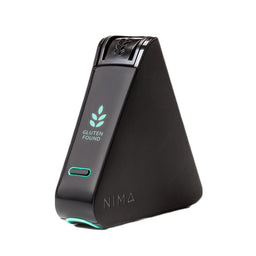
Detection threshold: The lowest level of gluten a test can reliably detect. The NIMA™ Gluten Sensor detects at 10 ppm, which is twice as strict as the FDA's 20 ppm gluten-free labeling limit.
The portion you tested: A NIMA result reflects only the portion tested, not the whole dish.
Catered food usually comes from kitchens you will never see, often with staff who want to help but still work on shared prep lines. Cross-contact risk spikes during in-office setup and buffet-style service, not just in the kitchen. Your own sensitivity level and a plan already discussed with your care team form the foundation for every decision that follows.
Before The Event: Questions That Shape Your Plan
Contact the caterer or event organizer several days in advance, in writing, so you have a clear record. This simple step changes what happens later at the buffet and during the event.
Ask these specific questions:
Are gluten-free items prepared on separate surfaces with separate utensils?
Is a dedicated fryer used for gluten-free items?
How are sauces and dressings handled, and are they prepared separately or ladled from shared containers?
Can staff identify which trays are gluten-free on the day of the event?
Will the gluten-free meal be packaged separately and labeled with your name before the buffet line opens?
A vague answer gives you useful information. “We have gluten-free options” does not describe cross-contact controls. A caterer who cannot explain a safe process signals what will actually happen on the day. Shared cutting boards, fryer oil, serving spoons, buffet tongs, sauce ladles, and last-minute garnishes are common risk points, and a thoughtful caterer can walk through each one.
If the caterer’s answers are strong, you start from a safer baseline. If they are weak, you arrive with your backup plan ready. Either way, once you are at the event, the next step stays the same: build a plate that represents what you actually intend to eat.
Building A Representative Test Plate At A Buffet
Move through the buffet line at the same pace as everyone else and take portions that match what you plan to eat. Your plate does not need to look any particular way.
Choose items that match what you truly plan to eat and focus on the highest-risk parts of each dish. Sauces, coatings on fried items, char marks on grilled protein, and the bottom of a pizza slice often carry the most risk, so they deserve priority when you sample for testing.
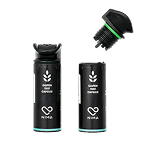
A result reflects only the portion you tested, so sampling technique directly affects what you learn. The teeth on the bottom of the NIMA capsule cap let you dab food from several areas of the plate before sealing, which increases the surface area you test. When you focus on the highest-risk part of the dish, that result carries the most meaning.
One capsule holds one combined sample. If you plan to eat several components together, such as a protein, a grain, and a vegetable from the same plate, dab each of them into the same capsule so the result reflects the meal as you would eat it. If a dish stands on its own and you want to know about that dish specifically, run a separate test for it. Separate tests also make sense when components come from different trays or carry different risk levels, because a combined sample cannot tell you which item caused a positive result.
At a buffet, shared serving utensils are a documented cross-contact risk. The spoon from one dish often ends up in another, and tongs move between items all service long. If you see a utensil that has clearly migrated, treat that dish as higher risk and prioritize it for testing or avoidance.
Step-By-Step: Discreet Gluten Testing At Work Events
Once you have your plate, the testing sequence takes about three minutes and only requires a private spot.
Slip away to a quiet, appropriate location, such as an empty office or a quiet hallway, and set your plate on a clean surface.
Decide what to sample. Combine components you would eat together into one capsule, and plan a separate capsule for any distinct dish you want to check on its own.
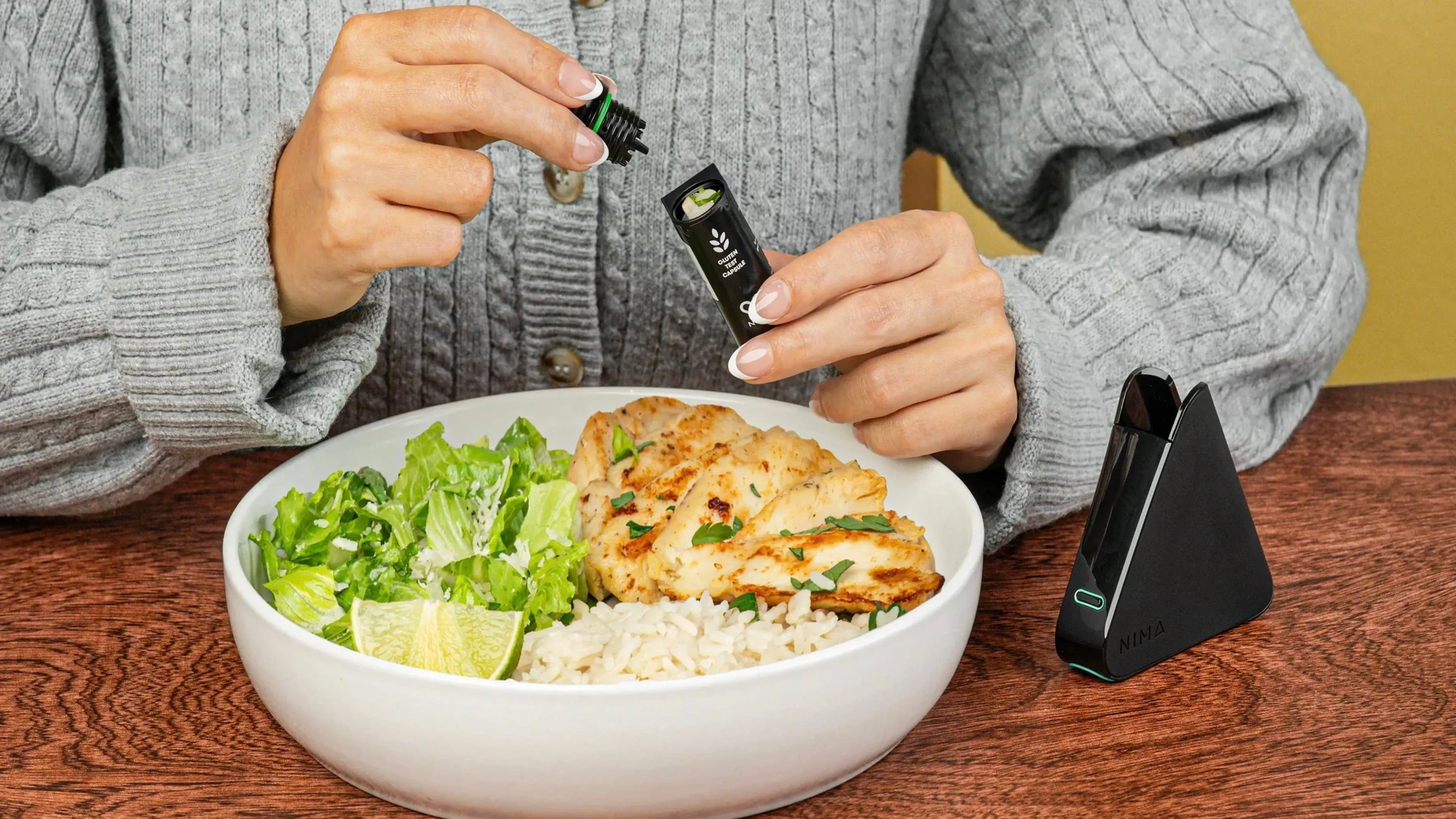
Load a pea-sized portion of the highest-risk item into a fresh capsule, using the cap teeth to dab from several spots on the plate.
Twist the cap until you hear the pop and the green ring disappears, then continue twisting until the cap sits flush, and keep it closed.
Insert the sealed capsule into the sensor until it clicks, keep the sensor flat and still on a surface, and press the button to begin.
Wait about three minutes for the progress bar to finish.
Read the result. A smiley face means no gluten was detected above 10 ppm in the tested portion. A “gluten found” symbol means gluten was detected, and the sensor can sometimes detect levels below 10 ppm. Then return to the room with your answer.
The sensor sleeps automatically when idle, which preserves battery life. The sealed capsule prevents cross-contact once you close it, and the sensor never touches food directly. The process stays quiet, contained, and easy to carry in a pocket or small bag.
What Portable Testing Can And Cannot Tell You
A NIMA result reflects only the portion you tested, not the entire dish. A smiley face means no gluten was detected above 10 ppm in that portion, and it does not claim the food is completely gluten-free or at 0 ppm. A “gluten found” symbol means gluten was detected, and the sensor can sometimes detect levels below 10 ppm.
An October 2025 controlled lab study by BIA Diagnostics found a 98.7% probability of detection at 10 ppm across four food matrices. A May 2026 real-world study by the same lab found 99% agreement between NIMA and the AOAC 2012.01 ELISA reference method across 100 restaurant-meal samples. Some meals were sold as gluten-free yet tested as high as 74 ppm. That gap matters because NIMA’s 10 ppm threshold is twice as strict as the FDA’s 20 ppm gluten-free labeling limit under 21 CFR 101.91, so NIMA can flag trace gluten that a label may legally miss.
Fermented and hydrolyzed foods and alcoholic beverages do not work reliably with NIMA. That group includes soy sauce, malt extract, beer, and malt vinegar. Non-food items such as gum, vitamins, supplements, and cosmetics also fall outside NIMA’s scope. For those categories, rely on certified gluten-free products tested through laboratory methods.
NIMA functions as a consumer wellness device and food-testing tool. It is not a medical or diagnostic device and is not FDA approved or FDA cleared.
The table below shows what each approach measures and how quickly it returns an answer, the two factors that matter most when you stand at a buffet with a plate in hand. Manual strip testers work by applying a food sample to a strip and reading a color change by eye, and their detection thresholds and result times vary by product, so check the manufacturer’s instructions for the specific kit you use.
Attribute |
Not Testing |
Manual Strip Testers |
NIMA |
|---|---|---|---|
Measures the actual plate |
No |
Yes |
Yes |
Detection threshold (ppm) |
Not measured |
Varies by product |
|
Who reads the result |
No test |
User by eye |
Optical camera and algorithm |
Result time (minutes) |
0 |
Varies by product |
About 3 |
Social Scripts For Common Work Scenarios
The hardest part of a catered work event often involves the social choreography, not the food itself. Simple, rehearsed lines make those moments easier.
For declining food without explanation: “I am all set, thank you, everything looks amazing.”
For deflecting “why are you not eating?”: “I had a big lunch, but I am glad I came.”
For handling a “gluten found” result mid-event: Quietly set the plate aside, swap in your backup, and share only what you feel comfortable sharing. You do not owe anyone a medical explanation in the middle of a work event.
For the colleague who genuinely wants to help: “I have celiac disease, so I have to be careful about cross-contact. I brought my own food just to be safe, but thank you.”
The goal in every scenario stays consistent. You protect your health, keep the interaction brief, and avoid spending social energy you did not plan to spend. A clear answer before your first bite makes that possible.
Your Backup Plan And When To Skip Testing
Keep a shelf-stable meal in your bag or desk drawer so you always have a safe fallback. A desk emergency kit of shelf-stable gluten-free foods such as protein bars, nut butter packets, gluten-free crackers, and a microwavable meal helps with surprise lunch meetings. When a “gluten found” result appears, you swap in your backup and move on without a scene or explanation.
Respect clear limits from the kitchen. When a caterer cannot describe a safe cross-contact protocol, you protect yourself by skipping that food. A negative NIMA result does not replace a kitchen’s own warning that it cannot safely serve someone with celiac disease. A well-run caterer will honestly say when it cannot safely accommodate a restriction, and you can take that at face value. NIMA adds information on top of that assessment instead of overruling it.
This concern shows up in real workplaces. In July 2026, Bon Appétit Management Company ran the first large-scale institutional pilot of NIMA across its dining portfolio, covering catered meals, campus events, and cafeteria settings similar to the ones you navigate at work. That pilot shows how NIMA can work in employer-controlled settings, but it does not measure how often gluten exposure happens across workplaces. A single pilot cannot establish workplace exposure rates, and the results reflect the specific sites and meals involved rather than all catered events.
Frequently Asked Questions
Is There A Tester To Check Food For Gluten?
Yes. Portable gluten sensors like NIMA let you test a pea-sized sample of food and see a clear result in about three minutes. NIMA detects gluten from wheat, barley, and rye down to 10 ppm, the threshold described earlier. The result is binary, a smiley face or a “gluten found” symbol, with no faint line to interpret. An integrated optical camera reads the test strip at pixel level inside a sealed capsule, which removes the user interpretation that manual strip testers require.
Are Gluten Food Tests Accurate?
Accuracy depends on the device and the studies behind it. As noted earlier, NIMA’s detection performance comes from two BIA Diagnostics studies, one controlled lab study and one real-world restaurant-meal study, with results of 98.7% and 99% respectively. A result still reflects only the portion tested, so you pair those numbers with careful sampling.
How Do I Test A Buffet Plate Without Anyone Noticing?
Build a plate with the foods you plan to eat, move through the line at the same pace as everyone else, and step away to a quiet, appropriate location such as an empty office or a quiet hallway if you want privacy. Set your plate on a clean surface before you begin. The NIMA sensor is pocket-sized, the capsule seals completely, and the process takes about three minutes. Use the teeth on the capsule cap to dab from several areas of the plate, focusing on sauces, dressings, coatings, and other higher-risk parts of each dish. One capsule covers one combined sample, so dab the components you would eat together into the same capsule and run a separate test for any dish you want to check on its own. Then return to the room with your answer.
What Do I Say When Coworkers Ask Why I Am Not Eating?
Keep your response light and closed: “I had a big lunch, but everything looks great.” You do not owe anyone a medical explanation. If a colleague genuinely wants to understand, a brief, matter-of-fact line works well: “I have celiac disease, so I have to be careful about cross-contact. I brought my own food just to be safe.” Most people move on quickly, and the short answer closes the conversation without drama.
What Should I Do If My Test Finds Gluten At A Work Event?
Quietly set the plate aside and swap in your backup meal. You do not need to announce it or explain it. If you want to let the organizer know privately after the event so they can adjust future orders, that can help them plan, but the choice stays yours. The result gave you the information you needed before your first bite, which is exactly what NIMA is designed to do.
How Do I Ask A Caterer About Gluten-Free Options In Advance?
Contact the caterer several days ahead, in writing, so there is a record. Ask about separate prep surfaces, dedicated utensils, dedicated fryers, how sauces and dressings are handled, and whether staff can identify gluten-free trays on the day. Ask whether your meal can be packaged separately and labeled with your name before the buffet line opens. A vague answer such as “we have gluten-free options” does not describe cross-contact controls, and a caterer who cannot outline a safe process tells you something useful about what will actually happen.
The Bottom Line: Clarity Before Your First Bite
Labels, certifications, and conversations with servers all forecast how safe a meal might be, but none of them measures the plate in front of you. At a catered work event, where you did not choose the kitchen, the caterer, or the serving setup, that gap feels widest.
NIMA is the portable gluten sensor that closes that gap. You load a pea-sized portion, seal the capsule, insert it into the sensor, and see a clear result in about three minutes, discreetly, in a hallway or an empty office, before you sit back down. A smiley face or a “gluten found” symbol gives you one more piece of information to weigh alongside your own sensitivity level and the plan you discussed with your care team.
You read the label and asked the organizer. You followed every standard step. NIMA adds a final layer of information about what is actually on the plate.
Recent News

Is Soy Sauce Gluten Free? What You Need To Know
Most soy sauce contains wheat. NIMA breaks down gluten-free options, tamari, label tips, and safe substitutes so you can eat confidently.


