

Gluten-Free Foods: What to Eat and What to Avoid
Key Takeaways
- A gluten-free diet is a medical treatment for celiac disease and gluten sensitivity that requires lifelong avoidance of wheat, barley, and rye.
- Many whole foods such as fruits, vegetables, fresh meats, plain dairy, and legumes are naturally gluten-free but can pick up gluten through cross-contact.
- Gluten-free grains and starches including rice, quinoa, corn, buckwheat, and certified gluten-free oats give you alternatives to wheat-based products.
- Hidden gluten often appears in processed foods such as soy sauce, marinades, deli meats, and malt-containing items, so careful label reading matters every time.
- NIMA can add a layer of safety by testing actual food for gluten during higher-risk situations such as restaurant meals, travel, and catered events.
Naturally Gluten-Free Foods You Can Build Meals Around
Many whole foods are naturally free of gluten and form the base of most gluten-free meals. Harvard Health notes that you do not need to rely only on specialty gluten-free products, because everyday foods cover most needs.
- Fruits and vegetables: All fresh, plain fruits and vegetables are naturally gluten-free.
- Fresh meats, poultry, fish, and eggs: Unprocessed, unmarinated proteins contain no gluten.
- Plain dairy: Milk, natural cheese, and most plain yogurt are naturally gluten-free. Some flavored or reduced-fat dairy products may contain added thickeners, so check the label.
- Legumes, beans, and lentils: Naturally gluten-free in their whole form, though dried varieties may carry cross-contact risk from shared growing, harvesting, or processing equipment.
- Nuts and seeds: Plain, unprocessed nuts and seeds are naturally gluten-free. Those sold from bulk bins may carry cross-contact risk and are safer to avoid.
- Oils and butter: Pure oils and plain butter are naturally gluten-free. Flavored, blended, or additive-containing versions may include gluten.
These foods start out gluten-free. Any of them can become unsafe through cross-contact during growing, processing, or preparation. A plain chicken breast is usually safe. A marinated or pre-seasoned one always needs a label check.
Gluten-Free Grains and Starches to Use Instead of Wheat
Gluten-free eating still includes a full grain group. A range of gluten-free whole grains provides fiber, B vitamins, and other nutrients. The Canadian Digestive Health Foundation lists the following as safe gluten-free grains and starches:
- Rice (brown, white, wild, black, and red)
- Corn and cornmeal
- Quinoa
- Buckwheat
- Millet
- Sorghum
- Teff
- Amaranth
- Certified gluten-free oats
- Potatoes and sweet potatoes
- Tapioca, arrowroot, and cornstarch
Oats deserve a specific note. Oats do not naturally contain the same gluten proteins found in wheat, barley, and rye. They are frequently grown or processed alongside those grains, which creates many opportunities for cross-contact. People with celiac disease should choose oats labeled gluten-free, because conventional oats carry cross-contact risk.
A small number of people with celiac disease may also react to avenin, the protein naturally present in oats. Anyone who continues to have symptoms after adding certified gluten-free oats should discuss this with a clinician or registered dietitian.
Hidden Gluten in Processed Foods to Watch For
The most common sources of accidental gluten exposure are the sauces, seasonings, and processed foods that seem safe at first glance, not bread or pasta. Read the ingredient line every time, because formulations can change without notice.
Common hidden-gluten culprits include:
- Soy sauce and teriyaki sauce: Traditional soy sauce is brewed with wheat and often causes surprise gluten exposure in restaurant and home cooking.
- Marinades, gravies, and salad dressings: Frequently thickened or flavored with wheat-based ingredients.
- Soups and broths: Many canned soups and soup mixes contain gluten from ingredients such as wheat flour, wheat starch, barley malt, or malt extract, which are often used as thickeners or flavorings.
- Deli meats and sausages: Processed meats including deli meats, jerky, sausages, and hot dogs may contain gluten in fillers or binders.
- Breaded or coated foods: Any coating, crust, or batter is a red flag without a label check.
- Seasoned snacks: Spice blends, flavored chips, and seasoning packets may contain starches or malt-based components.
- Malt-containing products: Malt extract, malt flavoring, and malt vinegar all derive from barley.
In the United States, wheat must appear as a major food allergen on packaged food labels. However, barley and rye are not covered by the same allergen declaration requirement. Ingredients such as malt extract, malt flavoring, hydrolyzed wheat protein, and wheat starch require research rather than a quick allergen scan. A product with no wheat in the allergen statement can still contain gluten from barley or rye.
How to Read a Gluten-Free Label With Confidence
Clear label reading gives you one of the most practical tools for managing this diet.
Under the FDA's gluten-free labeling rule, a packaged food may carry a gluten-free claim if any unavoidable gluten in the finished product is below 20 parts per million (ppm), equivalent to 20 milligrams of gluten per kilogram of food. The manufacturer self-reports compliance with this standard. A gluten-free label communicates that the finished product meets the legal threshold. It does not disclose whether the product was made on dedicated equipment, shared production lines, or with independently tested ingredients.
"Labeled gluten-free" and "certified gluten-free" describe different levels of verification. Third-party certification programs shift verification to an independent body. For example, the Gluten-Free Certification Organization (GFCO) tests to 10 ppm and requires facility audits, while other programs test to 20 ppm. Certification covers only the products enrolled in a given program.
For restaurant menus, the FDA recommends that gluten-free claims be consistent with its definition. This is a recommendation rather than the same binding regulation that governs packaged foods. A restaurant's gluten-free label does not carry the same legal weight as a packaged-food claim.
Practical label habits to build from the start:
- Read the full ingredient list every time, not just the allergen statement.
- Look for barley, rye, malt, malt extract, malt flavoring, and brewer's yeast, which will not appear in a wheat allergen statement.
- Check for wheat starch, hydrolyzed wheat protein, and modified food starch, which may indicate a wheat-derived ingredient.
- Recheck familiar products regularly, because formulations change without notice.
Managing Non-Celiac Gluten Sensitivity: A Step-By-Step Guide covers label reading in more depth for people navigating a diagnosis without a confirmed celiac result. Labels only apply to packaged foods. The next challenge appears when a correctly chosen food reaches a kitchen you cannot see.
The Safety Spectrum for Everyday Meals
A simple safety spectrum helps you see where risk increases as food moves from your kitchen to other settings. Even a correctly chosen food can become unsafe by the time it reaches the plate.
- Naturally gluten-free: Fresh fruits, vegetables, plain meats, eggs, plain dairy, and whole gluten-free grains. These are safe in their unprocessed form but vulnerable to cross-contact during preparation.
- Requires a label check: Packaged foods, sauces, dressings, processed meats, oats, and any food with multiple ingredients. A gluten-free label or certification should appear before you eat.
- High cross-contact risk: Restaurant meals, shared fryers, catered food, and anything prepared in a kitchen you cannot observe. Cross-contact is the main reason a gluten-free meal in these settings may not be safe.
Cross-contact occurs when a gluten-free food touches a gluten-containing ingredient or surface. Shared slicers, counters, utensils, gloves, and cutting boards can all introduce gluten into otherwise safe food. A 2019 study published in the American Journal of Gastroenterology found detectable gluten in just under one-third of restaurant foods advertised as gluten-free, with pizza and pasta showing the highest rates.
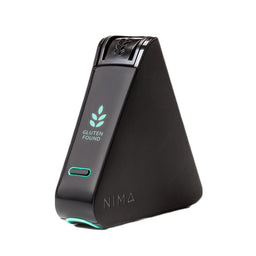
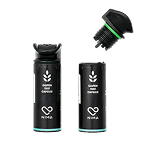
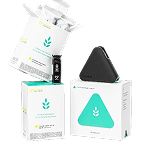
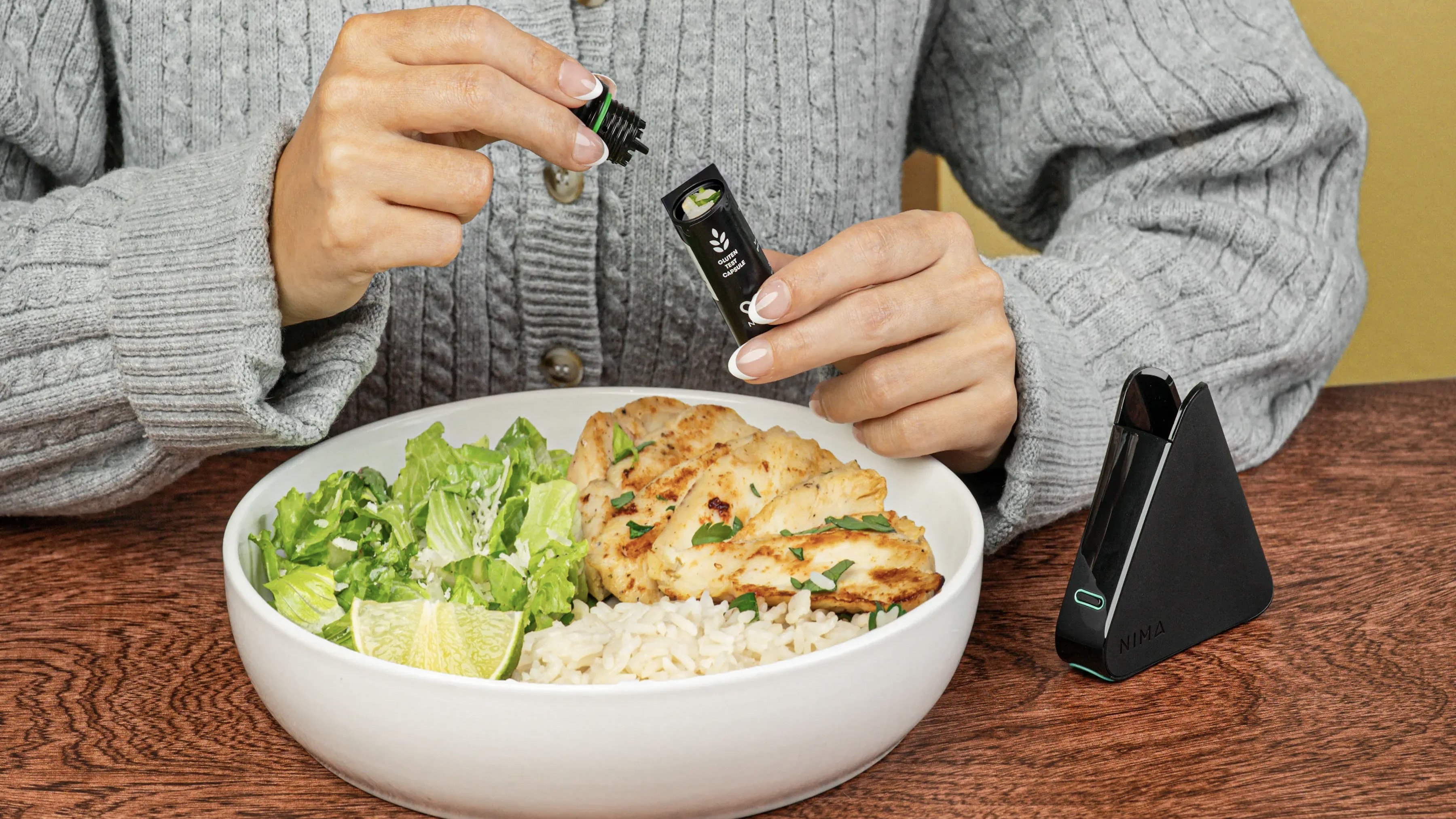
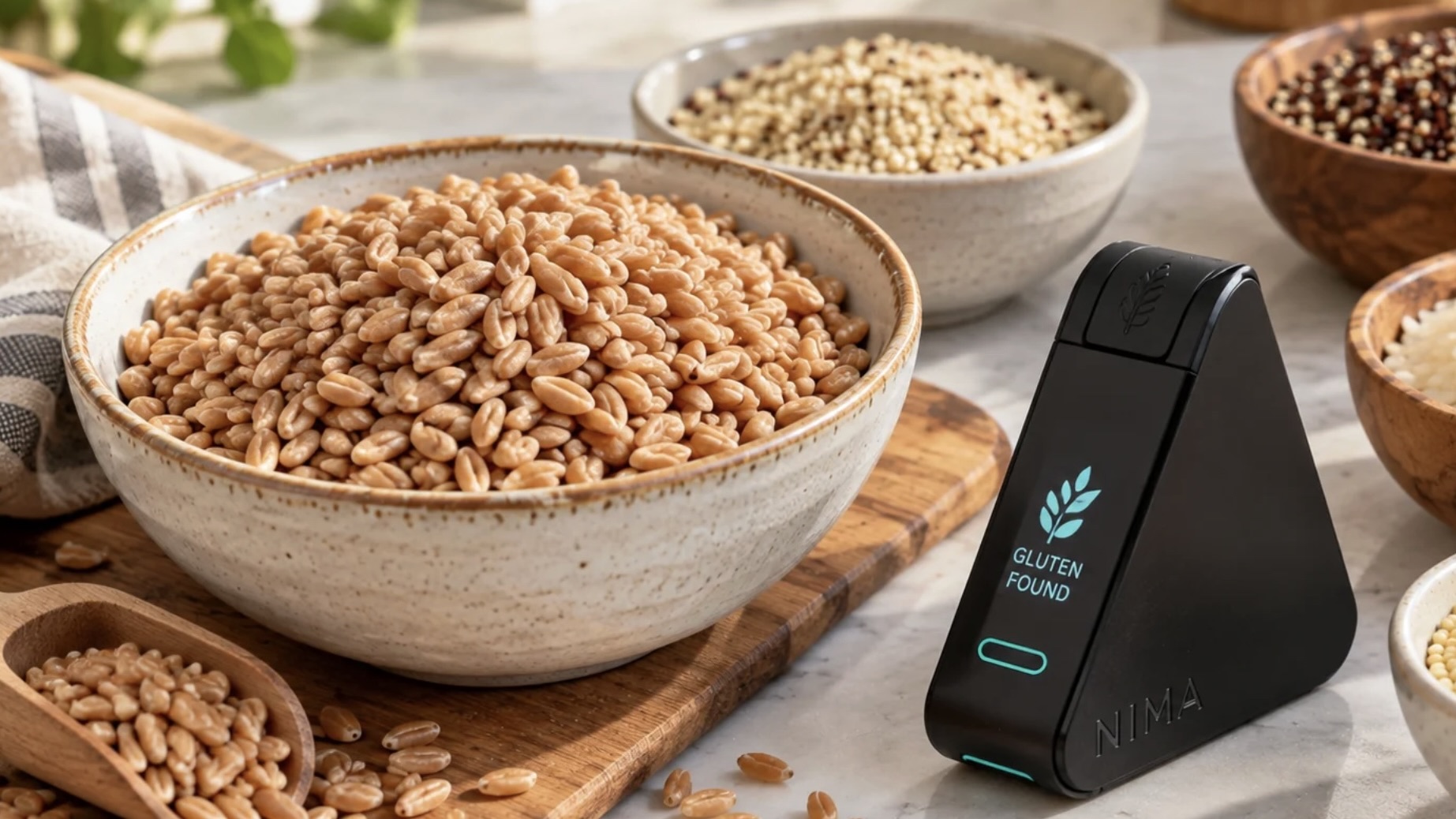
NIMA fits into this toolkit as a way to test the food itself. NIMA is a portable gluten detection sensor. You load a pea-sized portion of food into a single-use capsule, insert it into the sensor, and see a clear result in about three minutes. NIMA detects gluten from wheat, barley, and rye at a validated threshold that is stricter than the FDA's 20 ppm labeling limit. A smiley face means no gluten was detected above that threshold in the portion tested. A "gluten found" symbol means gluten was detected. The result reflects only the portion tested and adds information to your decision-making.
Independent studies have evaluated how NIMA performs in real-world and laboratory settings. In an independent May 2026 real-world study by BIA Diagnostics, NIMA showed 99% agreement with the AOAC 2012.01 ELISA reference method across 100 samples from 20 restaurant meals. That figure measures agreement between NIMA and the laboratory reference method in a restaurant context. A separate controlled lab study by BIA Diagnostics in October 2025 found a 98.7% probability of detection at 10 ppm across 228 samples. This probability of detection underpins the performance figures cited in NIMA's materials.
NIMA reduces interpretation errors by automating sample extraction, mixing, and result reading through an integrated optical camera. Sampling errors can still occur, and the result always reflects only the portion tested.
"I can't trust something that is labeled gluten free. I use the NIMA sensor to test labels I can't trust." — Lorin S., verified buyer
Test High-Risk Meals With NIMA
Eating Out, Traveling, and Social Meals
Restaurants, travel, and social gatherings sit at the higher end of the safety spectrum. Labels and ingredient lists help less when you cannot see the kitchen.

Practical steps for eating out:
- Start by checking the restaurant's procedures before you go, because many post allergen information online.
- Once you arrive, ask specific questions: Is there a dedicated gluten-free fryer? Are prep surfaces and utensils kept separate? Is gluten-free pasta cooked in separate water?
- Respect any statement from a kitchen that it cannot safely serve someone with celiac disease. That information takes precedence over any other assessment, and a NIMA result does not override a kitchen's own warning.
- Bring backup food when attending events where safe options are uncertain.
When you use NIMA to test a restaurant meal, choose a clean, stable surface such as a table or countertop and test before eating. For a meal with multiple components, test the highest-risk element first, such as the sauce, the coating on a fried item, or any element that contacted a shared surface. Use the teeth on the capsule cap to sample from several areas of the plate before sealing. If components are prepared differently, such as a protein and a sauce, test them separately because cross-contact risk can vary across the plate.

Some categories have important testing limitations. Fermented and hydrolyzed foods and alcoholic beverages cannot be reliably tested with NIMA. This group includes soy sauce, malt vinegar, beer, and malt extract. For these items, rely on ingredient labels and certified gluten-free products instead of sensor testing. Some laboratory antibody methods differ from NIMA's sandwich assay in how they handle fermented foods. This limitation is specific to NIMA's chemistry and does not automatically apply to every antibody-based test.
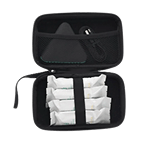
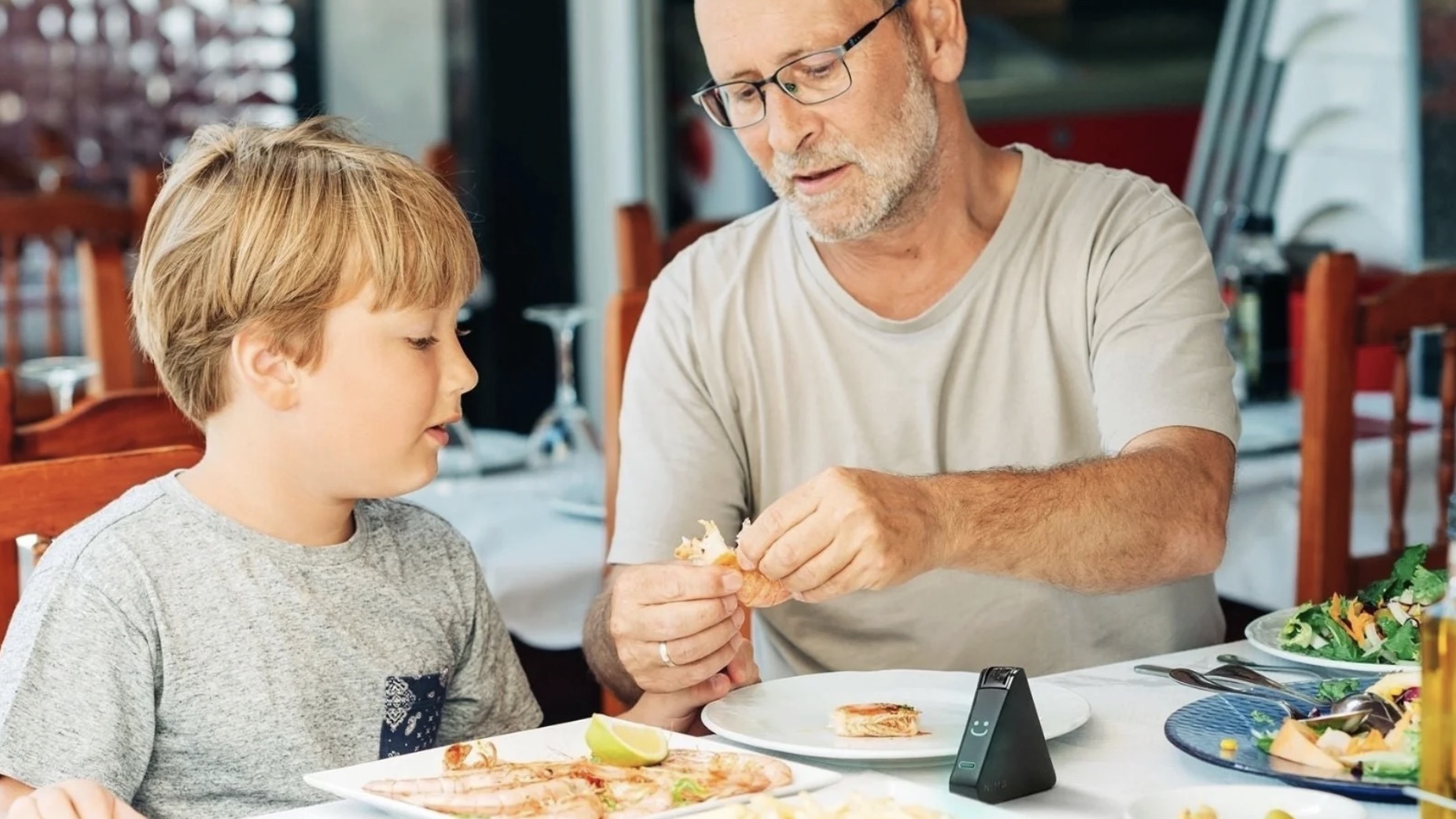
For travel, NIMA fits in a bag, charges over USB-C, and runs roughly 30 to 40 tests per charge. How To Discreetly Test Catered Food For Gluten At Work covers practical approaches for workplace and catered settings.
A Simple Gluten-Free Meal Idea
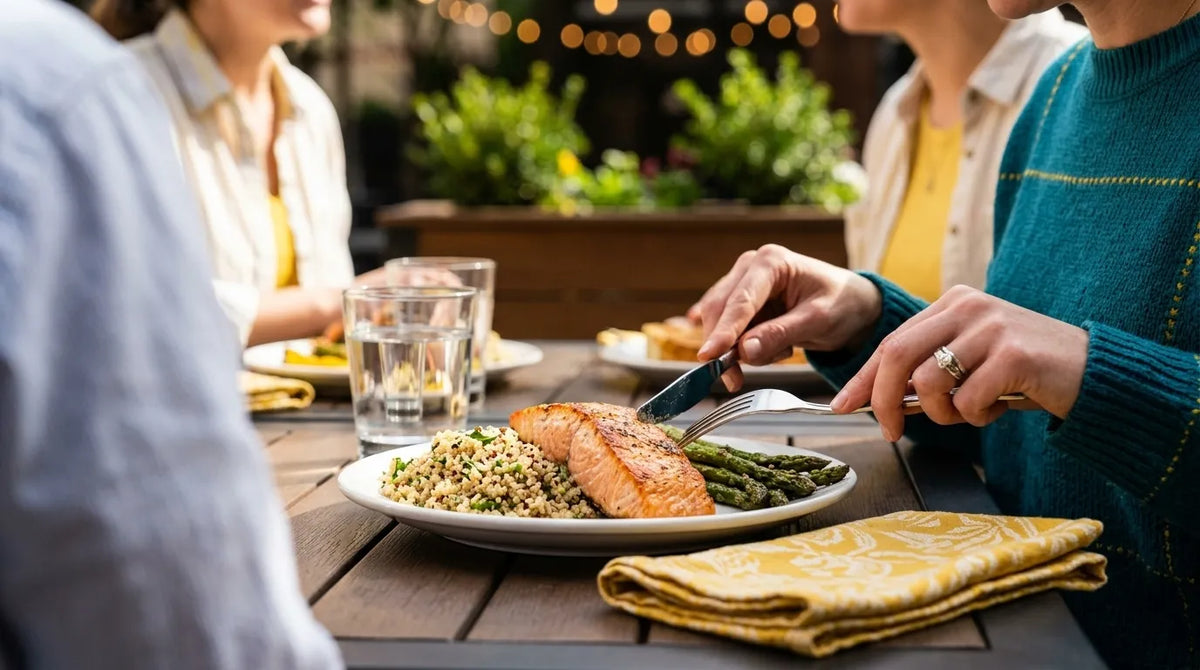
Building a gluten-free meal from naturally safe ingredients becomes easier once you use this framework. A quinoa bowl with grilled chicken, roasted vegetables, and a homemade dressing of olive oil, lemon juice, and fresh herbs uses foods from the naturally gluten-free category and keeps preparation straightforward.
A few notes on this example:
- Quinoa is a naturally gluten-free whole grain. Choose a brand labeled gluten-free if cross-contact during processing is a concern.
- Plain grilled chicken is usually safe. Marinated chicken requires a label check on every ingredient in the marinade.
- A homemade dressing made from whole ingredients is easy to verify. Evaluate ingredients and handling for both house-made and packaged sauces, because either can be safe when prepared carefully.
- Roasted vegetables are naturally gluten-free. Check any seasoning blends used, as spice mixes may contain gluten-containing starches or malt-based ingredients.
The same plate-building logic applies anywhere. Aim for half vegetables, a quarter lean protein, a quarter gluten-free grain or starchy vegetable, and a dressing or sauce whose ingredients you can verify.
Frequently Asked Questions
What Are Some Examples of Gluten-Free Carbs?
Gluten-free carbohydrates include rice, quinoa, corn, potatoes, sweet potatoes, buckwheat, millet, sorghum, teff, amaranth, and certified gluten-free oats. Tapioca, arrowroot, and cornstarch are also gluten-free starches useful for cooking and baking. These foods provide energy and, in the case of whole grains, fiber and micronutrients, so gluten-free eating still includes a full carbohydrate group.
Is Oatmeal Gluten-Free?
Oats are naturally gluten-free but are frequently grown, harvested, transported, or processed alongside wheat, barley, and rye, which creates cross-contact risk. People with celiac disease should choose oats labeled gluten-free, because conventional oats carry cross-contact risk. A small number of people with celiac disease may also react to avenin, the protein naturally present in oats, even when cross-contact is not the issue. Anyone who experiences symptoms after adding certified gluten-free oats should discuss this with their clinician or registered dietitian.
How Do You Know if a Food Is Truly Gluten-Free?
No single tool provides a complete answer. Reading the ingredient list, looking for a certified gluten-free seal, and asking about preparation practices in restaurants all play a role. Each of these steps offers a forecast about food you have not yet eaten. A portable gluten detection sensor like NIMA adds an objective data point by testing the actual food on the plate. A result showing no gluten detected means gluten was not found above the detection threshold in the portion tested. It does not guarantee the entire plate is free of gluten. For certified gluten-free packaged foods you already trust, routine testing is generally not necessary. Testing is most useful at higher-risk moments such as restaurant meals, travel, catered events, and unfamiliar kitchens.
Conclusion and Practical Next Steps
A gluten-free diet starts with a clear list of foods to eat, including naturally gluten-free whole foods, safe grains, and plain proteins. It then builds on that base with careful label reading and an understanding of where gluten appears in processed and restaurant foods. The three-level safety spectrum, with naturally gluten-free, requires a label check, and high cross-contact risk, gives a practical structure for every meal decision.
Next steps usually work best with support. Partner with a clinician or registered dietitian on any changes to your diet, especially around elimination or reintroduction of foods. Follow-up timing and dietary adjustments are most effective when individualized with a provider who knows your history. Use NIMA during higher-risk moments such as restaurant meals, travel, and social gatherings, when labels and conversations with staff have given you as much information as they can.
"After years of avoiding restaurants, I'm finally saying yes again." — Janet M., verified buyer
Many people move from asking "Can I eat this?" to feeling "I've got this." The food lists, the safety spectrum, and a way to verify the actual plate work together to support that shift.
Read Next
Recent News

Gluten-Free Meals, Snacks, and a 7-Day Plan for Kids
Get kid-friendly gluten-free meal ideas, a 7-day plan, and cross-contact safety tips for home and school. NIMA helps your family eat with confidence.


