

How Accurate Are Gluten Sensors For Testing Food?

How NIMA Gluten Sensors Help You Read Your Plate
Gluten sensor accuracy depends on detection threshold, sample technique, and food matrix. Each factor shapes what a result actually means.
NIMA detects gluten at 10 ppm across wheat, barley, and rye, which is twice as strict as the FDA’s 20 ppm gluten-free labeling limit.
A pea-sized sample can still be meaningful when taken from high-risk areas and multiple spots on a plate, as shown by 99% agreement with lab reference methods in real-world restaurant testing.
Some foods cannot be reliably tested with any antibody-based method, including fermented, hydrolyzed, and alcoholic products. Others need modified technique such as dilution.
NIMA provides an objective data point at the table. It is a consumer wellness tool, not a medical device or diagnostic test.
What 10 Ppm Detection Means In Everyday Eating
A detection threshold is the lowest concentration of gluten a test can reliably identify, measured in parts per million (ppm). One ppm equals one milligram of a substance per kilogram of food. So NIMA's validated detection threshold of 10 ppm equals 10 milligrams of gluten per kilogram of food.
Under 21 CFR 101.91, the FDA requires that any unavoidable gluten in a food bearing a gluten-free claim stay below 20 ppm. A sensor set to 10 ppm detects at a threshold twice as strict as the FDA's labeling limit. A product can follow the law on gluten-free labeling and still contain trace gluten that NIMA will detect.
NIMA's 10 ppm threshold is validated across all three relevant gluten sources: wheat (gliadin), barley (hordein), and rye (secalin). The antibodies inside each capsule are designed to recognize protein fragments from all three grains.
A detection threshold does not equal 0 ppm, and it does not define a universal medical safety line. People vary in how little gluten triggers a reaction, and the 20 ppm gluten threshold was adopted following clinical challenge studies and risk assessments (Catassi et al. 2007) as a quantitative legal labeling threshold for gluten-free claims. Treat a sensor result as one objective data point among several when deciding whether to eat.
Why A Pea-Sized Sample Still Tells You Something
A pea-sized sample can feel too small to represent a whole plate, especially in a restaurant. The key is that a result reflects only the portion tested, so sampling technique becomes the other half of accuracy.
Gluten distribution in restaurant meals is often patchy instead of uniform. A study of French fries cooked in shared fryers found gluten in 9 of 20 orders by sandwich ELISA, with concentrations ranging from 7 to over 80 ppm. That pattern shows contamination varies from one order to the next. Where you sample matters as much as whether you sample.
Use this practical guidance when sampling a dish:
Start with the highest-risk part of the dish, such as char marks on grilled protein, the coating on fried items, the sauce, or the bottom of a pizza.
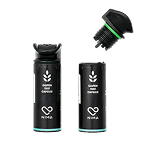
Use the teeth on the capsule cap to dab from several areas of the plate before sealing, which increases the surface area actually tested.
On a plate with multiple components, begin with the element most likely to have had contact with a gluten source during preparation.
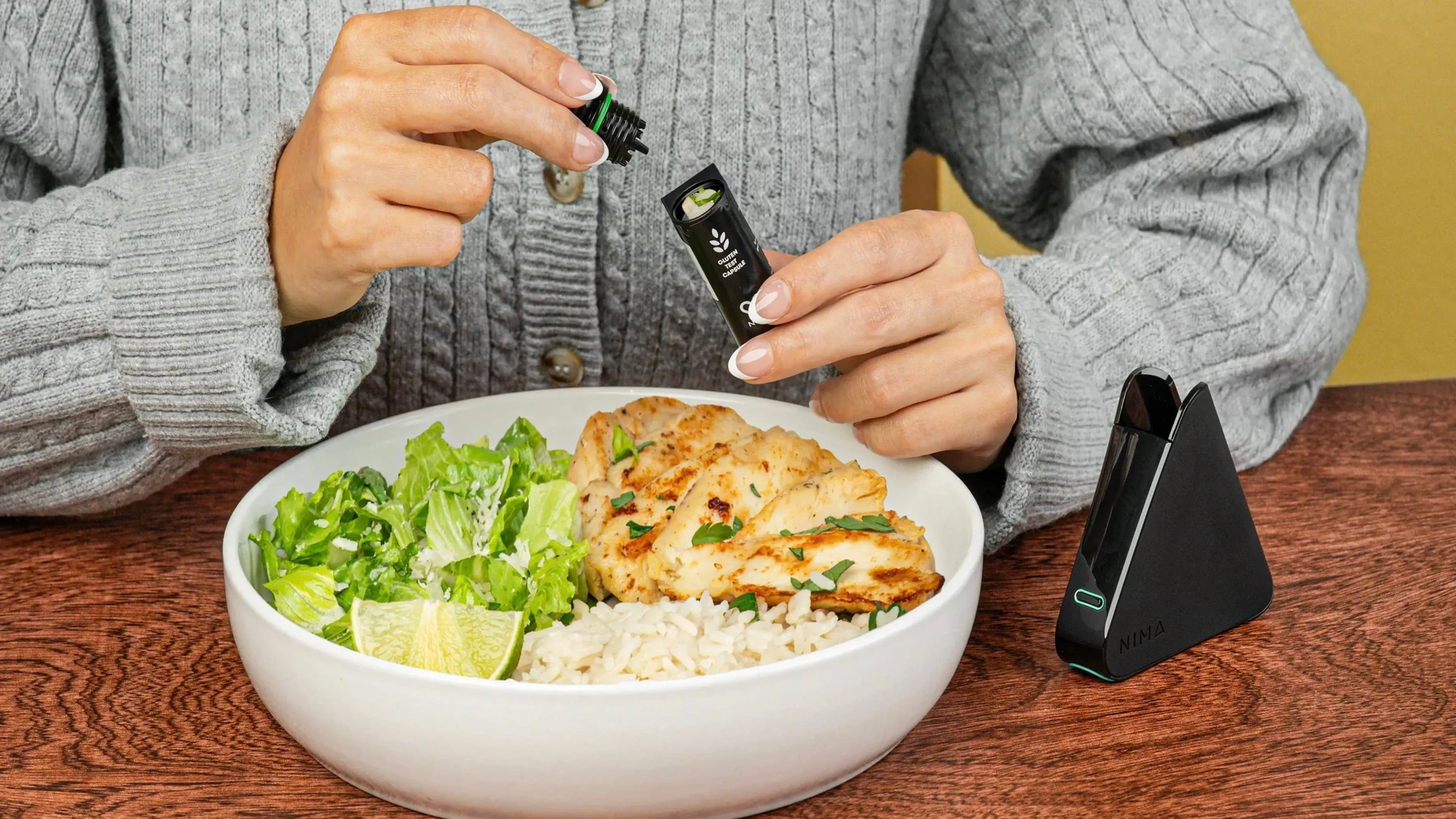
The May 2026 BIA Diagnostics real-world study tested this approach directly. Researchers ordered 20 restaurant meals, including 10 advertised as gluten-free and 10 standard gluten-containing meals across fried chicken, pasta, sandwiches, hamburgers, and pizza. Three discrete samples were taken from different parts of each meal, plus two samples of the homogenized whole meal, by each method. Across 100 samples per method, NIMA agreed with the AOAC 2012.01 gluten ELISA reference method 99% of the time (99 of 100 samples). That 99% figure measures agreement in real-world restaurant meal validation, not probability of detection.
The 1% disagreement is instructive. On one sandwich, both homogenate ELISA samples read below 1 ppm while one NIMA sample detected gluten. The report attributes this to a hot spot the ELISA sampling missed, because discrete testing of the same meal had already found 14.952 ppm. That result points to the value of discrete sampling for catching contamination that homogenization can dilute.
Foods NIMA Cannot Reliably Test
Some food categories cannot be reliably tested with NIMA. Others require modified technique to keep results meaningful.
Avoid Testing These Categories:
Fermented and hydrolyzed foods, and alcoholic beverages such as soy sauce, malt extract, beer, and malt vinegar. Fermentation and hydrolysis break gluten into smaller protein fragments that antibody-based tests are built to recognize by shape; when those fragments no longer contain two intact binding sites, sandwich-format assays cannot detect them. Alcohol disrupts the chemistry further. This limitation applies to NIMA's sandwich-format assay, and some laboratory antibody methods use formats that differ from it.
Non-food items such as gum, vitamins, supplements, and cosmetics, which fall outside supported use cases.
Use Modified Technique For These Foods:
Thick or sticky foods such as nut butters and hummus should be diluted 1:1 with water and tested in a smaller sample.
High-oil foods such as dressings and fried coatings should also be diluted 1:1 with water. Fat can interfere with even mixing between the sample and the extraction buffer, which reduces detection reliability.
Liquids and soups require careful volume control. Use roughly 5 to 6 drops and never fill past the spindles at the bottom of the capsule.
Dry or powdery foods work best when you use less than 1/8 teaspoon mixed into a slurry before loading.
Brightly colored foods such as beet-heavy or turmeric-heavy dishes should be diluted because strong pigment can interfere with the optical reader.
NIMA's Responsible Use framework publishes the full matrix of testable, modified-technique, and untestable categories and serves as the main reference for edge cases.
What A Negative Result Actually Tells You
A smiley face means gluten was not detected above 10 ppm in the tested portion. The reading applies only to that sample and does not confirm that the entire dish is gluten-free.
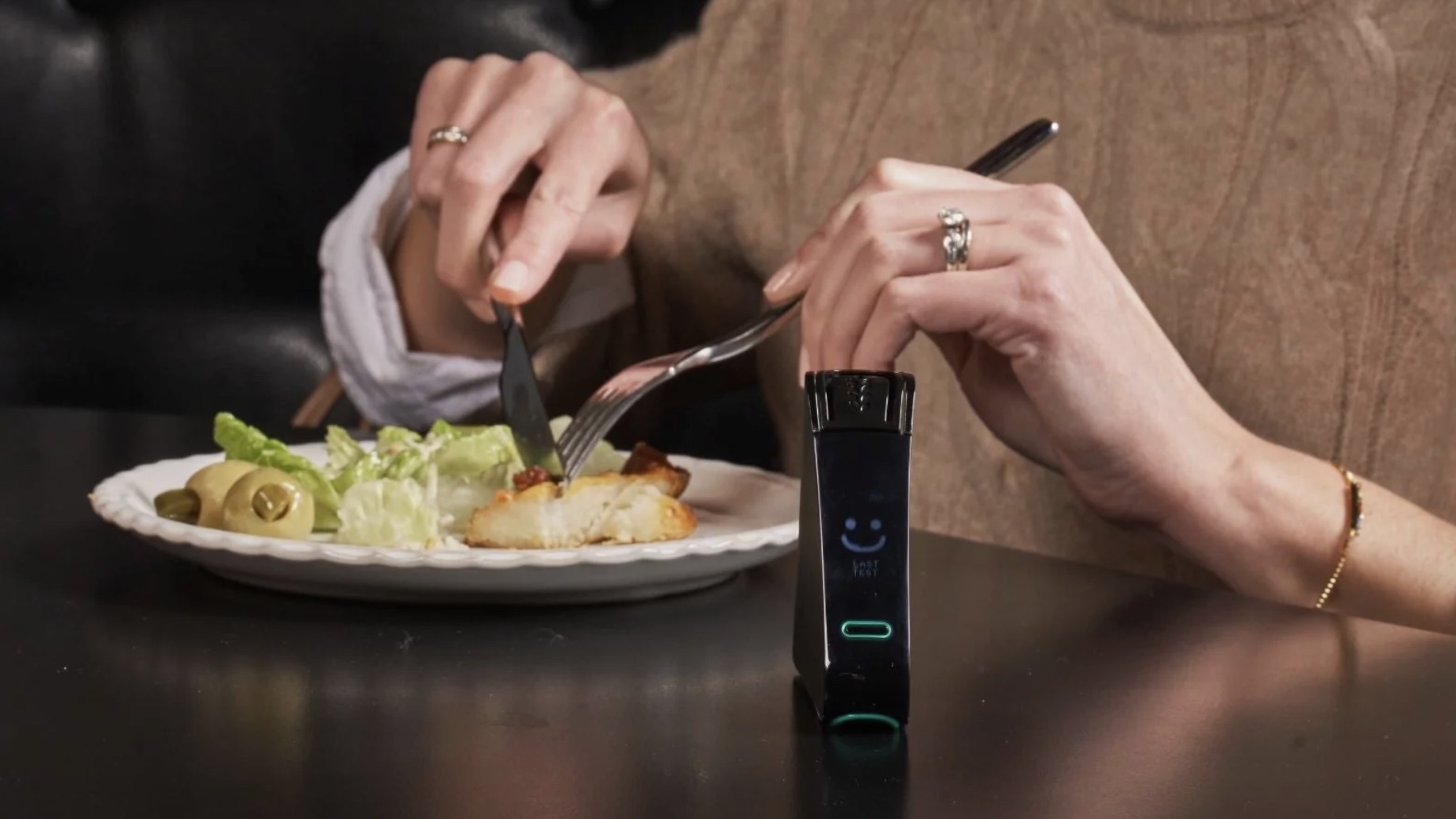
Near the detection threshold, repeated tests of the same sample can return different results. This variability is inherent to all lateral flow devices, including those used in clinical laboratories, and appears across portable consumer sensors as well.
NIMA functions as a screening tool and consumer wellness device. It is not intended for the diagnosis, treatment, or prevention of any disease. A negative NIMA result never overrides a kitchen's own statement that it cannot safely serve someone with celiac disease. When a restaurant says it cannot guarantee a gluten-free preparation, that warning stands regardless of a single sensor reading.
A negative result gives you an objective data point where you previously had only predictions. Labels, certifications, server conversations, and review apps all forecast how a dish should have been prepared. A sensor reading reflects what sits on your table at that moment.
How Automated Reading Improves Consistency
NIMA uses a lateral flow immunoassay, and the main difference from a manual strip tester lies in how the result gets read.
On a manual strip tester, the user collects the sample, mixes it with an extraction solution, applies drops to a strip, and then reads a faint line by eye under whatever lighting is available. Visual interpretation of lateral flow assays is vulnerable to user subjectivity, variable lighting, cognitive bias, and inconsistent timing. These factors are documented, recurring sources of inconsistency in consumer lateral flow testing.
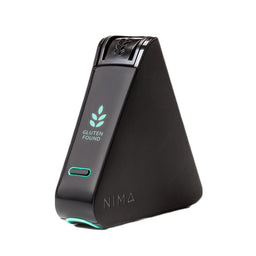
NIMA automates the three steps where interpretation errors often enter. The capsule grinds and extracts the sample. A motor-driven magnetic clutch mixes it for approximately 30 seconds. An integrated optical camera reads the strip at pixel level at the precise moment the reaction is readable, and a proprietary algorithm makes the call on a fixed threshold. Sampling errors can still occur, so how you collect the sample remains part of the result.
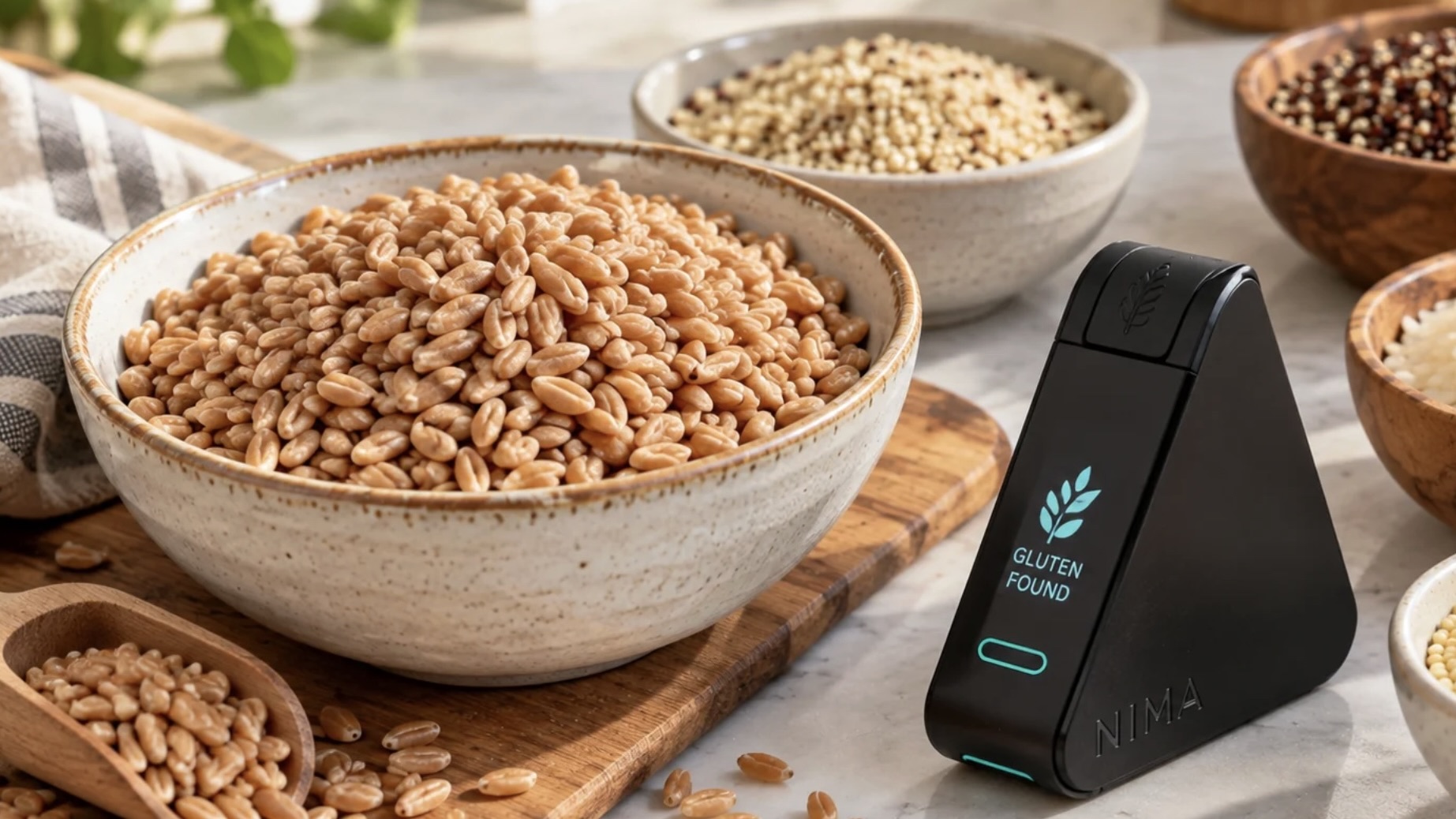
Optical readers are preferable when reproducibility matters, particularly for weak signals and field use, because they reduce the variability associated with naked-eye interpretation of lateral flow strips. The output from NIMA is binary: a smiley face or a "gluten found" symbol, so the result does not depend on eyesight, lighting, or hand steadiness.
Why Some Users Test Packaged Gluten-Free Foods
Under FDA rules, a packaged food can be labeled gluten-free if it contains fewer than 20 ppm of gluten. The manufacturer self-reports that figure, with no mandatory independent verification of how it was measured.
As noted earlier, NIMA's 10 ppm threshold is twice as strict as the FDA's 20 ppm labeling limit. Some individuals react below the 20 ppm ceiling the law permits, so a label that complies with regulations may still feel risky for them.
Certified gluten-free foods generally do not need routine testing. Certification programs verify products against defined gluten limits, so a certified product already carries that check. Testing is most useful when a product is not certified or when you want an extra data point on a specific item.
NIMA reports that 42% of its customers test packaged food at home as well as restaurant meals. The sensor gives an extra check on products that already carry a gluten-free claim.
How To Read NIMA Accuracy Numbers
Accuracy reflects detection threshold, sample technique, and food matrix. The reader can influence two of those three factors through sampling and food choice.
Two different numbers describe NIMA performance, and they measure different things. The first is probability of detection. From the October 2025 BIA Diagnostics controlled lab study, NIMA showed a 98.7% probability of detection at 10 ppm, with 225 of 228 samples correctly detected and a 95% confidence interval of 96.20% to 99.55%. The study tested four food matrices: corn muffins, meatballs, tortillas, and pie crust. Each was prepared with wheat, rye, and barley gluten at 10 ppm, incurred into the food before baking rather than applied to the surface. Reference methods were AOAC OMA 2012.01 and AOAC OMA 2018.05.
The second number is agreement. The May 2026 BIA Diagnostics real-world study cited earlier reported 99% agreement between NIMA and the AOAC 2012.01 gluten ELISA reference method across 100 samples from 20 restaurant meals tested with both discrete and homogenized sampling. Agreement measures how often the two methods reached the same call in real-world restaurant meal validation, which is a different question from how reliably NIMA detects gluten at a set concentration.
When you need detail, treat accuracy as a specific study in a specific food matrix with a defined sample count and reference method.
Frequently Asked Questions
Is There A Reliable Test For Gluten Sensitivity?
NIMA is a screening tool for detecting gluten in food, not a diagnostic device for gluten sensitivity or celiac disease. It does not diagnose any condition and is not intended for the diagnosis, treatment, or prevention of any disease. If you are experiencing symptoms and have not been evaluated for celiac disease, speak with a gastroenterologist before adopting a strict gluten-free diet, because celiac testing is generally most reliable while gluten is still being consumed. NIMA is designed for people who already have a diagnosis and want an objective data point at the moment of eating.
Which Gluten Test Is The Most Accurate?
Accuracy in gluten testing depends on detection threshold, reading method, and food matrix. A lower detection threshold can find gluten at concentrations the FDA still permits in labeled gluten-free products. Automated optical reading removes the human error that enters when a user must judge a faint line by eye under variable lighting, a documented, recurring source of inconsistency in consumer lateral flow testing. No gluten test performs perfectly in all food matrices, because fermented, hydrolyzed, and high-fat foods present challenges for all antibody-based methods. The most meaningful comparison is between a test that automates sample preparation and result reading and one that leaves those steps to the user.
What Does A Smiley Face Actually Guarantee?
As explained above, a smiley face means no gluten was detected above 10 ppm in the tested portion. The reading does not guarantee 0 ppm of gluten or confirm that the entire dish is safe. Near the detection threshold, repeated tests of the same sample can return different results, which is inherent to all lateral flow devices. Use a negative result as one more layer of information alongside kitchen practices and clinical guidance.
Can I Test Beer, Soy Sauce, Or My Medication?
No. Fermented and hydrolyzed foods, and alcoholic beverages, cannot be reliably tested with NIMA. Fermentation and hydrolysis break gluten into smaller protein fragments. NIMA's sandwich-format assay is built to recognize gluten by the shape of intact protein structures. When those structures are fragmented, the antibodies cannot bind them, even when biologically relevant gluten peptides remain present. Some laboratory antibody methods use formats that differ from NIMA's, so their results may not match. This means a negative result on beer, soy sauce, malt vinegar, or malt extract does not carry a clear meaning. Alcohol disrupts the chemistry further. For these categories, choose certified gluten-free brands tested through laboratory methods. Medications, supplements, vitamins, and cosmetics also fall outside supported use cases.
Should I Use It At Every Meal?
NIMA is designed for moments of genuine uncertainty such as restaurant meals, travel, and social settings where you have less control over preparation. NIMA's own guidance recommends introducing a detection tool after roughly four to eight weeks of active dietary adjustment, once label literacy and cross-contact awareness are established. Using it before that foundation exists can create a false sense of competence. Using it afterward reinforces skills you already have and supports saying yes to situations that once felt off-limits.
It's Not FDA Approved, Does That Matter?
NIMA is a consumer wellness device, not a medical or diagnostic device, and it is not intended for the diagnosis, treatment, or prevention of any disease. FDA approval is a regulatory status for medical devices, so NIMA does not require it and does not claim it. NIMA instead relies on independent third-party validation by BIA Diagnostics against AOAC reference ELISA methods, including AOAC 2012.01, a Codex Type I method. It is manufactured under a formal Quality Management System that meets standards required for medical devices and complies with FTC and FCC regulations. The validation studies are published in full and downloadable, which provides the relevant evidence base for a food-testing tool.
Will Using A Sensor Make My Anxiety Or Hypervigilance Worse?
NIMA's published guidance addresses this directly. The four-to-eight-week adjustment period described above applies here as well, because the concern centers on timing and habits rather than the tool itself. Once label literacy and cross-contact awareness are in place, NIMA can add a layer of objective information to a foundation that already exists. The intended framing is a tool of expansion for high-risk moments, not a device for checking every meal. If testing starts to make your world smaller, that pattern signals a need to revisit how and when you use the sensor.
Conclusion: A Clearer Answer Before Your First Bite
You read the label, you asked the server, and you still may feel unsure. That gap between everything you can predict and the plate in front of you is where NIMA fits.
A gluten sensor's accuracy depends on detection threshold, sample technique, and food matrix. NIMA detects gluten at 10 ppm across wheat, barley, and rye, a threshold twice as strict as the FDA's gluten-free labeling limit. It automates sample preparation and result reading with an optical camera and a proprietary algorithm, which reduces the human error that makes manual strip reading inconsistent. Independent validation by BIA Diagnostics against AOAC reference ELISA methods supports those performance claims.
A negative result does not guarantee a perfectly gluten-free dish. It gives you an objective data point where none existed before. For people managing celiac disease or non-celiac gluten sensitivity at every meal, that extra information can shape safer, more confident choices.
Recent News

Is Soy Sauce Gluten Free? What You Need To Know
Most soy sauce contains wheat. NIMA breaks down gluten-free options, tamari, label tips, and safe substitutes so you can eat confidently.


