

Is The NIMA Gluten Tester Worth It for Diners?

Key Takeaways For Gluten-Free Diners
The NIMA gluten tester makes the most sense if you eat at restaurants, travel, or often eat food you did not prepare.
NIMA measures actual food at 10 ppm, which is twice as strict as the FDA’s 20 ppm gluten-free labeling rule, but it only tests the portion sampled.
Pricing, HSA/FSA reimbursement, returns, and warranty details are all listed on NIMA’s official pages, so check there for current information.
The rebuilt 2025–2026 sensor achieved a 98.7% probability of detection at 10 ppm in lab tests and 99% agreement in real-world restaurant meal validation.
NIMA adds an objective data point at the table for people who eat out and travel, so it becomes a practical tool in the gluten-free toolkit.
What The NIMA Gluten Tester Actually Tells You
Every tool in the gluten-free toolkit is predictive. Labels, certifications, restaurant conversations, and review apps are all forecasts about food you have not eaten yet. NIMA, by contrast, measures the actual food in front of you.
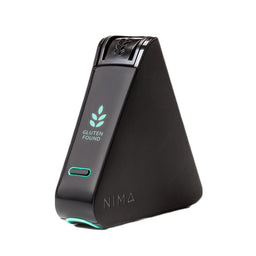
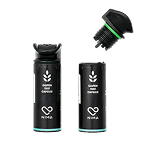
A pea-sized portion goes into a single-use capsule, the capsule goes into the sensor, and a clear result appears in about three minutes. The screen shows either a smiley face or a “gluten found” symbol. The detection threshold is 10 ppm, and it covers wheat, barley, and rye. Under the FDA’s gluten-free labeling rule, any unavoidable gluten in a food labeled gluten-free must be less than 20 ppm. That means NIMA’s threshold is twice as strict as the FDA’s labeling rule, and it can flag trace gluten in products that legally carry a gluten-free label.
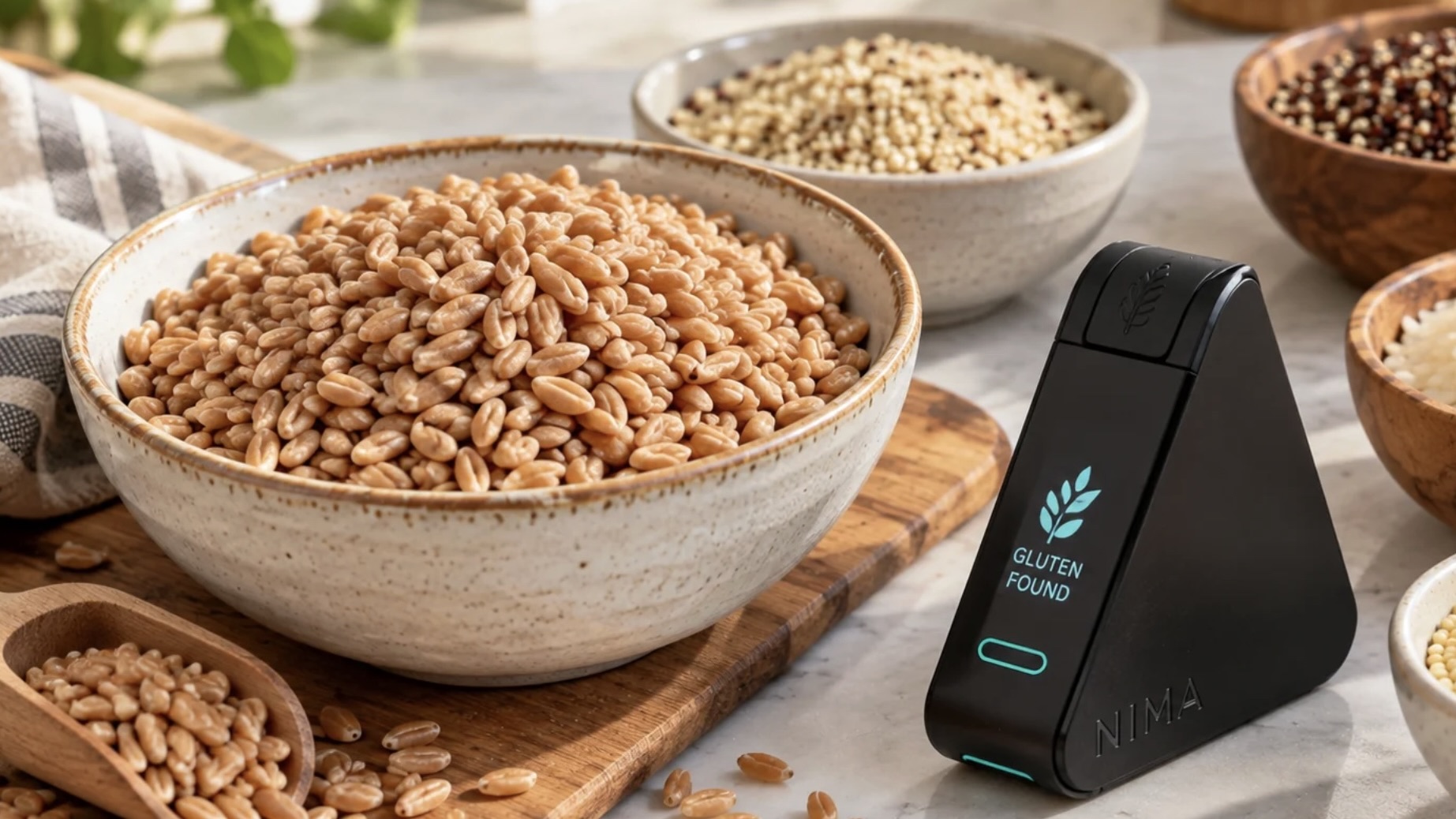
The sampling limitation is real and matters. A smiley face reflects only the portion tested, never the whole plate. Advocacy groups highlight this point, and they are correct. Gluten can be distributed unevenly across a dish. A contaminated crumb can land on one bite while the rest of the portion stays clean.
NIMA gives you an objective data point from the portion you choose to test, so sampling technique matters. Test the highest-risk part of the dish. On grilled protein, focus on the char marks. On fried items, test the coating. On pasta or pizza, test the sauce or the bottom crust.
NIMA is a screening tool and not a medical or diagnostic device. It does not replace a doctor, a dietitian, a label, or a conversation with a kitchen. A result that shows no gluten detected means gluten was not detected above 10 ppm in the tested portion. It does not certify that the food is gluten-free.
The Full Cost Breakdown And Savings Paths
People living with celiac disease already pay significantly more for gluten-free groceries and often carry medical expenses on top. The recurring capsule cost is the objection that stops most people. Here is how to think about it.
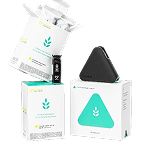
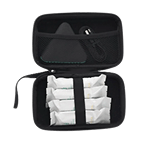
NIMA lists current sensor, Starter Pack, and capsule pricing on its official product pages, along with subscription discounts and shipping terms. Check those pages for the latest figures rather than relying on a snapshot here.
Recurring costs depend on how often you test. Assuming one capsule per test, two to three tests weekly average $104 to $156 per month at the subscription price of $10.20 per capsule. At the one-time purchase price of $12.00 per capsule, the same testing frequency averages $104 to $156 per month as well.
HSA and FSA reimbursement is another path worth checking. NIMA’s official pages explain eligibility, the Letter of Medical Necessity process, and how to submit through your plan administrator.
Returns and warranty coverage are also described on NIMA’s official pages, including the return window and the limited warranty terms for the sensor.
What Changed With The New NIMA Sensor
Much of the content online still describes the original NIMA sensor. That earlier version used a 20 ppm threshold, went through a supply gap, and was unavailable for a period. Any article that says the NIMA gluten tester only reads at 20 ppm is describing a sensor that is no longer on the market.
Following a 2025 investment from RA Capital Management, the sensor, capsules, app, and quality systems were rebuilt over nine months. The detection threshold moved to 10 ppm. The rebuilt device was independently validated twice by BIA Diagnostics Laboratories in Colchester, Vermont, benchmarked against AOAC reference ELISA methods.
The first study, conducted in October 2025, was a controlled laboratory evaluation. BIA Diagnostics tested 228 samples across four food matrices: corn muffins, meatballs, tortillas, and pie crust. Each was prepared with wheat, rye, and barley gluten incurred into the food at 10 ppm before baking, using AOAC OMA 2012.01 and AOAC OMA 2018.05 as reference methods. NIMA correctly detected gluten in 225 of 228 samples, producing a 98.7% probability of detection at 10 ppm, with a 95% confidence interval of 96.20% to 99.55%.
The second study, completed in May 2026, tested real-world restaurant meals. BIA Diagnostics ordered 20 meals from area restaurants: 10 advertised as gluten-free and 10 standard gluten-containing, spanning fried chicken, pasta, sandwiches, hamburgers, and pizza. Three discrete samples from different parts of each meal were tested by both NIMA and the AOAC 2012.01 ELISA reference method. Each entire meal was then homogenized and tested again by both methods, producing 100 samples per method.
NIMA agreed with the AOAC 2012.01 reference method on 99 of 100 samples. That 99% agreement measures how often NIMA and the lab reference method reached the same conclusion on the same sample, whether gluten was detected or not. It is a concordance rate between two methods, not a measure of how often NIMA is right about a meal. Among the meals sold as gluten-free, gluten was detected in 15 NIMA samples. The laboratory method measured concentrations as high as 74 ppm in those meals. NIMA itself reports a positive or negative result rather than a numeric ppm value. These findings confirm that restaurant meals advertised as gluten-free can still contain meaningful levels of gluten.
The rebuilt device also won a Gold Stevie Award for Achievement in Product Innovation in the 2026 American Business Awards.
Who Probably Should Skip A NIMA Gluten Tester
NIMA is powerful for some people and unnecessary for others. Being clear about who should not buy it helps you decide whether it fits your situation.
The answer is generally no for:
Anyone hoping to test fermented or hydrolyzed foods such as soy sauce, beer, malt vinegar, or malt extract, because these cannot be reliably tested with NIMA. Fermentation and hydrolysis break gluten into smaller protein fragments that NIMA’s antibody-based detection cannot recognize.
NIMA also does not replace a doctor, a registered dietitian, a label, or a direct conversation with a kitchen. Reporting in MedCity News describes these devices as tools rather than diagnostic tests, noting that they do not replace serology, biopsy when indicated, dietitian support, or follow-up care.
How To Use NIMA Confidently At The Table
A detection tool used with poor technique produces unreliable results and can increase anxiety rather than reduce it.
Sample the highest-risk part of the dish. On grilled protein, that means the char marks. On fried items, focus on the coating. On pasta or pizza, test the sauce or the bottom crust. To increase the surface area actually tested, use the teeth on the bottom of the capsule cap to dab from several areas of the plate before sealing. Because gluten can be distributed unevenly across a dish, gathering material from several spots gives the capsule a better chance of capturing contamination that a single dab might miss.
For thick or sticky foods like nut butters or hummus, dilute 1:1 with water before sampling. For liquids and soups, use roughly 5 to 6 drops and never overfill past the spindles at the bottom of the capsule. Brightly colored foods, such as beet-heavy or turmeric-heavy dishes, should also be diluted, because strong pigment can interfere with the optical reader.
Reserve NIMA for genuine uncertainty: restaurant meals, travel, and social settings where you have less control over preparation. The goal is not to test everything. The goal is to feel comfortable saying yes to more places. Used this way, NIMA becomes a tool of expansion that helps you participate more fully in everyday life.
Frequently Asked Questions About NIMA
Will Insurance Cover A NIMA Sensor?
Traditional health insurance generally does not cover food testing devices like the Nima sensor, as insurers often classify them as elective or non-medically necessary. NIMA tests a food sample for gluten rather than testing a person’s sensitivity. As explained in the cost section, NIMA products are generally eligible for HSA and FSA reimbursement through Truemed with a Letter of Medical Necessity. NIMA’s official pages walk through the survey, provider review, and submission steps, so check there for current details.
How Much Does The NIMA Gluten Sensor Cost?
NIMA lists current sensor, Starter Pack, and capsule pricing on its official product pages, including subscription discounts. For exact prices and current offers, see the product pages linked above.
Is The NIMA Gluten Sensor Accurate?
The current-generation NIMA sensor has been independently validated twice by BIA Diagnostics Laboratories. The validation studies described earlier showed a 98.7% probability of detection at 10 ppm in controlled lab tests and 99% agreement with an AOAC reference method in real-world restaurant meals. That agreement rate measures how often NIMA and the lab reference method reached the same conclusion on the same sample, not how often NIMA is right about a meal. The sampling caveat applies to both: each result reflects only the portion tested.
Does A Smiley Face Mean The Whole Meal Is Safe?
A smiley face means gluten was not detected above 10 ppm in the specific portion tested. It does not cover the rest of the plate, and it is not a guarantee of zero ppm. Gluten can be distributed unevenly across a dish, so a contaminated area elsewhere on the plate may not be captured by a single test. Near the detection threshold, repeated tests of the same sample can also return different results, which is a property of all lateral flow immunoassay devices, including those used in clinical laboratories. NIMA provides additional information that you can combine with labels and restaurant conversations.
The Final Verdict: NIMA Makes Sense If You Often Eat Food You Did Not Cook
“Worth it” depends on where you eat and how often you eat food you did not prepare. If restaurants, travel, and social meals are a regular part of your life, NIMA adds an objective data point at the exact moment every other tool in your toolkit runs out. If your diet is built almost entirely around certified gluten-free food you prepare at home, the case is weaker.
The earlier sections on cost and accuracy point to a simple conclusion. NIMA makes sense if you frequently eat food you did not prepare, want an objective reading at the table instead of a forecast, and understand that each result reflects only the portion you tested. If all three describe you, NIMA is built for your real life.
Recent News

Is Soy Sauce Gluten Free? What You Need To Know
Most soy sauce contains wheat. NIMA breaks down gluten-free options, tamari, label tips, and safe substitutes so you can eat confidently.


