

NIMA™ vs. LEO Gluten Tester: Which Is Better for Everyday Gluten Testing?
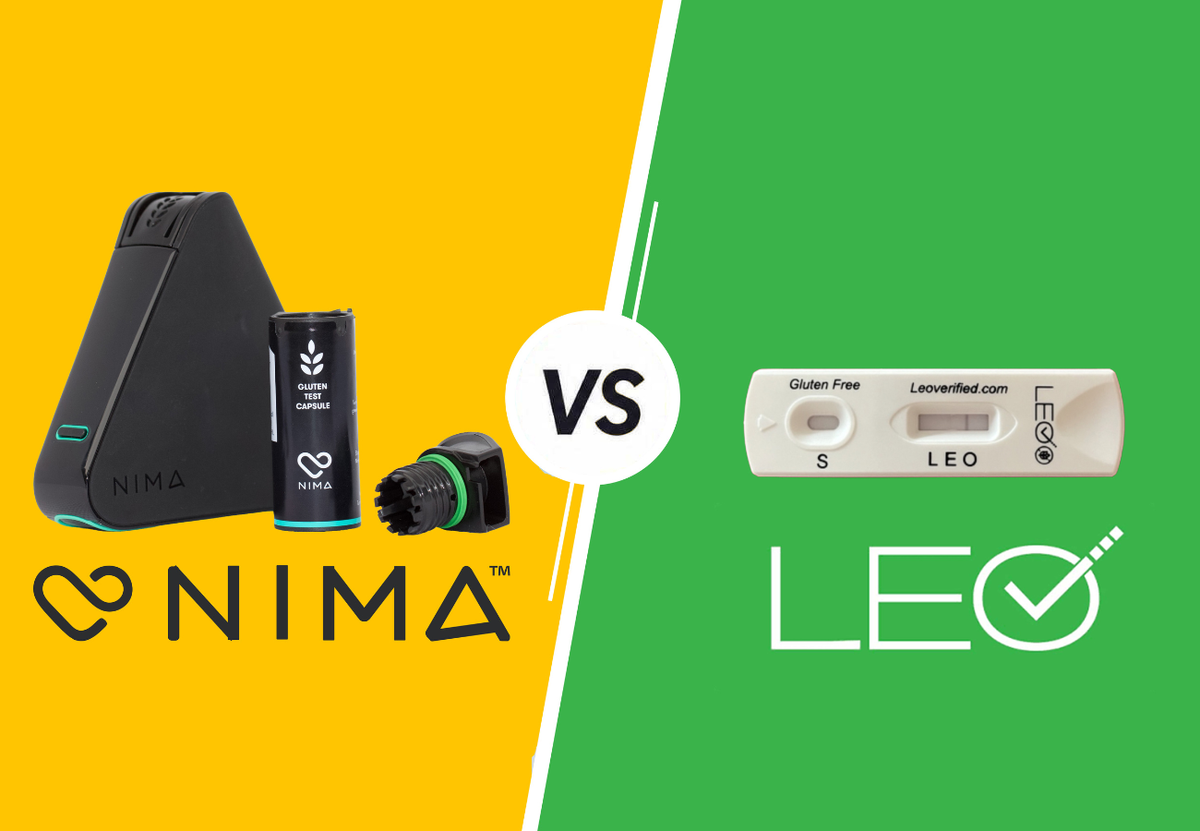
You did everything right. You read the label, you asked the kitchen about cross-contact, and the plate in front of you still might not be safe. That gap between following every rule and actually knowing is the hardest part of living gluten-free, and it is exactly the gap at-home gluten testers try to close.
Two testers come up more than any others, the NIMA™ gluten sensor and the LEO gluten tester. Both check a bite of food for gluten down to 10 ppm. NIMA™ returns a result in about three minutes, and LEO publishes a two-minute result time. They work in very different ways, and those differences decide which one belongs in your bag. Here is an up-to-date side-by-side on how each tester works, how accurate it is, how you read the result, and what it costs.
NIMA™ vs. LEO Gluten Tester at a Glance
Both devices answer the same question, is there gluten in this food, and both answer it fast. The difference is how.
|
Feature |
NIMA™ |
LEO |
|
Detection limit |
Down to 10 ppm (wheat, barley, rye) |
Down to 10 ppm (wheat only) |
|
Result time |
About 3 minutes |
2 minutes |
|
Format |
Reusable electronic sensor plus single-use capsules |
Single-use disposable tester |
|
Reader required |
Yes, a rechargeable sensor |
No, read by eye (optional app) |
|
How you read the result |
Digital smile or wheat icon on a screen |
Test lines above the E and O |
|
Price model |
One-time device, then capsules sold in boxes of 6 |
Per test, sold in packs |
|
Best for |
Frequent testers who want a clear digital answer |
Occasional testers who want the lowest entry cost |
The single biggest practical difference is what you hold at the end. NIMA™ gives you a digital yes or no on a reusable electronic reader. LEO gives you a disposable strip you read by eye, with an optional app to help. NIMA™ takes about three minutes, while LEO publishes a two-minute result time, so speed is a small difference rather than the deciding factor.
That one design choice, a device you keep versus a disposable you use once, drives almost everything else that follows. It shapes the cost model, the daily routine, and how much interpretation each result asks of you. Keep it in mind as we go.
How Each Gluten Tester Works
Start with what they share. Both are antibody-based tests you can run outside a lab, and both are qualitative, which means they give you a yes-or-no answer rather than a lab report. NIMA™ specifically detects gluten fragments from wheat, barley, and rye. LEO detects wheat-derived gluten down to 10 ppm but does not provide the same barley and rye coverage, so the two claims are not identical.
Here is the part worth slowing down on. Neither device gives you a ppm number. A qualitative test tells you whether gluten is above or below a set threshold, not exactly how much is there. So a result is not "your food contains six ppm of gluten." It is closer to "gluten found" or "no gluten found at this level."
That is all most people need in the moment before a first bite, and it is why both testers work in minutes instead of hours. That antibody approach is what makes a fast, no-lab answer possible in the first place. The rest comes down to mechanics, how you get the sample in and how the device shows you the answer.
How the NIMA™ Sensor Works
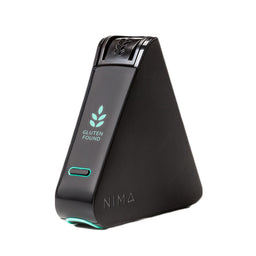
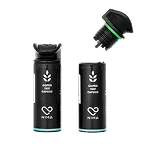
The NIMA™ process is built around one motion. You add a pea-sized piece of food to a single-use capsule, twist the top to seal it, and slide the capsule into the electronic sensor. From there the device does the work, grinding and mixing the sample, running the antibody reaction inside, and showing your result in about three minutes.
The readout is deliberately simple. A smile means no gluten was found at the tested level. A wheat icon means gluten was found. There is no line to squint at and nothing to interpret.
The sensor itself is rechargeable and reusable, so it is a tool you carry and use again and again, not a one-time throwaway. You only replace the capsules. And the specifics are worth anchoring. NIMA™ detects gluten from wheat, barley, and rye down to 10 ppm, using detection antibodies that are unique to NIMA™.
How the LEO Gluten Tester Works
LEO, short for Love Eating Out, takes the opposite approach. It is a single-use disposable test with no electronics. According to LEO’s instructions, you collect small samples from multiple spots on the plate, mix them into the included solution, and add two drops to the tester.
Then you read the lines. A control line above the O confirms the test ran correctly. A line above the E signals that gluten is below 10 ppm. You can read those lines by eye, or scan the tester with the LEO app, which uses AI to help interpret them.
LEO is designed to detect gluten down to 10 ppm in two minutes. It was created by Seaton and Jill Smith, who live with celiac disease in their own family, which is part of why the tester is built around real-world eating-out moments.
Detection Sensitivity: How Low Each Test Goes
On sensitivity, the two are evenly matched today. Both detect gluten down to 10 ppm. That number matters because of how "gluten-free" is defined. Under the FDA's gluten-free labeling rule, a packaged food can be labeled gluten-free as long as it contains less than 20 ppm of gluten, so a test that reads down to 10 ppm sits comfortably under that line.
This is where the NIMA™ record needs correcting, because many older reviews get it wrong. The original NIMA™ sensor detected at 20 ppm and drew fair criticism for inconsistent results. That was the old device. NIMA™ was rebuilt from the ground up and relaunched in 2025 with a lower 10 ppm threshold and new accuracy data.
If you have read that NIMA™ "only" reads at 20 ppm, you were reading about a sensor that no longer exists. So on the sensitivity spec alone, NIMA™ and LEO are essentially tied. The real decision comes down to how you read the result, how well each one is independently validated, and what each costs.
How You Read the Result: Digital Screen vs. Test Lines
This is the heart of the comparison. NIMA™ returns an answer in about three minutes, and LEO publishes a two-minute result time. The experience of getting that answer still matters more than the one-minute difference.
NIMA™ shows you a digital smile or a wheat icon on a screen. There is nothing to interpret and no judgment call. The device makes the decision, and you read it.
LEO asks a little more of you. You judge whether there is a line above the E, and faint lines can be genuinely hard to call. The app is there to help, but it adds a step. In one independent Gluten Free Watchdog assessment, reading the line was not always straightforward, and the result depended on how the sample was collected.
Neither approach is wrong. A digital readout removes interpretation, which is reassuring when you are anxious or in low light. A disposable strip is simpler to carry and has nothing to charge. These are different comfort levels, not a winner and a loser.
What Do You Do When a Gluten Test Finds Gluten?
When a test finds gluten, the answer is simple. Don't eat that food, and trust the result instead of talking yourself out of it. How clear that moment feels depends on the readout. The NIMA™ sensor shows a wheat icon on its screen, a plain "gluten found" with no faint line to second-guess, which helps when you are anxious or reading it in low restaurant light. With LEO, you read the lines or check the app to confirm before you decide.
A positive result is good news in disguise, because it caught something your labels and your questions to the kitchen did not. If you want to know which part of the plate carried the gluten, test a second component with a fresh capsule or a fresh tester. And if you have already eaten and start to react, that is a conversation for your doctor, not the device. A tester checks the bite before you take it, and it never treats what comes after.
Speed and Everyday Use
Speed is close, but not identical. NIMA™ returns a result in about three minutes, while LEO publishes a two-minute result time. The everyday difference is still what you have to manage.
NIMA™ is charge-and-go. You keep the reader charged, carry fresh capsules, and reuse the device indefinitely. LEO is grab-and-go, with nothing to power and only as many disposable testers as you expect to use.
Your habits decide which fits better. If you test 2-3x per week, a reusable reader with fresh capsules settles into a routine. If you test more like weekly or now and then, a pocketable disposable may feel lighter to keep on hand. Either way, the test is the last step in your toolkit, the quick check right before the first bite.
Accuracy and Independent Validation
Accuracy is where you want proof, not promises, so look at what each tester can actually point to.
NIMA™ leans on recent, independent data. Its relaunched sensor was validated at 99% accuracy by the independent lab Bia Diagnostics in October 2025. It also has a longer paper trail. A 2018 evaluation in the Journal of Food Protection tested an earlier version of the NIMA™ sensor across 13 food types and found it reliably flagged gluten at and above 20 ppm, the threshold the device targeted at the time.
LEO is newer and has less published independent validation so far. In that same independent assessment, the tester returned a false negative on dry bread when the sample was collected by swab, until the sampling approach was corrected. To LEO's credit, the company responded by updating its testing instructions for customers rather than ignoring the finding.
Be clear-eyed about both. NIMA™ can point to a named independent lab and a peer-reviewed study. LEO is earlier in that process. And no matter which you choose, the National Celiac Association cautions against relying on any at-home device by itself. A test is one input, not the whole decision.
Is the NIMA™ Gluten Sensor FDA Approved?
It is a fair question. NIMA™ is a food-testing tool, not a medical device. It is not designed to diagnose a condition, treat one, or replace anything your doctor or dietitian does, so it does not carry and does not claim medical-device approval.
What it does is narrow and genuinely useful. It checks a sample of food for gluten before you eat. That is the whole job, and it is one worth doing well. Read it as one more layer in your gluten-free toolkit, working alongside careful labels, good questions, and your care team, rather than standing in for any of them.
This is also why you should be wary of any gluten tester, NIMA™, LEO, or otherwise, that promises perfect safety. No home device can guarantee a meal is completely gluten-free. What a good one can do is catch gluten that slipped past your other defenses, which is exactly where its value lives.
LEO sits in the same lane. It is a food tester too, not a diagnosis and not medical advice. For both devices, the right expectation is added confidence at the table, never a guarantee and never a substitute for the people who manage your health.
What Each Test Can and Can't Check
A useful comparison also has to name the limits.
The biggest one is simple. A home test only reads the exact sample you put in. Gluten is often spread unevenly across a plate, so one clean result on one bite does not clear the entire dish. Test the pieces most likely to carry gluten, and treat the reading as specific to what you sampled.
Some foods cannot be reliably tested with either device. NIMA™ advises against testing fermented or hydrolyzed foods and alcoholic beverages because processing can alter the proteins that antibodies recognize. LEO’s testing limitations likewise say not to test fermented or hydrolyzed products. Oily foods, pure liquids, and very dry or powdery foods can also require special handling or may be unsuitable, depending on the tester. Those limits are why whether fermentation breaks down gluten matters before relying on a rapid test for a fermented food.
Do These Testers Help If You Have Non-Celiac Gluten Sensitivity?
Yes. Both the NIMA™ sensor and the LEO tester check the food, not your diagnosis, so they work the same whether you have celiac disease, non-celiac gluten sensitivity, or another reason to keep gluten off your plate. A tester reads the gluten in a sample down to 10 ppm and reports what it finds, and that answer is just as useful to someone whose sensitivity flares from a small amount as it is to someone with celiac disease. If you react but have never pinned down how much it takes, a quick check turns a guess into something you can see.
The formats still split the same way they do for everyone. NIMA™'s digital wheat-or-smile readout and reusable reader fit anyone who tests a few times a week and wants a clear answer with nothing to interpret, and LEO's disposable strip suits lighter, occasional use. One limit holds for everyone. These tools test food, they do not test you. Sorting out whether you have celiac disease, a sensitivity, or something else is work for your doctor, and a food tester is added confidence at the table, not a diagnosis.
When an At-Home Gluten Test Earns Its Place
The limits are real, but so is the upside. A quick gluten check tends to matter most in exactly the moments that cause the most doubt, and naming them helps you decide how often you will actually reach for a tester.
Eating somewhere new is the classic one. A restaurant you have not vetted, a shared fryer you cannot see, a sauce with no label to read. Travel piles on more of the same, with unfamiliar brands and kitchens far from your usual routine. So does a busy family or shared kitchen, where the same toaster or cutting board touches gluten all day.
New packaged foods are another good moment, especially when a brand has quietly changed suppliers or a label leaves you unsure. In each case, the test does the same small thing, turning a guess into a check right before the first bite. That is the possibility both NIMA™ and LEO are offering, a little more freedom to say yes.
None of this means testing every bite of every meal. It means having a fast check for the moments that carry the most uncertainty, so the rest of your eating feels a little less like a gamble.
How to Get a Reliable Food Sample
With any at-home gluten test, a smart sample is everything. The device can only be as good as what you feed it, so aim for the component most likely to carry gluten, choosing a solid or semi-solid sample that can mix evenly in the test. If you still have doubts after one read, test a second spot.
Each NIMA™ capsule is single-use, but you do not need a separate capsule for every bite or ingredient. For one overall meal check, you can gather a representative pea-sized sample from different parts of the plate in the same capsule. Use a new capsule only when you want a separate result for a specific component, such as testing the sauce independently from the protein. LEO also uses one disposable tester per test.
Dry and hard foods deserve extra care, because they are a classic source of a false negative. Use enough sample. Following those same independent findings, LEO updated its guidance to place a pinch of food directly into the solution rather than relying on a swab alone. The principle holds for any tester. Give the antibodies enough material to find the gluten.
Which Gluten Tester Is Easier to Take Traveling?
It depends on the trip. LEO's disposable testers are the lighter thing to pack, and NIMA™'s reusable sensor is the steadier choice for longer or frequent travel where you will test meal after meal. Travel is when a quick check matters most, because you are eating from unfamiliar kitchens and reading brands you have never seen. For a short trip or a backup, LEO is hard to beat on weight, since there is nothing to charge and you can drop a few testers in your bag and go.
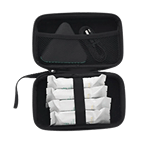
For a week away or regular travel, NIMA™ leans on being reusable. Its Starter Pack ships with a cloth travel bag and a charging cable, so one charged reader plus a supply of capsules can cover repeated tests without relying on single-use strips. Neither is a burden to bring. Both are compact food testers, so they tuck into a day bag and travel easily. Match the format to the trip, and you keep your quick check with you wherever the kitchen is unfamiliar.
Cost Comparison: Upfront Device vs. Per-Test Strips
The two testers use completely different cost models, so there is no single cheaper option. It depends entirely on how often you test.
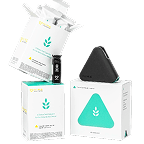
NIMA™ charges once for the hardware, then a smaller amount per test. The NIMA™ Starter Pack runs about $330 and includes the reusable sensor, a total of 12 single-use capsules in two boxes of six, a charging cable, and a cloth travel bag. After that, capsules are sold in boxes of six.
LEO has no device to buy. The disposable testers are sold in packs, and the per-test price lands in the single-digit-dollar range, roughly $5 to $10 each depending on pack size, per LEO's own pricing. Nothing to charge, nothing to maintain, just a tester when you need one.
So do the math on your own habits. If you test occasionally, LEO's low entry cost is hard to beat, because you only pay when you test. If you test 2-3x per week, NIMA™'s one-time device cost spreads across many fast, digital reads, and the per-test capsule cost stays modest. Frequency is the whole equation.
Which Gluten Tester Fits Your Routine?
Here is the trade-off in one breath. LEO offers the lowest upfront cost, a disposable format, and a result you read by eye or with the app. NIMA™ offers a clear digital readout and a reusable reader designed for repeat testing.
Neither is the wrong answer. Frequent testers who want a clear digital yes-or-no, with nothing to interpret, tend to lean toward NIMA™. Occasional testers who want the lowest possible entry cost tend to lean toward LEO. Both are reasonable choices for people managing the same daily reality.
Whichever you pick, keep it in its proper place, the last layer before the first bite, not a replacement for careful labels, good questions, or your doctor. That is what a tester is for, a little more clarity and a little more control right when it matters most. See how NIMA™ works and where the sensor fits into your gluten-free toolkit, then decide what belongs in your bag.
Recent News

Gluten Belly: Symptoms, Causes, and How to Know If Gluten Is the Problem
What people call “gluten belly” is usually bloating, pressure, or abdominal discomfort, but gluten is not the only possible cause. Learn the signs to track, conditions to rule out, and why testing should come before a gluten-free trial.


