

Does Fermentation Break Down Gluten? Why Testing Isn’t Always Reliable
Fermentation can break gluten proteins into smaller fragments, but it does not reliably remove every fragment or make a food gluten-free. If you live medically gluten-free, that difference matters. A changed protein may still affect a person with celiac disease even when a standard antibody test misses it.
Here’s the practical takeaway. Fermentation changes gluten, which can make testing less reliable. For sourdough, soy sauce, beer, malt, and vinegar, labels, certification, and manufacturer records carry more weight than a negative result.
Does Fermentation Break Down Gluten? The Short Answer
Yes. Fermentation breaks down gluten proteins into shorter pieces called peptides, but the gluten has not necessarily disappeared. The amount broken down depends on the ingredients and process. For people with celiac disease, the goal is to avoid gluten exposure rather than rely on symptoms or the extent of fermentation to decide whether a food is appropriate. An absence of symptoms does not mean an absence of an immune response. Conventional wheat sourdough is not automatically gluten-free.
Three different outcomes tend to get lumped together here. A food may contain less gluten, smaller gluten fragments, or no relevant gluten at all. Those are different claims.
Fermentation may reduce or fragment gluten to varying degrees, but the process alone cannot prove removal.
Context matters. A controlled process that starts with gluten-free ingredients and keeps cross-contact in check differs from a long ferment of ordinary wheat flour. Judge the finished product by reliable labeling and records, not by fermentation time alone.
Can NIMA Test Fermented or Hydrolyzed Foods?
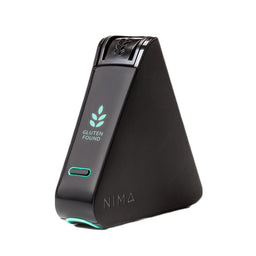
When you compare fermented foods and gluten risk, the NIMA gluten sensor cannot reliably test fermented or hydrolyzed foods or alcoholic beverages. These processes can split gluten proteins into fragments that no longer match the antibody’s target, so a negative result may miss material derived from gluten.
Use the product’s label, gluten-free certification, and manufacturer records for soy sauce, beer, malt vinegar, and similar products. This keeps the decision tied to the full production process, not one sample.
What Fermentation Does to Gluten Proteins
During fermentation, microbes and naturally active enzymes start cutting large proteins into shorter peptides, a process called proteolysis. How far they get depends on the grain, the microbes and enzymes involved, acidity, temperature, and time. Change any one of those factors and the result can change too.
Picture gluten as a long rope. Fermentation can snip it into shorter lengths without making the material vanish. Some pieces may become too small for one test to recognize.
Other pieces can still contain sequences that matter to the immune system.
Does fermenting sourdough longer reduce gluten? It may change how much intact gluten remains, but there is no universal reduction percentage. The result depends on the ingredients and processing conditions.
Gluten Can Be Fragmented Without Being Eliminated
An epitope is a small spot on a protein that an antibody or the immune system recognizes. Fermentation may change or erase some of those spots and leave others intact. If a test can no longer see its target, it still cannot tell you that every gluten-derived peptide is gone.
Research on ordinary wheat sourdough fermentation found that ordinary lactic fermentation did not reduce key gluten interactions enough to support a safety claim for people with celiac disease. The researchers tested a specific process, not every sourdough method.
Their result still makes one point clear. Ordinary fermentation cannot be used as proof that wheat bread is safe.
Easier Digestion Is Not the Same as Gluten-Free
Some people ask whether sourdough bread is healthier than gluten-free bread because it can feel easier to digest than conventional bread. That experience cannot show whether the loaf is gluten-free or suitable for a person with celiac disease. Fermentation may change wheat components besides gluten, including fructans, so symptoms can reflect more than one factor.
Does sourdough cancel out gluten? No. Feeling fine after one serving cannot show whether a food is suitable for a person with celiac disease or answer how much gluten a person with celiac disease can tolerate. Symptoms do not provide the same information as verified gluten-free sourcing. Ask how the bread was made and whether it was verified gluten-free, even if it seemed easier to digest.
Why Gluten Tests Can Miss Fermented Foods
Hydrolyzed gluten testing and fermented-food testing often rely on antibodies that recognize a particular sequence or shape on a gluten protein. Fermentation and hydrolysis can alter that target and still leave gluten-derived peptides in the food. The antibody has less to grab onto, and accurate detection becomes much harder.
A review of antibody-based methods documented wide variation in results across beers, sourdoughs, sauces, and vinegars. Different antibodies and calibration standards reported different apparent gluten levels across these foods. One low reading cannot clear every fermented product.
The core antibody gluten test limitation is the mismatch between what remains and what the antibody can see. Even a careful test cannot report a fragment it was not designed to recognize. Fermented foods need a different decision path.
Antibody Tests Look for Specific Gluten Shapes
A lock-and-key analogy helps. The antibody is the lock, and a recognizable part of gluten is the key. If fermentation cuts or reshapes the key, it may no longer fit the lock, even though pieces of the original key remain in the food.
That explains why two antibody methods can read the same sample differently. They may look for different targets or compare the signal with different standards.
The NIMA FAQ explains the limit directly. Fermentation or hydrolysis may break apart the protein shape the NIMA antibody is designed to recognize.
Fragmented Gluten Can Create a Misleading Negative Result
A false-negative gluten test on fermented foods can create false confidence. A negative result tells you only what happened in one portion. It says the target was not detected there. It cannot show that the full product contains no gluten-derived fragments.
Altered epitopes, uneven sampling, the food’s texture and chemistry, and the detection threshold all shape what the test sees.
NIMA gives a direct instruction. Do not test fermented or hydrolyzed foods or alcoholic beverages with the Sensor.
These are foods NIMA cannot test reliably. A smiley result cannot clear soy sauce, beer, malt vinegar, or another product in this category.
Which Fermented Foods Need Extra Caution?
What went into the food matters as much as the process. A category name will not answer the gluten question by itself. Start with the comparison below, then check the label and manufacturer information for the product in front of you.
|
Food |
How it is processed |
Why gluten status can be confusing |
Recommended approach for evaluating gluten-free status |
|
Wheat sourdough |
Wheat flour ferments with a starter culture of yeasts and bacteria. |
Fermentation may reduce or fragment gluten, but an ordinary loaf still contains wheat-derived gluten. |
Choose sourdough made with gluten-free ingredients and labeled or certified gluten-free. Do not use a home test to clear conventional wheat sourdough. |
|
Soy sauce |
Traditional versions ferment soybeans with wheat and salt. |
Wheat may be part of the recipe, and fermentation makes post-process antibody measurement unreliable. |
Choose soy sauce or tamari with a clear gluten-free claim, check the full ingredient list, and verify the manufacturer’s controls. |
|
Beer |
Barley or wheat wort is commonly fermented with yeast. |
Fermentation can fragment grain proteins, and “gluten-reduced” is not the same as made from gluten-free grains. |
Choose beer made from gluten-free grains with appropriate labeling. Do not test alcoholic beverages with NIMA. |
|
Malt products |
Barley is germinated and processed into malt, malt extract, or malt syrup. |
An ingredient may be fermented or hydrolyzed, but unqualified “malt” usually means barley. A different source should be named on the label. |
Choose these products only when reliable labeling identifies them as gluten-free. |
|
Vinegar |
Malt vinegar is fermented without distillation. Distilled vinegar goes through a separate purification step. |
The category covers different starting ingredients and processes, so one rule does not fit every vinegar. |
Avoid malt vinegar. For other vinegars, check the label, starting ingredients, and any flavors added after distillation. |
Wheat Sourdough Is Not Automatically Gluten-Free
Is sourdough bread OK on a gluten-free diet? Typical bakery sourdough made with wheat still contains wheat-derived gluten, even after a long ferment. Research protocols can produce different results because they may use selected microbes, added enzymes, tightly controlled conditions, and final verification. Instead of asking what kind of bread has the least gluten, look for a verified gluten-free loaf. An ordinary bakery sourdough should not be treated as equivalent to a research protocol.
Can people with celiac disease eat sourdough? Conventional wheat sourdough should not be assumed safe. Look for a loaf made with gluten-free ingredients and labeled or certified gluten-free, then check the maker’s cross-contact controls. Stories about comfort or digestibility cannot replace that information.
Soy Sauce, Beer, Malt, and Vinegar Require Label-First Decisions
Gluten in soy sauce often comes from wheat because traditional recipes start with soybeans and wheat. Beer usually begins with barley or wheat, and an unqualified malt ingredient points to barley.
Malt vinegar is fermented. Distilled vinegar goes through a separate process.
The ingredient list and production details settle the gluten question, not the category name.
Gluten in beer can be harder to judge because marketing terms blur important process differences. “Gluten-reduced” beer differs from beer made with gluten-free grains, and a negative home test cannot settle that difference after fermentation. For a closer look at labels and production, read our guide to gluten-free alcoholic beverages before choosing a drink.
Fermentation, Hydrolysis, and Distillation Are Different Processes
If you are asking what can break down gluten, fermentation and hydrolysis are two processes that split larger compounds into smaller pieces. Neither process proves that every relevant fragment is gone. Distillation takes a different route by separating volatile components from nonvolatile material.
|
Process |
What it does to proteins |
What it means for gluten decisions |
|
Fermentation |
Microbes convert carbohydrates, and enzymes can cut larger proteins into smaller peptides. |
It may fragment or reduce gluten, but it does not automatically remove it. Conventional antibody measurement may be unreliable afterward. |
|
Hydrolysis |
Water, often with added enzymes, splits proteins into smaller compounds. |
Like fermentation, it can change antibody targets without proving that all relevant gluten fragments are absent. |
|
Distillation |
Heat vaporizes volatile components and condenses them separately from nonvolatile material such as protein. |
Proper distillation can remove protein from the distilled component. The final label and any ingredients added later still matter. |
Proper distillation can separate alcohol from nonvolatile proteins, including gluten. The finished bottle can still change after that step. Flavorings and other ingredients added later matter, and alcoholic beverages remain outside NIMA’s reliable-use category.
How to Judge a Fermented or Hydrolyzed Food Without Relying on a Test
For a fermented or hydrolyzed food, use this order.
-
Check the grain source.
-
Read the full ingredient list.
-
Look for a clear gluten-free label or trusted certification.
-
Contact the manufacturer if the process is unclear.
These steps tell you more about the full production system than one small sample can.
Keep your clinician’s guidance in the picture, especially if you have celiac disease or another condition that requires strict gluten avoidance. No label, test, or article can account for your individual health history and risk tolerance.
If the label and manufacturer records leave a gap, pause before treating the product as suitable. That may feel less satisfying than a quick yes or no, but it protects you from asking an unreliable test to settle the question.
What Is the Difference Between a Gluten-Free Label and a NIMA Test?
A gluten-free label speaks to a product’s ingredients and manufacturing controls. A NIMA result reports whether gluten was detected in one tested portion of a suitable food.
For fermented or hydrolyzed products, let the label and manufacturer records lead because NIMA cannot test that category reliably. For a nonfermented solid or semi-solid food, the Sensor can add one data point after label reading and a cross-contact check.
Start With Labels, Certification, and Manufacturer Records
In the United States, any unavoidable gluten in a food bearing a gluten-free claim must stay below 20 parts per million under the FDA definition. Conventional tests may not adequately detect and quantify gluten after fermentation or hydrolysis. That is why FDA guidance uses manufacturer records and process controls.
Those records need to show that the food met the gluten-free definition before fermentation or hydrolysis and that the manufacturer evaluated cross-contact risk. Ask two basic questions.
Was the starting ingredient gluten-free before processing? How do you prevent cross-contact?
Use NIMA Only on Foods It Can Test Reliably
NIMA adds another tool to your gluten-free toolkit after label reading, restaurant communication, and awareness of cross-contact risks. The Sensor cannot diagnose celiac disease or guarantee the whole meal.
With a suitable solid or semi-solid food, the result applies only to the portion tested. Representative sampling helps only within a food category the antibody can measure. Review how NIMA accuracy works, then follow the current Responsible Use guidance for the food you plan to test.
Use Fermentation and Gluten Facts to Make Clearer Choices
So, does fermentation break down gluten? It can change the protein and make antibody testing less reliable, but neither change proves a food is gluten-free. Once those limits are clear, ingredients, certification, and manufacturer records carry more weight than a reassuring anecdote or a single test result.
Knowing the limits gives you a clearer way to choose the right source for each decision. Before testing, review NIMA’s Responsible Use guide. Use the Sensor where it can add meaningful information, one more layer before your first bite.
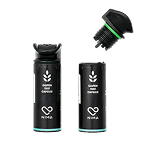
NIMA publishes this testing boundary so you can choose the right source of information, not chase a reassuring result. Check the food category before opening a capsule. For a fermented, hydrolyzed, or alcoholic product, use the label and manufacturer records instead. For a suitable solid or semi-solid food, follow the sampling instructions and treat the result as one part of your gluten-free toolkit.
References
Engström, Niklas, Ann-Sofie Sandberg, and Nathalie Scheers. “Sourdough Fermentation of Wheat Flour Does Not Prevent the Interaction of Transglutaminase 2 with α2-Gliadin or Gluten.” Nutrients, vol. 7, no. 4, 2015, pp. 2134-2144.
Panda, Rakhi, and Eric A. E. Garber. “Detection and Quantitation of Gluten in Fermented-Hydrolyzed Foods by Antibody-Based Methods: Challenges, Progress, and a Potential Path Forward.” Frontiers in Nutrition, vol. 6, 2019, article 97.
Mollo, Katarina. “Labeling Fermented and Hydrolyzed Foods.” National Celiac Association, 2020.
Recent News

Food Anxiety With Celiac Disease: How to Feel Safer Around Food
Food anxiety can be a rational response to managing celiac disease, but it should not make your world smaller. This guide explains how to build calmer safety routines, balance vigilance with quality of life, and recognize when professional support could help.


