

Trust What the Sensor Tells You – Not the Lines on the Capsules
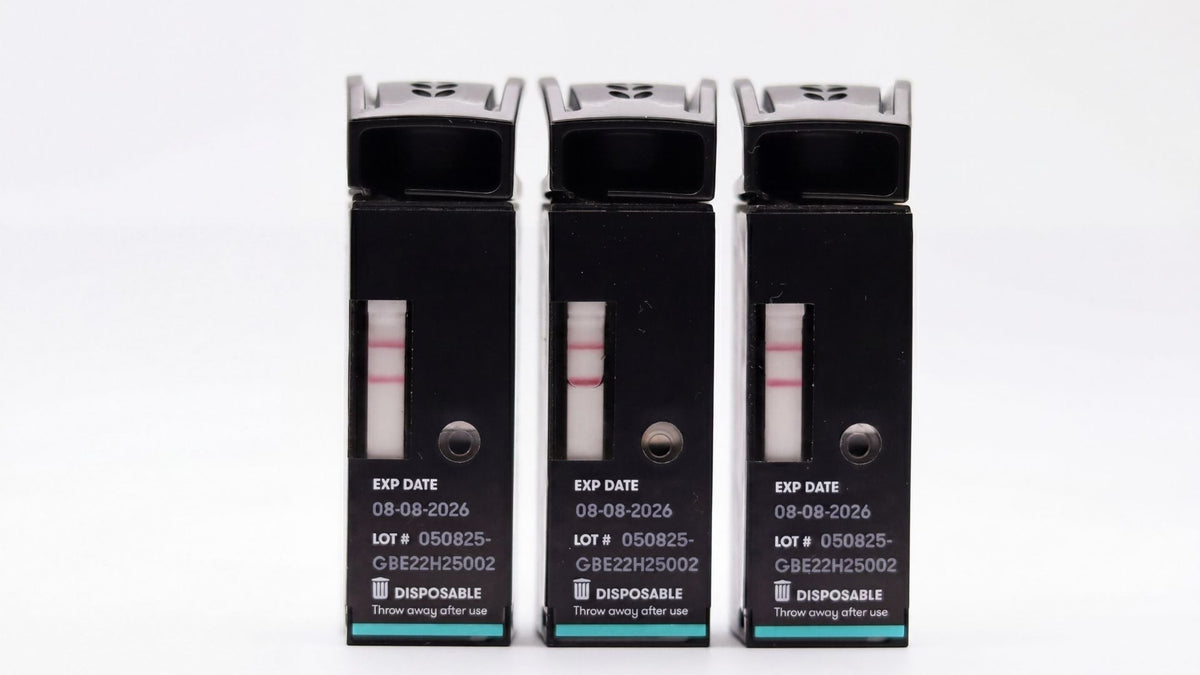
Why We No Longer Recommend Looking at the Back of the Capsule
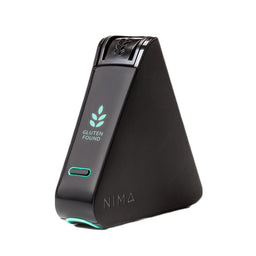
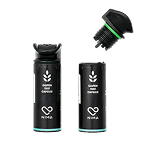
If you've been using NIMA for a while, you may remember being told to check the strip behind the capsule after a test. That guidance came from the previous version of NIMA. We want to address it directly and explain why we've changed our recommendation.
The short version: the more we understood how the technology actually works, the clearer it became that visual strip checks don't add accuracy. In some cases, they work against it.
Here's what we know now.
The color you see is not the color that mattered.
The strip inside the capsule doesn't settle into one color and hold it. It changes continuously throughout the 2 to 3 minute test as the chemistry progresses. NIMA's camera captures that entire process, image by image, in real time.
A wheat-dense sample, for example, may produce a deep red line early in the test that gradually fades to faint pink as the reaction runs its course. If you look at the capsule after the test is complete, you see faint pink. You reasonably conclude trace amounts. The actual result is the opposite.
What you're seeing is one frozen moment from a dynamic process. It doesn't tell you what happened, only when you looked.
A faint line doesn't always mean what you think.
There's another scenario worth understanding. Sometimes a faint line appears alongside a no-gluten-found result - and that is the device working correctly, not a contradiction. If gluten is present but below the 10 ppm detection threshold, the antibodies may still bind with a small amount of protein, producing a faint visible line. The sensor correctly identifies this as below the reportable threshold. The result is not a false positive. It is a below-threshold trace that doesn't meet the level at which NIMA reports detected gluten. Understanding how much gluten a celiac can tolerate helps put ppm thresholds, cross-contact, and individual reactions into practical context.
This is exactly why visual interpretation after the fact adds confusion rather than clarity.
NIMA's strip was never built like the ones you've seen before.
This is where the earlier guidance fell short. NIMA uses a proprietary assay with its own chemistry. It is not the same as the lateral flow strips found in over-the-counter tests. The "darker means more, lighter means less" logic feels intuitive because it works on standard strips. It does not work here. The color intensity ranges NIMA's algorithm are trained on, follow different rules entirely. Applying the standard interpretation to a non-standard strip leads to incorrect conclusions. Strip kits you are meant to read by eye work the other way around, and the comparison between NIMA and EZ Gluten turns largely on that single difference in how you get your answer. The LEO gluten tester asks the same judgment of you, since a faint line above the E is yours to call.
That guidance made sense with what was communicated at the time. But this is a rebuilt product with a better-understood algorithm, and when our understanding improves, we update our guidance - because getting this right matters more than staying consistent with what was said before.
The camera sees what you can't.
NIMA's sensor reaches its result from the moment the control line develops, under consistent lighting, in a sealed capsule, reading the reaction continuously. That controlled environment is doing significant work. A visual check after the fact, under ambient light, at a single point in time, is missing most of what the device used to reach its conclusion.
The sensor was engineered specifically to remove the variables that make human interpretation unreliable. Looking at the strip reintroduces them.
The result is the result.
When NIMA gives you an answer, that is the answer. Not a starting point for further interpretation, but a conclusion reached by a system designed to be more precise than the human eye in this specific context.
We know some of you built habits around checking the strip. That guidance made sense with what we communicated at the time. But science improves, understanding deepens, and when that happens, we update our guidance because getting this right matters more than staying consistent with what we said before.
Trust what the sensor tells you. It saw the whole picture.
Recent News

Is Bulgur Gluten Free? Why It Contains Gluten and What to Eat Instead
Bulgur is a form of wheat, so it is not gluten free. This guide explains where it appears, how to read labels and menus, and which naturally gluten-free grains can replace it in salads, pilafs, soups, and other recipes.


