

NIMA™ vs. EZ Gluten®: Key Differences Between Both Testing Devices
You read the label twice. You asked the server about the fryer. And you still cannot be completely sure the plate in front of you is safe. If you live gluten-free because your health depends on it, that gap between doing everything right and knowing for certain can be exhausting. A food gluten test is one way to help close it.
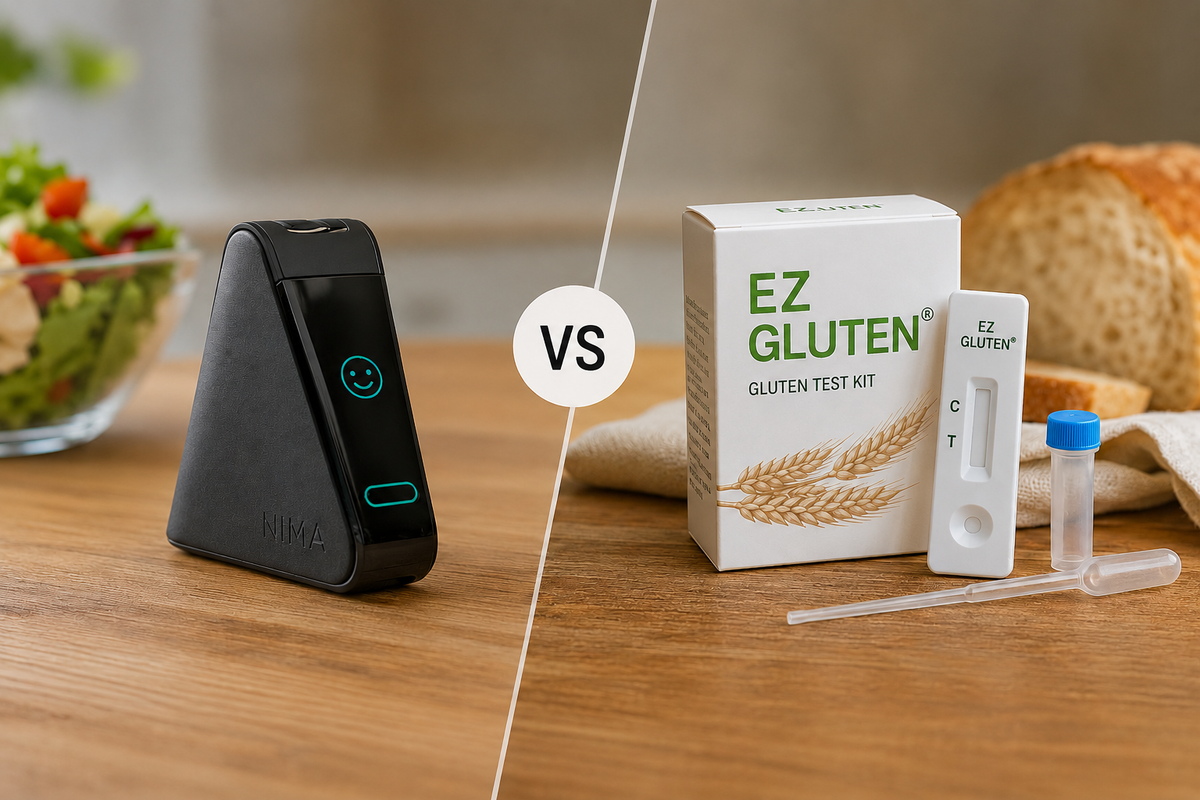
Two of the best-known options are the NIMA™ gluten sensor and the EZ Gluten® test kit. Both check a small food sample for gluten down to 10 ppm, and both can catch traces you cannot see, taste, or smell. But they get there in very different ways. Here is a clear, unbiased look at how NIMA™ and EZ Gluten® compare on detection, speed, accuracy, cost, and everyday use, starting with the table below.
NIMA™ vs. EZ Gluten® at a Glance
|
Feature |
NIMA™ |
EZ Gluten® |
|
Detection limit |
10 ppm (wheat, barley, rye) |
10 ppm |
|
Result time |
About 3 minutes |
About 10 to 15 minutes |
|
Format |
Electronic reader + single-use capsule |
Single-use strip kit, no electronics |
|
Reader required |
Yes, rechargeable device |
No, read by eye |
|
What it tests |
Food samples |
Food samples and surfaces (with swabs) |
|
Price model |
Upfront device + per-test capsules |
Test packs, no device |
|
Best for |
Frequent testing, fast digital results |
Occasional testing, low upfront cost |
The single biggest practical difference is how you get your answer. NIMA™ gives you a digital yes or no on an electronic reader in about three minutes. EZ Gluten® shows you lines on a test strip that you read by eye, closer to a home pregnancy test. Almost every other practical difference between these two gluten testing devices flows from that one design choice, including portability and cost. Keep it in mind as you read the sections below, because it shapes which test fits which kind of person.
How Each Device Works
Before the differences, it helps to understand what these two tests share. Both NIMA™ and EZ Gluten® are antibody-based tests, and each is a gluten detection device you can use outside a lab. Inside each one are antibodies engineered to bind to the specific protein fragments that make gluten a problem for people with celiac disease, the fragments found in wheat, barley, and rye. When you prepare a food sample, those antibodies go looking for gluten. If they find enough of it, the test reacts and tells you.
Both tests are qualitative, not quantitative. A quantitative lab test measures exactly how many parts per million of gluten are in a sample. These home devices answer a simpler, more practical question. Is there gluten here, above the threshold, or not? For someone standing in a kitchen or sitting at a restaurant, that yes-or-no answer is usually what matters. Here is how each device reaches it.
How the NIMA™ Sensor Works
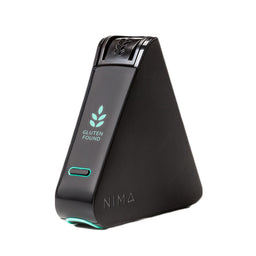
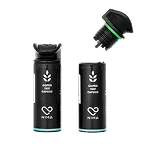
With NIMA™, you take a pea-sized piece of the food you want to check and place it into a single-use capsule. You twist the cap to seal it, then slide the capsule into the electronic sensor. From there, the device does the work. It grinds and mixes the sample with the testing solution, runs the antibody reaction, and displays a clear result on its screen in about three minutes. A smile means no gluten was found. A small wheat icon means gluten was detected. There are no lines to interpret and no timer to watch.
The relaunched sensor looks for wheat, barley, and rye down to 10 ppm, and its 99% accuracy was confirmed by the food-allergen lab Bia Diagnostics in independent testing in October 2025. The reader itself is rechargeable, so you top it up and carry it the way you would carry any other small electronic. That makes it a repeatable tool you keep with you, rather than something you use once and throw away.
How the EZ Gluten® Test Works
EZ Gluten® works without any electronics at all. Each test is a self-contained kit. You add a small food sample, the amount that fits in the provided spoon, into the extraction bottle, close it, and shake to mix the food with the extraction solution. Then you transfer a few drops onto the test device and wait. You read the result much like a home pregnancy test. A control line confirms the test ran correctly, and a separate test line tells you whether gluten is present, with results ready in about 10 to 15 minutes. Make sure you have enough space for the testing equipment.
Because there is nothing to charge and nothing to plug in, the kit fits in a bag or a pocket, so you can test food for gluten almost anywhere. EZ Gluten® sells sterile swabs that let you test surfaces, not just food. If you are worried about a shared cutting board, a restaurant table, or a fryer basket, the swab option lets you check the surface itself. That surface-testing flexibility is something NIMA™'s food-capsule system does not offer in the same way.
Detection Sensitivity: How Low Each Test Goes
On sensitivity, the two tests now draw the line in the same place. EZ Gluten® detects gluten at the same 10 ppm floor, and the relaunched NIMA™ detects down to 10 ppm. That number matters because of how gluten-free is defined. Under the FDA rule, a manufacturer can label a packaged food gluten-free as long as it contains less than 20 ppm of gluten. A test that reacts at the 10 ppm gluten threshold can flag traces that are still low enough to sit under the legal labeling limit, which is useful if you are especially sensitive. Understanding gluten allergy vs. celiac disease helps readers distinguish an immune disorder from intolerance or other reactions.
This is where the NIMA™ story has genuinely changed, and where most older comparisons are out of date. The original NIMA™ detected gluten at 20 ppm and drew criticism for inconsistent results in early testing. The 2025 relaunch lowered the detection threshold to 10 ppm and rebuilt the accuracy data behind the device. So if you have read an older review that describes NIMA™ as a 20 ppm test with shaky reliability, you were reading about the previous generation, not the current one. Comparing today's NIMA™ to EZ Gluten® means comparing two tests that share the same 10 ppm sensitivity.
Speed and Ease of Use
Speed is the most noticeable day-to-day difference. NIMA™ returns a result in about three minutes. EZ Gluten® takes about 10 to 15 minutes from sample to a line you can read. Neither is truly slow, but the gap is real. Three minutes at a restaurant table is a short pause in conversation. 10 to 15 minutes is long enough that your food is getting cold or your table has moved on.
How you read the result differs too, and it affects confidence. NIMA™ shows a digital symbol, so there is little to interpret. You see a smile or a wheat icon. EZ Gluten®, like any lateral flow gluten test, asks you to decide whether a test line has appeared, and faint lines can be harder to judge, which adds a small element of subjectivity for some users. Setup is the last contrast. NIMA™ is a charge-and-go device you keep ready and reuse with fresh capsules. EZ Gluten® is a grab-anywhere disposable kit with nothing to power and nothing to maintain. Neither approach is better than the other, they just suit different routines and comfort levels.
How to Test a Restaurant Meal for Gluten at the Table
To test a restaurant meal for gluten, take a pea-sized piece of the dish you are most unsure about, run it through your test, and read the result before you start eating. The trick is picking the right bite. Gluten tends to hide in the parts that touch shared equipment or added sauces, so test the marinade, the dressing, the fried item, or anything that could have met a shared surface, rather than the plainest thing on the plate.
Speed is what makes this practical in a dining room. A portable gluten sensor like NIMA™ returns a plain digital result in about three minutes, so you can run the check during a normal pause in conversation and get your answer while the food is still hot. Seal a small sample in a single-use capsule, slide it into the reader, and wait for a smile or a wheat icon. If the result flags gluten, you have caught it before the first bite instead of hours later. That is the payoff for carrying a test into a restaurant, and it is where a fast, readable answer earns its place.
What Each Test Can and Can't Check
Both devices share the same honest limitation, and you should understand it before you make a choice. An at-home gluten test reads the specific sample you put into it. Gluten can be distributed unevenly across a plate, so a clean result on one bite does not prove the rest of the meal is clear. The National Celiac Association does not endorse relying on any home device alone for exactly this reason, pointing to the risk of false negatives when you test small, uneven samples.
Some foods are hard to test reliably, and this is true for both products. Fermented and hydrolyzed foods, oily foods, dry or powdery foods, and certain liquids can all produce unclear or unreliable results on antibody-based tests. That is a limit of the antibody-based technology both products rely on, not a mark against either one. The right way to hold all of this is with perspective, not fear. A home test adds a layer of protection you did not have before. That testing limit is also why whether fermentation breaks down gluten matters when evaluating fermented foods.
How to Get a Food Sample That Represents Your Whole Meal
A home gluten test only knows about the exact piece of food you put into it, so a smart sample is everything. Gluten can sit in one spot and not another, which means one clean reading does not clear the entire plate. The fix is to treat it as a gluten cross-contamination test and check the component most likely to carry gluten, then test a second spot if you still have doubts.
This is where a single-use capsule design helps. Each NIMA™ test runs one fresh sample, so checking a sauce and then checking the pasta underneath it are two separate, clean reads with no crossover between them. If a shared fryer worries you more than the protein, sample the fried piece. If a dressing is the unknown, test the dressing. Matching the sample to the real risk gives you a result you can trust, and it keeps the test doing the one job it does well, telling you whether gluten showed up in what you checked.
Accuracy and Third-Party Validation
If you are trying to pin down the most accurate gluten test, the honest answer is that both companies can point to real credentials, and being fair means crediting both. NIMA™ leans on recent, independent data. The relaunched sensor tested at 99% accuracy, validated by Bia Diagnostics in October 2025. EZ Gluten® holds AOAC Performance Tested Method status, an independent certification of its method, and its manufacturer, ELISA Technologies, notes the method was used to help set the AOAC's performance requirements for gluten detection. Those are two different but legitimate forms of proof.
Be precise about the peer-reviewed research, because it is easy to misread. A 2018 academic evaluation in the Journal of Food Protection studied the NIMA™ sensor specifically. It did not test EZ Gluten®. So when people cite an academic study of a handheld gluten detector, they are usually citing work on NIMA™, while EZ Gluten®'s strongest documented evidence is its AOAC certification rather than a published journal study. Neither test is unproven. They just rest on different kinds of validation, and an honest comparison names both instead of overstating one.
Cost Comparison
The two products use fundamentally different cost models, so there is no single cheaper option. It depends on whether you test weekly or 2-3x/week. EZ Gluten® has no device to buy at all. A 5-pack costs $69 on the manufacturer's website, which comes out to a modest per-test price with zero upfront hardware. For someone who tests now and then, that low barrier to entry is hard to beat.
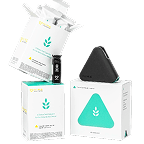
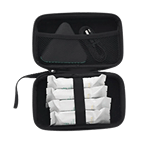
NIMA™ charges for the reader once, then for capsules on a per-test basis. The current NIMA™ Starter Pack runs $330 and includes the electronic sensor along with two boxes of capsules to get you started.
That is a larger number up front. But frequent testers spread the one-time device cost across many uses, so what matters over the long run is the per-capsule price and how often you test.
If you test weekly, EZ Gluten®'s low entry cost is appealing. If you test 2-3x/week, NIMA™'s speed and reusable digital reader can justify the investment. The best value is the one that matches your actual habits.
Which Gluten Test Fits Your Routine?
In the NIMA™ versus EZ Gluten® decision, it comes down to how you weigh speed against cost. NIMA™ gives you fast, digital results, a current 10 ppm threshold, and 99% accuracy validated by an independent lab, in exchange for an upfront device cost. EZ Gluten® gives you a low-cost, no-electronics strip you can read almost anywhere, plus the flexibility to swab surfaces as well as food.
Frequent testers who value speed and a clear digital answer tend to lean toward NIMA™. Occasional testers who want the lowest possible entry cost tend to lean toward EZ Gluten®. There is no single best gluten test kit here, only the one that fits your routine, and both are honest choices for honest reasons. If disposables are what appeal to you, the LEO gluten tester is a second strip-style option, read by eye in two minutes and covering wheat down to the same 10 ppm.
Whichever you pick, keep it in the right place. A food test is the last layer before the first bite, not a replacement for reading labels, asking careful questions, or working with your doctor and dietitian.
Used that way, as one more check rather than the only check, it gives you a little more quiet confidence at the table. If you want that last check to be quick and clear, NIMA™ reads a pea-sized sample and shows you a plain gluten result in about three minutes, so you can decide before your first bite. See how NIMA™ works and where it fits in your gluten-free toolkit.
Recent News

Gluten Belly: Symptoms, Causes, and How to Know If Gluten Is the Problem
What people call “gluten belly” is usually bloating, pressure, or abdominal discomfort, but gluten is not the only possible cause. Learn the signs to track, conditions to rule out, and why testing should come before a gluten-free trial.


