




What's the Difference Between Celiac Sprue and Celiac Disease?
There is no medical difference between celiac sprue and celiac disease. Both names describe the same chronic immune condition, which is triggered by gluten and damages the small intestine. If an older chart says celiac sprue, the wording does not change the diagnosis, the testing process, or the treatment.
One similar-sounding term does mean something else. Tropical sprue is a separate illness with its own causes and treatment. If you found either term in a medical record, bring the exact wording to a healthcare professional before changing your diet.
Celiac Sprue and Celiac Disease Are the Same Condition
For people already managing a confirmed diagnosis, a portable gluten sensor can add information about a food sample, but it cannot diagnose celiac disease.
Celiac sprue is an older name for celiac disease. The Celiac Disease Foundation lists celiac sprue, nontropical sprue, and gluten-sensitive enteropathy as names for the same condition. You may see the British spelling, coeliac disease.
The terminology has shifted, but the condition has not. In someone with celiac disease, eating gluten sets off an immune reaction that injures the small intestine. The name in a report cannot tell you how severe the symptoms are, how much damage has occurred, or whether the diagnosis is confirmed. If you are wondering what causes celiac sprue, the answer is the same under either name: gluten triggers the immune reaction in a susceptible person.
That can be reassuring. Finding “celiac sprue” in an old chart does not mean you need a second treatment plan. The usual diagnostic care and follow-up still apply.
Why Does the Word Sprue Still Appear?
Sprue is an older term often associated with malabsorption, which means the intestine does not absorb nutrients well. Long before celiac disease became the clearer patient-facing name, clinicians used celiac sprue or nontropical sprue to distinguish the gluten-triggered condition from tropical sprue. Today, celiac disease is the term most patients will hear.
Older journal articles, billing codes, textbooks, and medical records have not all caught up. You may even see a combined phrase such as “celiac disease-sprue.” That wording reflects the history of medicine rather than a new form, stage, or severity level.
The surrounding record usually tells you more than the isolated word. A billing code may be there for administrative reasons. A pathology report describes what was seen in tissue. If different parts of the chart seem to conflict, ask your clinician to reconcile them instead of assuming the name signals a different diagnosis.
Still unsure what a note means? Ask the clinician who wrote it or ordered the test. A quick clarification is safer than trying to decode a diagnosis from one phrase.
What Celiac Disease Does to the Body
Celiac disease is an autoimmune condition. A wheat allergy and non-celiac gluten sensitivity involve different processes, so they call for different medical advice. Our guide to gluten allergy versus celiac disease explains those distinctions in plain language.
When someone with celiac disease eats gluten, the immune reaction injures villi, the tiny fingerlike structures lining the small intestine. Villi help the body absorb nutrients. Damage can make it harder to take in iron, folate, calcium, and other nutrients the body needs.
The effects do not look the same for everyone. One person might have frequent diarrhea and weight loss. Someone else may first discover a problem when bloodwork shows iron-deficiency anemia with only mild digestive symptoms. The guide to asymptomatic celiac disease covers the questions to discuss when noticeable symptoms are absent.
Other possible signs include bloating, abdominal discomfort, and fatigue. The skin rash associated with celiac sprue is dermatitis herpetiformis, an intensely itchy, blistering gluten rash. Some people have few obvious digestive symptoms. Feeling mostly well does not rule out celiac disease, and symptoms alone cannot confirm it.
Does Celiac Sprue Change Which Grains You Need to Avoid?
No. Celiac sprue and celiac disease require avoiding gluten from wheat, barley, and rye because they are the same condition.
The wording in your chart does not create a separate food list. Label reading, restaurant questions, and cross-contact precautions remain the foundation. A new name should not send you searching for a different treatment plan. A practical list of foods to avoid with celiac disease can help you recognize less obvious sources of wheat, barley, and rye.
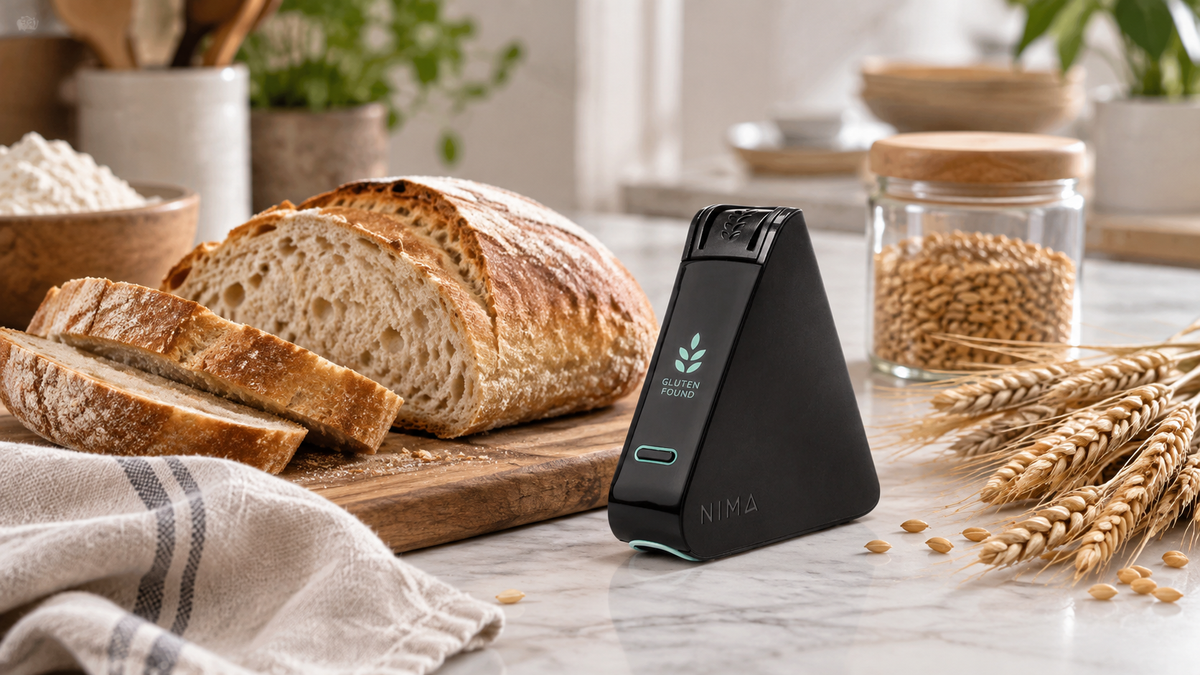
For someone already diagnosed, NIMA's portable gluten sensor can check a representative food sample for gluten from wheat, barley, and rye. Its result does not identify the grain, certify the whole meal, or replace the safeguards you already use. It adds one more piece of information when an unfamiliar dish leaves questions.
Celiac Sprue vs. Tropical Sprue: Similar Name, Different Condition
When comparing celiac disease and tropical sprue, start with the fact that tropical sprue is a separate malabsorption illness. It can resemble celiac disease because both may cause chronic diarrhea, weight loss, nutrient deficiencies, and changes in the small intestine. The overlap makes a full history and medical workup necessary.
A systematic review of celiac disease and tropical sprue found considerable overlap in symptoms, endoscopy, and intestinal tissue findings. Celiac-specific blood tests stood out as the clearest single differentiator. A clinician still has to interpret those results alongside travel history, diet, symptoms, and biopsy findings.
The phrase villous atrophy may appear in discussions of either condition. It describes what intestinal tissue looks like under a microscope, and it cannot establish the cause by itself. When several conditions could explain the same finding, a broader evaluation matters.
Context helps. Celiac disease is triggered by gluten and occurs worldwide. Tropical sprue is linked with living in or spending extended time in certain tropical regions, and treatment may involve antibiotics and nutrient replacement after medical evaluation.
So, nontropical sprue may refer to celiac disease. Tropical sprue does not. A gastroenterologist can review the wording, test results, and relevant travel or residence history without relying on the name alone.
Diagnosis and Treatment Do Not Change With the Name
A celiac sprue diagnosis follows the same clinical path as a celiac disease diagnosis. Doctors commonly begin with celiac-specific blood tests. Depending on the person’s age, symptoms, and results, they may use an upper endoscopy to collect small-intestine biopsies. The 2023 American College of Gastroenterology guideline gives clinicians detailed recommendations for diagnosis and follow-up.
Blood tests look for antibodies linked to the immune response to gluten. Genetic testing can sometimes help rule out celiac disease, but having a compatible gene does not prove the condition is present. A gastroenterologist weighs the tests together with medical history and whether the person was eating gluten during testing.
Start a gluten-free diet before diagnostic testing only when your healthcare professional advises it. The American College of Gastroenterology guideline explains that removing gluten can affect test results. If you are sorting through the likely costs of blood tests, genetic tests, and endoscopy, our gluten test cost breakdown can help you prepare questions for your care team.
Celiac sprue treatment is the same as celiac disease treatment: a lifelong gluten-free diet with follow-up from a clinician and registered dietitian. There is no cure. Careful label reading and attention to cross-contact become part of daily life. Follow-up helps show whether the intestine is healing.
Follow-up still matters when symptoms improve. A care team may monitor celiac antibodies, nutrient levels, and other health concerns based on the person’s needs. Feeling better is valuable, but it cannot show on its own whether intestinal healing is complete. After a diagnosis, a focused list of questions to ask your GI or dietitian can help you plan follow-up care.
Where NIMA™ Fits, and Where It Does Not
NIMA™ belongs after diagnosis as an additional food-testing tool. It tests the food sample placed in a capsule. It does not test your blood, genes, or intestine, and it cannot diagnose or rule out celiac disease.
That boundary matters. A food test can answer whether gluten was detected in the portion you sampled. It cannot explain symptoms, show whether intestinal damage is present, or decide whether a gluten-free diet is medically necessary. Those are questions for your healthcare team.
One result applies only to the sample tested, not an entire plate, batch, restaurant, or brand. A “No Gluten Found” result cannot override a kitchen warning or replace label reading, restaurant communication, medical care, and your own judgment.
For foods it can reliably test, NIMA™ detects gliadin down to 10 parts per million with a 99% probability of detection and returns results in about three minutes. That gives you one more concrete data point before the first bite. It cannot provide a guarantee of perfect safety.
Frequently Asked Questions About Celiac Sprue
What Are the Early Signs of Celiac Sprue?
Celiac sprue symptoms can include diarrhea, bloating, abdominal discomfort, fatigue, iron-deficiency anemia, and dermatitis herpetiformis. The pattern varies widely, and some people have no obvious digestive symptoms. Because these signs overlap with many other conditions, testing and clinician review matter more than any single symptom.
What Organ Is Most Affected by Celiac Disease?
The small intestine is the primary organ affected, especially its lining and villi. Damage there can reduce nutrient absorption, which helps explain why celiac disease may cause anemia, fatigue, bone problems, and symptoms outside the digestive tract.
Are Celiac Sprue, Non-Tropical Sprue, and Tropical Sprue the Same?
Celiac sprue and non-tropical sprue are historical names for celiac disease. Tropical sprue is a separate malabsorption illness with some similar symptoms and intestinal findings. A healthcare professional can compare celiac testing with travel history and other possible causes instead of drawing a conclusion from the name.
Get Clarity on Celiac Sprue and Celiac Disease
Celiac sprue and celiac disease refer to the same condition. Tropical sprue is different. If the wording in a medical record leaves you unsure, take it to a gastroenterologist or registered dietitian before changing how you eat.
Already diagnosed and following a medically gluten-free diet? Review NIMA’s responsible-use guide to see how a food test can add information alongside the habits and professional care you already rely on. More clarity can make the next decision feel a little easier. The guide explains what NIMA™ can test, how to choose a representative sample, and how to treat one result as added information rather than a guarantee.
Recent News

Gluten Belly: Symptoms, Causes, and How to Know If Gluten Is the Problem
What people call “gluten belly” is usually bloating, pressure, or abdominal discomfort, but gluten is not the only possible cause. Learn the signs to track, conditions to rule out, and why testing should come before a gluten-free trial.


