

How Much Gluten Can Someone With Celiac Disease Tolerate Before It Triggers a Reaction?

If you live with celiac disease, you know the exact moment this question shows up. The plate is in front of you, the label said gluten-free, the server sounded sure, and still a quiet voice asks whether that bite really didn’t contain gluten. You're not being paranoid. You're managing a real autoimmune condition, and you deserve a real number to work with.
The Short Answer: Is Any Amount of Gluten Safe?
No amount of gluten is guaranteed safe for someone with celiac disease. But research points to about 10 milligrams per day as the threshold most people can handle without measurable damage to the small intestine. That is a tiny amount, smaller than a single crumb of bread, and well below what careful eaters usually take in. Treat 10 mg as a research threshold for accidental exposure, not as a personal daily allowance. The goal is still to avoid gluten and keep exposure as low as possible.
Here is the reframe that helps. Celiac disease is an autoimmune reaction, not an allergy you dose up or down. So "tolerate" here means staying under the level that triggers the immune response and damages the lining of your gut, not eating freely up to some personal allowance. Your aim is to keep daily exposure as close to zero as real life allows.
What the Research Says About a Safe Gluten Threshold
The science here comes down to two numbers, 10 mg and 20 ppm. Here is what each one means and where it comes from.
The 10 mg vs. 50 mg Finding
The most cited number comes from a controlled feeding trial in which adults with celiac disease ate measured gluten doses every day for three months. At 10 mg per day, the group showed no consistent damage to the intestinal lining. At 50 mg per day, the damage was clear. That gap is why 10 mg became the widely accepted safe upper limit.
The caveat matters just as much. A minority of participants showed some villous atrophy, the flattening of the intestinal lining, even at 10 mg per day, so individual sensitivity varies and some people react to less. This is not a reason to fear every microscopic trace. It is a reason to treat 10 mg as a ceiling to stay under, not a target to eat up to. People should not use this finding to test or determine their own tolerance, because individual sensitivity can differ.
So how small is 10 mg? Roughly one-hundredth of a single slice of bread. Picture a few crumbs left on a cutting board. That is the daily line researchers drew, which tells you how little gluten it takes to matter.
Why 20 ppm Became the Labeling Standard
In the U.S., the FDA's gluten-free labeling rule lets a food be called "gluten-free" only if it contains less than 20 parts per million of gluten. That is a concentration limit, not a promise of zero.
The 20 ppm figure was not chosen at random. It is a concentration low enough that a normal day of eating gluten-free-labeled foods keeps most people under the 10 mg daily dose. The label standard is built around the research threshold. In practical terms, 20 ppm describes the concentration of gluten in a food. It is not a recommendation for how much gluten a person with celiac disease can eat in a day. That difference between a concentration standard and a personal exposure limit is important context when someone feels sick after eating gluten-free and is trying to understand what may have happened.
This clears up a common myth. Gluten-free does not mean zero gluten. No validated test can confirm zero, and 20 ppm is a ceiling, not the actual content of most products. Plenty of certified foods test far lower. The label gives you a maximum, not a measurement of what is on your plate.
PPM vs. Milligrams: Why the Numbers Confuse Everyone
Two numbers get tangled together in almost every gluten conversation, and separating them makes everything else click. Parts per million (ppm) is concentration, or how dense the gluten is in a food. Milligrams (mg) is dose, or how much gluten you eat.
Here is why that difference matters. A large serving of a food at 20 ppm can deliver more total gluten than a few bites of something more concentrated. Concentration alone does not tell you the dose, because portion size changes the math. A "safe" concentration eaten in large amounts can still add up. You do not need to calculate the gluten content of everything you eat. The practical focus is choosing gluten-free foods and preventing cross-contact.
This is the gap that leaves people guessing. You cannot eyeball ppm, and a label only gives you a ceiling for concentration, never a reading of the actual plate in front of you. That is exactly where careful eaters run out of information.
How Can You Tell What's Really on Your Plate?
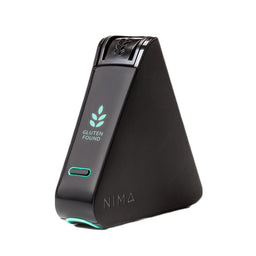
A label gives you a ceiling, not a reading of the food in front of you. A direct food test adds information a label cannot provide, but the result reflects only the sample you test. That is where a portable gluten sensor earns its place. NIMA makes one, a pocket-sized device that checks a small sample of your meal and shows whether gluten is detected in that sample before you take a bite. It does not read a package or take a kitchen's word for it. It tests the food sample itself, which is the one thing a label can never do. For meals where uncertainty remains, that gives you an answer you can use alongside the rest of your gluten-free toolkit.
Why Just a Little Still Matters for People With Celiac Disease
Feeling fine after a meal is not proof the meal was safe. In celiac disease, the immune response and damage to your intestinal lining can happen silently, with no symptoms at all. This silent intestinal damage is what makes small amounts worth respecting.
It adds up. Your daily total is what counts, so a little trace gluten from a shared toaster, a splash of the wrong sauce, and a floured prep surface can stack across a single day and push you past the threshold. No single hit feels like much. Together they can. Everyday sources of cross-contact include shared toasters, cutting boards, colanders, utensils, and condiment jars.
None of this is a reason to panic about getting glutened. It is the reason a steady, low-gluten routine matters more than any one perfect bite. Consistency, not perfection, is what protects your gut over time.
Do You Need to Test Every Meal?
No, and trying to would wear you out. Most of your safety comes from the habits you already run, the labels you read and the questions you ask before you order. A test earns its keep in the spots those habits cannot fully cover. A restaurant meal where you cannot see the kitchen. A shared kitchen where the toaster and cutting boards get used by everyone. A new product, a buffet, a plate handed to you at a party, or food in a country where you do not speak the language. Those are the moments people reach for a sensor like NIMA, a few times a week rather than at every meal. The goal is not to check everything. It is to add information where uncertainty remains.
How Fast Does a Reaction Hit, and What Does It Look Like?
Reactions do not run on a fixed clock. Some people notice symptoms within hours. Others notice them later, and some have no immediate symptoms at all, even when an immune response is happening.
When symptoms do show up, they vary widely from person to person. Digestive upset is common, along with fatigue, brain fog, and headaches. Two people can eat the same contaminated meal and have completely different experiences of it.
The most important point is this. Absence of symptoms does not mean absence of damage. "I felt fine" is a feeling, not evidence that a meal was gluten-free, which is why so many people want a way to check before they commit to the first bite. Symptoms are not a reliable way to know whether exposure occurred, because intestinal damage can happen without noticeable symptoms. Bring questions about celiac without noticeable symptoms to your follow-up rather than relying on how a meal felt.
Where Trace Gluten Actually Comes From
Some gluten risks cannot be solved by reading a label, because they happen after the label is printed. Cross-contact, sometimes called cross-contamination, is the big one. Shared fryers, grills, cutting boards, and prep surfaces can all move gluten onto an otherwise safe food. Ingredients and suppliers change without notice. Restaurant staff turn over, and prep protocols shift with them.
This is why a "gluten-free" menu item or a 20-ppm-labeled product can still carry trace gluten from handling. A clean label is not the same as a clean plate. Food can start out safe and pick up gluten somewhere between the kitchen and your table.
Here is the hard part, said plainly. You can do everything right and still not know for certain that the meal in front of you is safe. That gap is exactly what NIMA was built to close. The company was founded in 2013 by two MIT students who lived with food sensitivities and were tired of guessing.
How to Keep Your Daily Gluten Load Below the Threshold
You already have a toolkit for this, and it works.
-
Read labels and look for gluten-free certification.
-
Ask specific questions at restaurants about fryers, prep surfaces, and cross-contact.
-
Work with a registered dietitian to fine-tune your daily choices.
These habits are your foundation, and nothing replaces them. It also helps to build balanced meals around naturally gluten-free foods and overall nutrition, rather than focusing only on what to avoid.
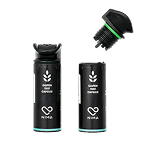
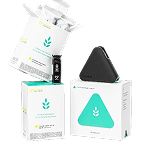
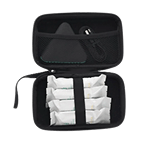
For the moment right before the first bite, you can add one more layer. NIMA is a portable gluten sensor that tests a pea-sized sample of your food and flags gluten from wheat, barley, and rye down to 10 ppm with 99% accuracy in the tested portion. It returns a result in about three minutes. NIMA was rebuilt from the ground up and relaunched in 2025, with that accuracy verified by an independent lab, Bia Diagnostics.
The connection here is simple. Since gluten-free labeling allows up to 20 ppm, a quick test below that labeling threshold gives you a real-world check a label alone cannot. It is the last step in your toolkit, not a replacement for your gluten-free diet or the medical guidance behind it.
Turning Uncertainty Into Confidence at the Table
No single bite is ever guaranteed, and that's okay. You can still stack the odds firmly in your favor with three things working together. Keep a low daily gluten load, build smart habits at home and when eating out, and add a quick way to verify when it counts. Manage the total, trust your routine, and check what you can. A gluten-free diet can still be balanced, varied, and enjoyable, including while you learn the routine after a new diagnosis.
That is the real shift this question is about. Once you understand how much gluten a person with celiac disease can tolerate and aim to stay under that daily limit, the fear starts to fade. You move from bracing before every meal to eating with more confidence, because you have done the work and have one more way to check for gluten before taking a bite. If that last moment of doubt is the part that wears on you, testing is there to add clarity. Understanding gluten allergy vs. celiac disease helps readers distinguish an immune disorder from intolerance or other reactions.
One last thing to hold onto. NIMA adds to careful eating and medical guidance, it never replaces them. Your gluten-free diet and your healthcare provider stay at the center. The sensor is one more layer of clarity, for the moments when clarity is what you need most. When that last layer feels worth it, take a look at how the sensor works and where it fits the routine you already trust.
Recent News

Is Bulgur Gluten Free? Why It Contains Gluten and What to Eat Instead
Bulgur is a form of wheat, so it is not gluten free. This guide explains where it appears, how to read labels and menus, and which naturally gluten-free grains can replace it in salads, pilafs, soups, and other recipes.


